Online purchase fraud is one of the most common complaints in Nigerian ecommerce. A new service wants to end it, using the app you already have open.
Almost everyone in Nigeria has the same story. You find something for sale on Instagram or WhatsApp. The price looks right. You send the money. And then nothing comes. The seller stops replying. Your cash is gone, and there is nobody to call.
For Toye Akinwale, that story belonged to his mother. She paid an online vendor for an order that never arrived. She had done nothing wrong. She simply had no way to know whether the person on the other end could be trusted, and no protection when the deal went bad. That moment is the reason EscrowPay exists.
Buying and selling online in Nigeria runs on fear. Buyers are afraid to pay strangers. Sellers are afraid to ship before they see money. Honest sellers lose real sales because buyers cannot tell them apart from fraudsters. It is a quiet tax on trade. Sellers raise their prices to cover the losses, so honest buyers pay more. Buyers walk away from good deals, and the trust that makes commerce possible stays in short supply.
Escrow is an old and simple idea. Instead of paying the seller directly, the buyer sends the money to a neutral party who holds it safely. The seller ships the item, knowing the money is secured and waiting. Once the buyer confirms the order has arrived, the money is released to the seller. If something goes wrong, the buyer is protected and can get their money back. Both sides are safe at the same time.
EscrowPay, which went live on 26 June, brings that protection to the place where Nigerians already buy and sell, which is WhatsApp. There is no app to download and no cards involved. Buyers pay by bank transfer into escrow, which removes card fraud and chargebacks entirely.
How EscrowPay works
Toye designed the service around a few core principles.
- It meets users where they already are. Rather than requiring a download or a new account, EscrowPay operates through WhatsApp and is built on the WhatsApp Business API, the channel where Nigerian buyers and sellers already trade every day. Anyone with WhatsApp can use it.
- It makes users accountable. Every buyer and seller verifies their identity by NIN through Prembly, a leader in Africa’s trust infrastructure, removing the anonymity that scams rely on.
- It holds funds with a bank, not the company. Buyer payments sit in a designated account with Rubies Microfinance Bank, a CBN licensed Nigerian bank, rather than on EscrowPay’s own books, and remain there until the transaction is complete. Both parties can follow each step in real time within WhatsApp.
- It releases funds automatically on delivery. Once an order is delivered, the buyer has 48 hours to confirm receipt or flag a problem. Confirming pays the seller immediately. Taking no action releases the funds to the seller automatically, so sellers are paid without having to chase, and no transaction is left in limbo.
- It offers flexible, trackable delivery. A seller can dispatch in one of three ways: with the buyer’s own rider, with a third party courier that provides tracking, or with the seller’s own rider through EscrowPay’s rider feature. That last option is the one EscrowPay backs, because it records both pickup and delivery, giving both sides, and any dispute, the clearest proof of what happened. In one of EscrowPay’s more distinctive touches, any rider with WhatsApp can be onboarded in a few clicks, so sellers are never tied to a single courier.
- It resolves disputes on evidence. If a buyer raises an issue, for example an item did not arrive or is not as described, the money is held while EscrowPay reviews verifiable facts such as delivery records, verified identities and the transaction trail, rather than one side’s word against the other’s. EscrowPay releases payment to the seller, or refunds the buyer, only after that review.
The governing principle, Toye says, is that no party should ever hold both the goods and the cash.
The promise is easy to say and easy to feel. Buyers, your money is always safe. Sellers, you always get paid.
More than 300 sellers signed up before EscrowPay went live, a sign that the trust gap weighs on sellers as much as on buyers.
“My mother did nothing wrong, and she still lost her money,” Toye says. “Nobody should have to gamble every time they buy something online. We built EscrowPay so that two strangers can trade and both feel safe, because the money is protected until the order is delivered.”
What next
The roadmap is about widening the same protection that launches today. Planned next steps include:
- Milestone escrow for larger or staged payments, such as services and higher value orders, where the money is released in agreed stages rather than all at once.
- A free EscrowPay storefront where verified sellers can showcase and sell, with the same protection built in from the first click. The storefront is free to set up and use; the only charge is the standard escrow fee when a sale goes through.
- Cross border escrow to bring the same protection to trade between Nigeria and the rest of the world.
The longer term goal is simple: to make protected payment the normal way Nigerians trade, online and across borders.
EscrowPay is live now. To make your first safe transaction, send the word Hello on WhatsApp to 0705 500 0705, or visit escrowpay.app to learn more.
We process trust.
AT A GLANCE
- What: WhatsApp native escrow for Nigerian ecommerce. No app download required.
- Launch: Now live, from 26 June 2026.
- How buyers’ funds are held: in a designated account at Rubies Microfinance Bank (CBN licensed).
- Identity: NIN verification via Prembly (a leader in Africa’s trust infrastructure), a one time check done only before a buyer or seller’s first transaction.
- Channel: WhatsApp Business API, provided by Meta.
- Availability: open to all buyers and sellers.
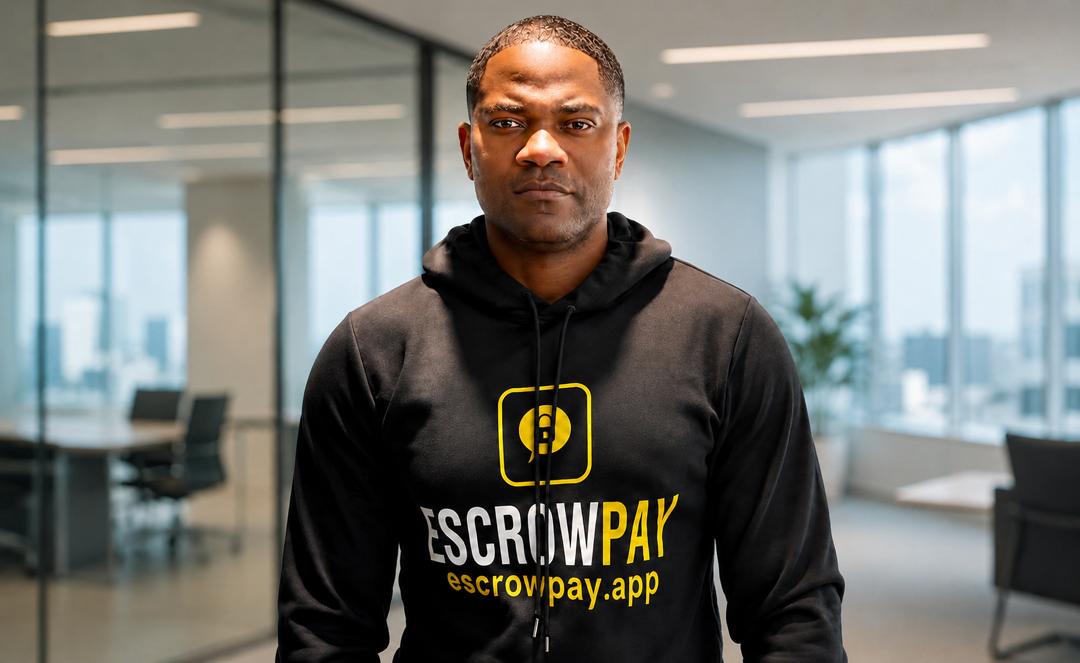
- Founder and CEO: Toye Akinwale.
- Tagline: We process trust.
- Fees: 1.75% transaction fee for sellers, 2.3% payment processing fee for buyers.
- Find out more: escrowpay.app
About the founder
Toye Akinwale is the founder and CEO of EscrowPay, Nigeria’s first WhatsApp native escrow service. He built it after his mother was scammed by an online vendor.