
First published on 12 July, 2026
For more than a decade, venture capitalists and founders have clung to the belief that if a high-growth startup runs out of cash, its proprietary technology will retain enough value to soften the blow. An administrator can sell the company’s code, platform, or data to a strategic buyer and recover at least part of the investment. It is also often wrong.
When a tech startup fails, its assets are worth only what a buyer can legally use. Delivery trucks depreciate. Custom software can become a liability. If a company’s data practices, licences or regulatory compliance are flawed, even technology developed at significant cost may become unsaleable. In insolvency, regulatory compliance, rather than intellectual property, often determines whether any value remains.
Why data privacy is the ultimate gatekeeper
Every consumer-facing technology company regards its customer database as one of its most valuable assets. That assumption has shaped startup valuations for years, as user data is seen as the foundation for future revenue. When United States retailer RadioShack filed for bankruptcy in 2015, its database of 65 million customer profiles was widely regarded as one of the few assets with significant value. Without it, the brand itself was considerably less attractive.
A decade later, the collapse of genetic testing company 23andMe exposed the limits of that assumption. Its database contained genetic and health records that could not simply be sold alongside the rest of the business. More than 25 US state attorneys general, together with the US Trustee Program intervened, arguing that any transfer of such sensitive information required close judicial scrutiny. The court appointed a Consumer Privacy Ombudsman to assess whether any proposed sale would honour the privacy commitments made to customers.
The same legal tension exists in Kenya under the Data Protection Act, 2019. The Office of the Data Protection Commissioner (ODPC) has progressively narrowed the circumstances in which organisations may rely on broad or implied consent when collecting and sharing personal data. Decisions such as Nancy Wansato Maroa v Vivo Energy and Artcaffe have established that organisations must clearly explain why personal data is being collected and identify any third parties with whom it may be shared. Consent that does not meet those standards may be deemed invalid.
For an insolvency practitioner, those rules can turn a seemingly valuable customer database into an unusable asset. A startup that promised customers it would never sell their personal information cannot simply abandon that commitment because it has run out of money. Any attempt to transfer the database may expose the company and its directors to regulatory sanctions while leaving the buyer unable to lawfully use the data. The result is a striking inversion of conventional venture capital logic. The database may still exist, but without the legal right to transfer and use it, much of its commercial value is lost.
Get smarter about Francophone Africa with our newsletter, Francophone Weekly—the startups, tech policies, and institutions building the pipelines for ecosystem growth.
For digital lending platforms and other non-deposit-taking credit providers, the principal asset on the balance sheet is the loan book: the portfolio of outstanding loans and receivables. Conventional financial thinking suggests that a distressed loan book is a liquid asset that can be sold or assigned to a commercial bank or a specialised debt collector.
In fintech, however, regulatory compliance is the determining factor in whether those assets are enforceable. Under Section 33S of the Central Bank of Kenya (CBK) Act, operating a non-deposit-taking credit business without a valid CBK licence is a criminal offence.
Next Wave continues after this ad.

The consequences of non-compliance were illustrated in the landmark case M-Collect Limited v Mbana Kalua, in which the High Court of Kenya dismissed 139 debt recovery suits brought by digital lenders. The court held that unlicenced lenders lacked legal standing to recover debt, collect outstanding sums or exercise statutory powers of sale against defaulting borrowers.
Consider a digital lender entering administration with a loan book valued at KES 500 million ($3.9 million). If that company operated without a valid CBK digital credit provider licence, the portfolio’s recoverable value may effectively be zero because the debts cannot be legally enforced. Furthermore, under the Business Laws (Amendment) Act, an unlicenced entity may face statutory fines of up to KES 20 million ($155,000) or three times the financial gain derived from non-compliance.
What appeared to be a valuable asset can quickly become a legal liability. Even if an administrator attempts to assign the debt, the absence of a registered financing statement on the electronic registry established under the Movable Property Security Rights Act (MPSR) may leave the security interest unperfected and ineffective against competing creditors.
The case of climate tech
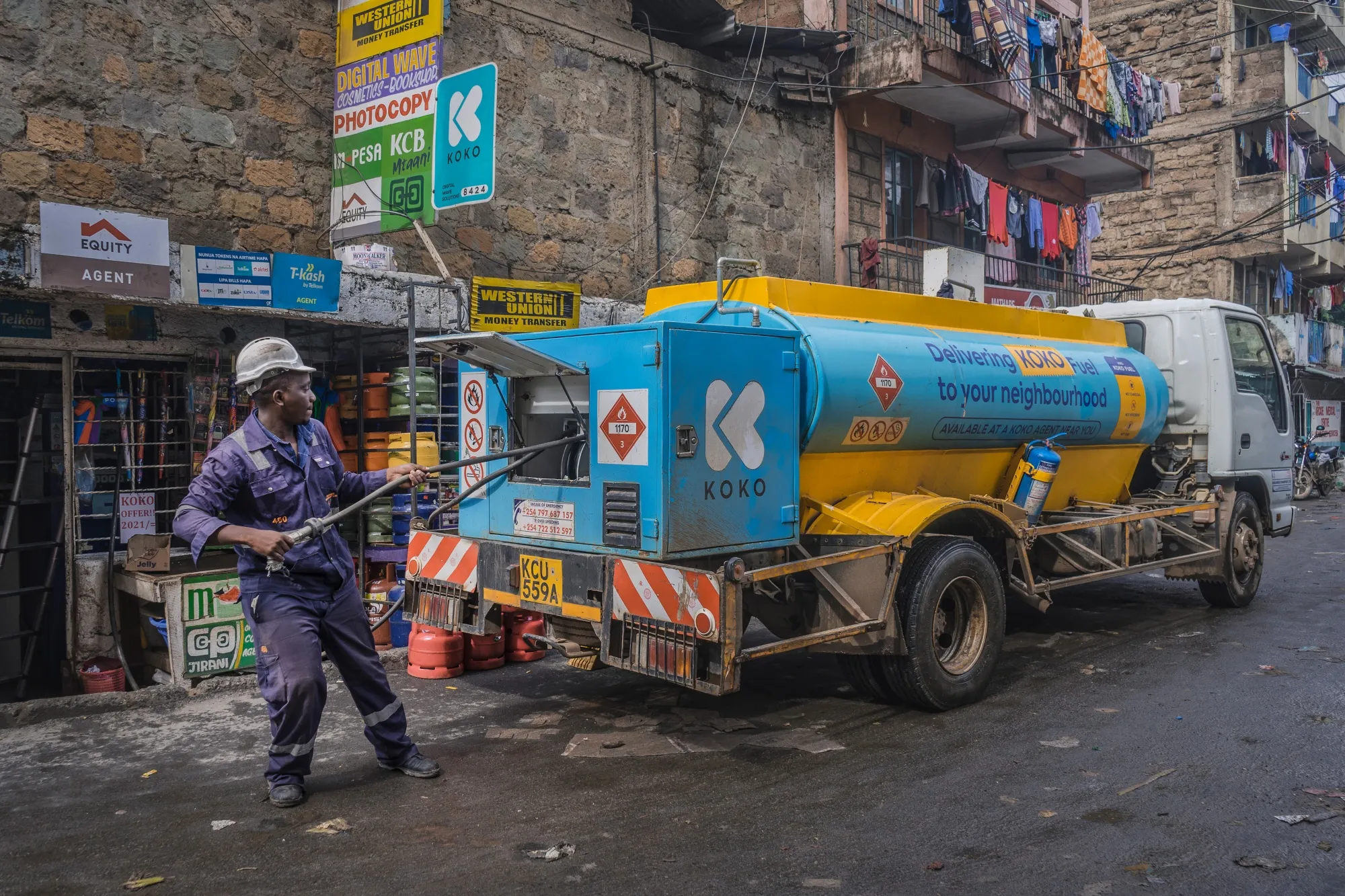
The collapse of Koko Networks in January 2026 offers a cautionary case study for the climate-tech and clean-cooking sectors. Over more than a decade, Koko invested an undisclosed sum in developing a carbon-financed bioethanol cooking network serving 1.5 million Kenyan households. Its business model relied on selling subsidised smart cookstoves and fuel while generating certified emissions reductions that could be monetised as carbon credits in international carbon markets.
That model unravelled after the Kenyan government declined to issue the Letter of Authorisation (LoA) required under Article 6 of the Paris Agreement for the relevant cross-border carbon credit transactions. Government officials, concerned about preserving the nation’s domestic carbon budget and reacting to academic critiques of cookstove emission methodologies, refused to greenlight Koko’s cross-border credit transfers. Without the required sovereign authorisation, Koko’s carbon-credit revenue stream ceased, the subsidy model became unsustainable, and the company entered administration.
When PricewaterhouseCoopers (PwC) stepped in to market Koko’s assets—including its manufacturing plant in Gujarat, its network of about 3,000 KokoPoints and its intellectual property portfolio—they confronted a harsh operational truth: that clean-cooking hardware cannot be remotely locked or disabled like pay-as-you-go (PAYGo) solar home systems.
This is the harsh arithmetic of insolvency. Koko’s hardware is worth little without the carbon credits that justify its existence, while its intellectual property cannot be separated from the regulatory approvals that allow the business to operate. Until those approvals return, the company’s technology sits in a valuation vacuum. .
How platform models are hollowed out
For asset-light logistics and e-commerce platforms like Sendy and Copia Kenya, the transition from administration to liquidation can expose significant tax liabilities that erode any remaining enterprise value. Sendy, which raised over $26 million to build a business-to-business (B2B) logistics platform, entered administration in late 2023.
Next Wave continues after this ad.

In October 2025, the High Court of Kenya ordered Sendy to pay KES 82.2 million ($635,000) in outstanding VAT to the Kenya Revenue Authority (KRA), finding that the company was not merely a digital intermediary but a principal supplier in the logistics services it facilitated. Sendy had argued that it operated as a digital platform, earning commission income and accounting for VAT only on those commissions.
The High Court reached a different conclusion. It held that because Sendy set the contractual terms, dispatched drivers and collected customer payments in its own name, it exercised sufficient control to be treated as the principal supplier. As a result, VAT is applied to the transaction’s gross value rather than solely to the platform’s commission.
This principal-supplier classification alters the risk profile of platform business models. For an administrator seeking to preserve value, a retroactive VAT audit of gross transaction volumes means the revenue authority’s high-priority tax claims will instantly consume the proceeds from any software or asset sale.
The platform’s software may have considerable commercial value, but where its tax structure is later found to be non-compliant, tax liabilities may substantially reduce the value ultimately realised by creditors.
The takeaway for founders and investors
The lesson of the current restructuring cycle is clear: that founders who scale rapidly by ignoring data compliance, tax structuring, and regulatory licencing are destroying the residual liquidation value of their enterprises.
For many startups, the most valuable asset is not their technology but the legal and regulatory framework that enables their business model to operate. Once that framework falls away, the commercial value of the underlying technology may decline sharply.
Kenn Abuya
Kenn Abuya is a senior reporter at TechCabal. He leads the Startups Desk.
Thank you for reading this far. Feel free to email kenn[at]bigcabal.com, with your thoughts about this edition of NextWave. Or just click reply to share your thoughts and feedback.
We’d love to hear from you
Psst! Down here!
Thanks for reading today’s Next Wave. Please share. Or subscribe if someone shared it to you here for free to get fresh perspectives on the progress of digital innovation in Africa every Sunday.
As always feel free to email a reply or response to this essay. I enjoy reading those emails a lot.
TC Daily newsletter is out daily (Mon – Fri) brief of all the technology and business stories you need to know. Get it in your inbox each weekday at 7 AM (WAT).
Follow TechCabal on Twitter, Instagram, Facebook, and LinkedIn to stay engaged in our real-time conversations on tech and innovation in Africa.


|
|


|
|
|
18, Nnobi Street, Surulere, Lagos, Nigeria |
View in Map |
| You received this email because you signed up on our website or made purchase from us. If you know longer wish to recieve these emails, please unsubscribe |