“Be anything.”
It sounds like the sort of advice printed on a graduation card. Freddie Omany’s older brother meant it literally.
Long before he found himself helping move millions of mobile money transactions across Africa every day, Omany, PawaPay Kenya country director, taught French. He translated documents. He worked in government communications. He chased unpaid invoices for Booking.com, a digital travel platform, across Francophone Africa. None of those jobs looked remotely connected at the time. Looking back, he insists they were all preparing him for the same thing.
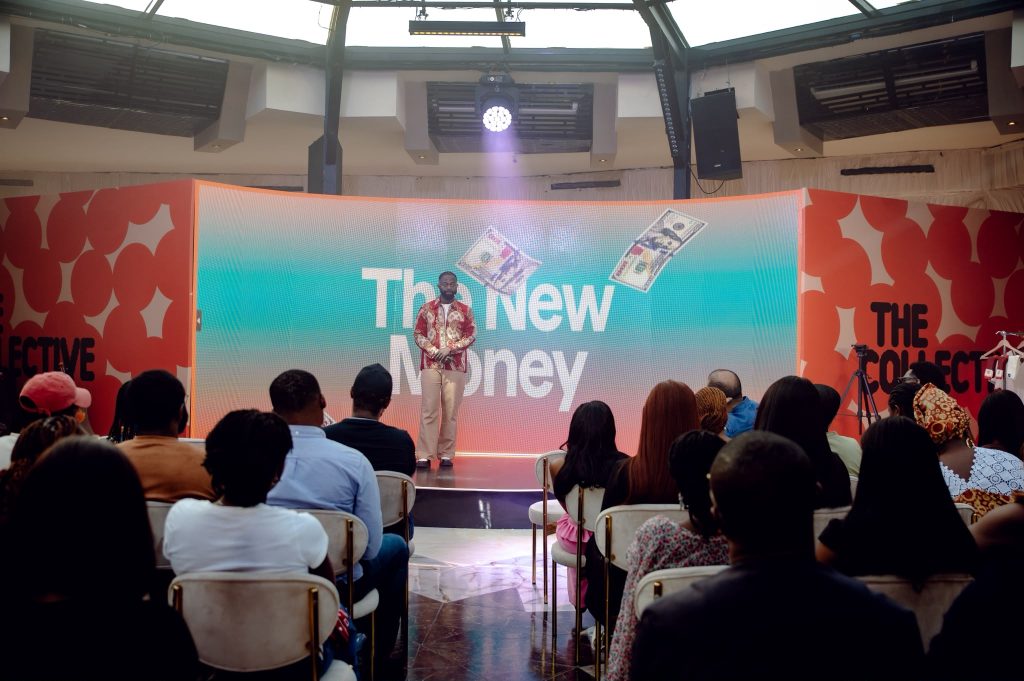
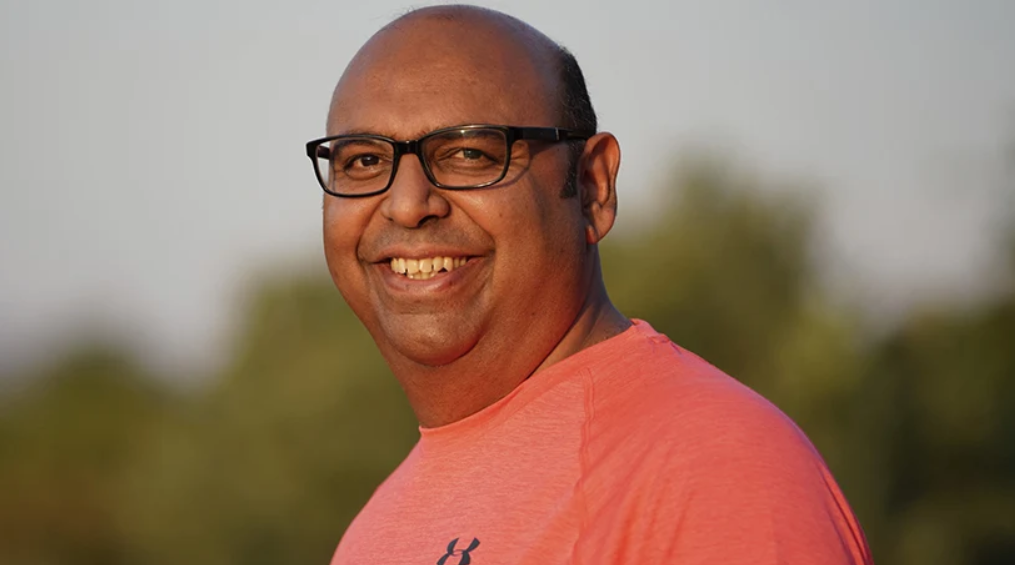
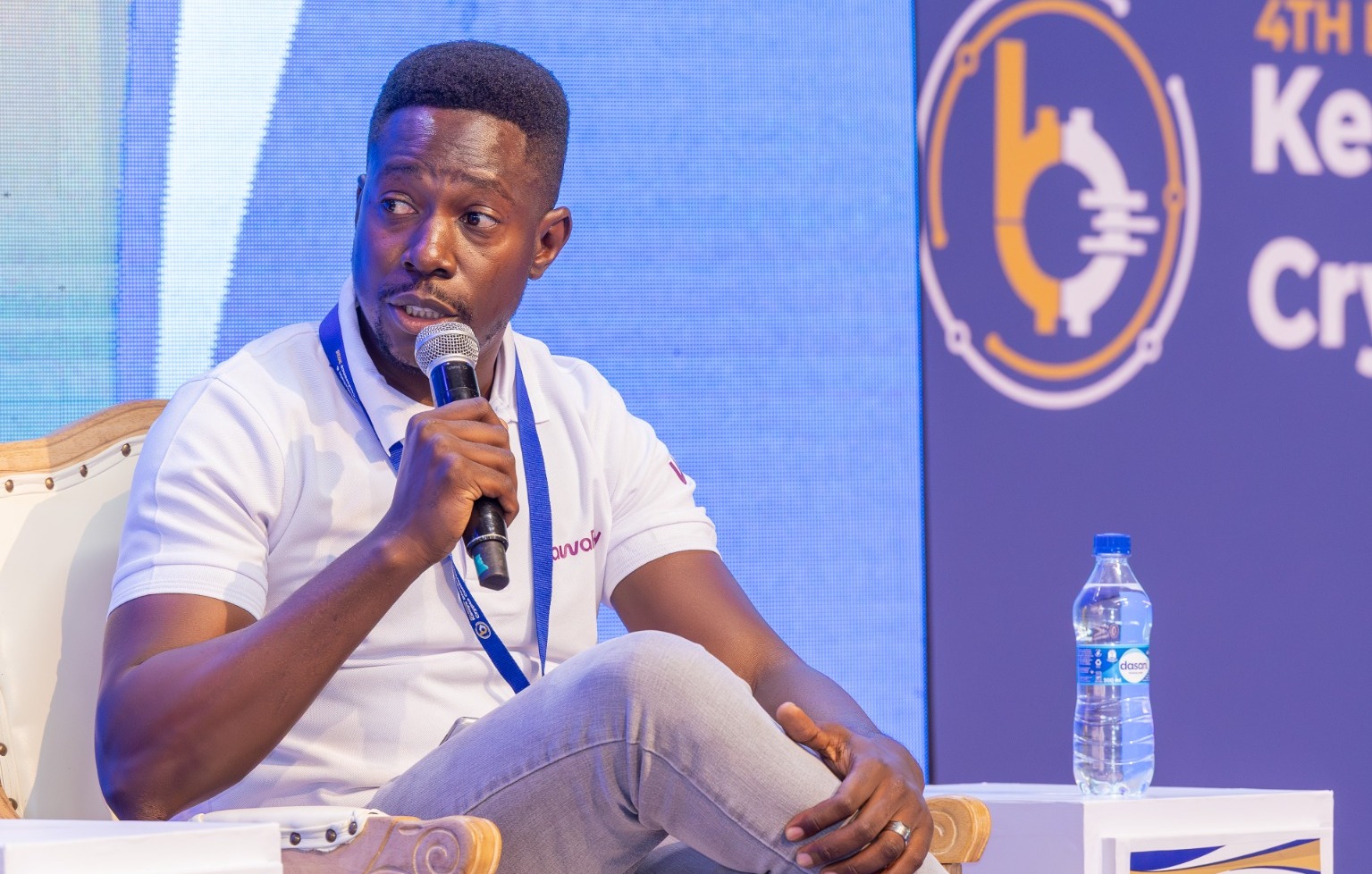
We meet on the sidelines of Road to Moonshot in Nairobi, where PawaPay is one of the event partners. He is difficult to categorise.
Payments executives usually talk in numbers: uptime, transaction values, fraud rates, APIs. Omany reaches instead for stories. Ask about financial inclusion, and he talks about a Bolt driver waiting to pay school fees. Ask about reliability, and he remembers a GiveDirectly—a non-profit that helps donors send money—recipient whose cash transfer could not afford to fail. Ask about leadership, and he quotes a mentor and not a management book.
The longer we talk, the clearer it becomes that he does not think of payments as moving money. He thinks of them as moving trust.
That may explain why the most interesting thing about Omany is not that he helps oversee one of Africa’s busiest payment networks. It’s that, after all these years and all these careers, he still approaches business like the curious boy from Molo, a small agricultural town 250km west of Nairobi, who kept asking why.
Our conversation wanders far beyond payments. We talk about growing up in Molo, teaching French, why Africa’s payments revolution is still unfinished, and why he believes the best infrastructure is the kind nobody notices.
This interview has been edited for length and clarity.
Let’s begin before fintech. What sort of child were you? What fascinated you growing up, and what kind of family shaped you?
Molo. That’s where it starts. A small farming town in the Rift Valley, a couple of hundred kilometres from Nairobi, and famously cold. People don’t always believe me when I tell them there are places in Kenya where you can see your breath in July. It was quiet, and Nairobi felt very far away.
My family was a normal Kenyan family, and I mean that in the best sense. Nothing dramatic, nothing that would make a good founder origin story. What they gave me was room to be curious. I was the child who asked why about everything and took things apart to see how they worked, usually without permission and often without successfully putting them back together.
That instinct never left. Everything I’ve done since, and I’ve done a lot of different things, comes back to the same reflex: here is a problem, let’s figure it out.
Was there a moment when you realised business, or solving commercial problems, was more exciting than following a conventional career?
It crept up on me rather than arriving as one big moment. Believe it or not, I’ve been a teacher. I taught French and worked as a translator. I’ve done communications for a government fund. Then I spent time at Booking.com managing finance across Francophone Africa, calling hotel owners from Dakar to Antananarivo about unpaid invoices.
Somewhere in those calls, I noticed I wasn’t tired at the end of the day. Every invoice was a puzzle. Sometimes it was a cash-flow problem, sometimes a currency problem, sometimes purely a trust problem. Untangling it felt a lot like teaching, actually. You meet people where they are and move them somewhere better.
Once I saw that, the idea of a conventional career stopped being interesting. I never really followed conventional career advice anyway.
What advice did you ignore when you were younger, and would you make the same decision today?
The advice is to pick one lane and stay in it. Everyone tells you to specialise early. I ignored that completely, and my brother deserves the credit. He told me to be a master in B.A. Not Business Administration. Be Anything.
So I have been a teacher, a communications person, a finance manager, a customer success lead, a strategic operations manager, a partnerships manager, and now a country director running Kenya and South Sudan for PawaPay. Every one of those looked like a detour at the time and turned out to be preparation.
Would I make the same decision today? Faster.
Looking back, which failure taught you more than any promotion ever did?
There was a time we spotted a problem on a partner’s network before their own team did. Our monitoring picked up a pattern that usually comes before a bigger degradation, so we made the call, rerouted traffic, and flagged it to them. Technically, we were completely right. Two hours later, it played out exactly as predicted.
But the way we delivered it made the partner feel accused rather than supported. The awkwardness of that conversation took longer to repair than the incident itself. Being right was not enough.
That failure crystallised something I now hold as a rule: people care about how you made them feel more than almost anything else, even in business. A merchant remembers the support team that solved their issue in record time. A partner remembers that you reached out when their CEO was unwell. Nobody frames the invoice. We are in the business of being human. No promotion teaches you that. Failure does.
You’ve worked through different phases of Africa’s payments evolution. What has surprised you most about how money actually moves across the continent? Not what reports say, but what you’ve personally witnessed.
How impatient this continent is, in the best possible way. Africans love speed. Fast payments, reliable payments. A trader in Kinshasa and a farmer in Addis Ababa have the same expectation: money should move now, and it should arrive complete. That expectation cuts across culture, language, everything. I’d argue it’s the foundation the continent’s success will be built on, because when things aren’t fast enough, we fix them.
The second surprise is how little transfers between markets. What works in Kenya does not automatically work next door. Every market has its own peculiarity, and our solutions have to be built for that peculiarity. There is no one-size-fits-all, however much investor decks wish there were.
And the third thing, which no report captures: the system doesn’t break in big, dramatic ways. At the volumes we handle, roughly five million transactions a day, it’s timeouts, missed PIN prompts, confirmations that don’t come through cleanly. The real work is the small stuff, done well, every single day.
If I spent a day shadowing you, what would surprise me? How much of your job is meetings, politics, spreadsheets, crisis management, relationship building, or simply waiting?
How unglamorous it is, probably. My job on any given day is doing whatever needs to get done for payments to move. Some days, that’s a commercial negotiation with a telco. Some days, it’s sitting with analysis until something gets figured out. Some days it’s a regulator meeting, or unblocking an escalation between two teams that have never met.
And a surprising amount of it is waiting. Waiting for a licence, for a signature, for a bank committee to come back. The skill nobody tells you about is knowing which wait to accept and which one to chase.
Also: far more WhatsApp than any corporate strategy document would ever admit.
You sit between regulators, banks, merchants, and fintechs. Who is the hardest constituency to satisfy, and why?
Banks, and I say that with affection. Regulators get a bad reputation, but in Kenya, they are actually engaging, asking good questions. Fintechs move fast because it’s existential for them. Merchants are the easiest of all to satisfy: give them predictability, and they’ll build a business on you.
Banks sit on infrastructure that this ecosystem badly needs, but many still treat these rails as a side project rather than core infrastructure. The incentives inside a bank reward caution, so timelines stretch and opportunities go cold. It’s not malice; it’s structure.
We’ve had a decade of talking about interoperability. The next phase is delivering it, and in Kenya, the regulators have done their part. The next step is banks.
Kenya is often presented as Africa’s fintech success story. What does the outside world misunderstand about this market?
That the story is finished. M-Pesa moved $322 billion in the last financial year, and mobile money penetration is at 91%, the highest in the world, so people assume Kenya is a solved market. It’s the opposite. That scale is where the hard work starts. A market this developed punishes you differently: customers are sophisticated, tolerance for failure is close to zero, and this market has always punished the slow.
The other misunderstanding is treating Kenya as a template. Kenya is an inspiration, not a blueprint and not the limit. What worked here worked because of very specific things: the operator landscape, the agent network, and the regulatory posture. I’ve watched people try to copy-paste the model into other markets and learn expensive lessons. Each market needs its own answer.
At PawaPay, what keeps you awake at night? Fraud? Regulation? FX? Competition? Infrastructure? Something else entirely?
Not infrastructure, and I’m not being arrogant about it. We handle around five million transactions a day with a 99.9% uptime service level agreement (SLA). The tech is the part of my life I trust most.
What keeps me alert is the part we don’t control. Regulation can shift under you overnight, and in this business, a licencing question in one market becomes a continental conversation very quickly. And trust. Trust with regulators, banks, telcos, and merchants takes years to build, and one badly handled incident can dent it.
So I sleep fine on the technology. It’s the human systems around it that I keep watch on.
Every payments company talks about financial inclusion. Tell me about a customer or merchant whose story genuinely changed how you think about the business.
Two.
GiveDirectly does something beautifully simple: it sends cash directly to people who need it, and we help deliver that money into mobile wallets across the continent. When a payout fails there, it is not a reconciliation line. It’s a family. That reframed the word reliability for me permanently.
The other is Bolt. From the outside, it’s a big tech client on a slide. Up close, a payout to a Bolt driver is a man finishing a long shift and paying school fees the same day. When people ask me what financial inclusion means in practice, it’s that. Not a slogan on a conference banner. A driver getting his money on time, every time, so he can take care of his family.
Have you ever made a commercial decision that looked wrong at the time but later proved right?
Deciding not to compete on price. In this market, that decision looks wrong on a weekly basis. You lose deals to cheaper offers, and you have to sit with that, explain it internally, and hold the line.
We chose to be the most predictable rather than the cheapest, and to say so openly. Over time, the Chief Finance Officers (CFOs) came around because failed payments, unclear statuses, and reconciliation gaps cost far more than any pricing difference ever will. What a serious merchant actually buys is predictable success rates, clear final status, and settlement they can model.
You don’t build a business on price. You build it on predictability. Some of the merchants who left over price are back.
Leadership can be lonely. Who tells you when you’re wrong, and how do you make difficult decisions when opinions are divided?
I’ve been lucky with mentors, and one of them gave me a rule I’ve never let go of: no matter how high you get, always have somebody you are accountable to, someone who can guide you and correct you. So I’ve deliberately never allowed myself to be the smartest person in my own room. My team knows they can challenge me, and they use the privilege generously.
When opinions are divided, I go back to one question: what actually matters to the customer here? It’s remarkable how quickly a disagreement dissolves when you put the customer at the centre instead of the org chart. Innovate with empathy, and half your strategy debates settle themselves.
And when it stays divided, I decide, and I own it. Divided and slow is worse than decided and wrong, because at least decided and wrong teaches you something.
Fintech is full of buzzwords: embedded finance, stablecoins, AI. Which trend do you think will genuinely reshape African payments over the next decade, and which one is mostly hype?
Stablecoins are the real ones, but not in the way most people pitch them. They will not change how a customer in Kenya pays. She will pay with M-PESA tomorrow, same as today. What stablecoins change is everything behind that payment: treasury, settlement, moving value between markets where the traditional routes are slow or constrained. That’s the missing piece that makes mobile money truly continental instead of twenty brilliant national systems that don’t talk to each other.
The hype isn’t really a technology; it’s a habit: the belief that buying a tool fixes a broken process. You see it most with AI right now. AI itself is real, and we use it. But bolt it onto a slow organisation, and all you’ve done is discover your problems faster while responding to them just as slowly. The tool was never the hard part.
If M-Pesa were being built today instead of in 2007, what would look completely different?
The genius would survive. Meeting people exactly where they were, on a feature phone, through a human agent they trusted, was one of the great product decisions of this century, and I don’t say that lightly.
What would look different is the architecture around it. Built today, it would be API-first and interoperable from day one rather than a walled garden that opened up slowly. Settlement would be designed as continental from the start, not national with cross-border bolted on later. And the wallet itself would be built knowing that customers will eventually hold more than one kind of value in it, including digital dollars.
But the winning companies of the next decade will be the ones who ask the original M-Pesa question again, honestly: where are people actually, and what do they actually need? The answer has changed. The question hasn’t.
If tomorrow someone offered you the CEO role at any African fintech, would you take it, or have you reached a point where purpose matters more than title?
I’d ask one question: what’s the problem? If the problem is worth solving, the title is irrelevant. If it isn’t, no title rescues it.
Purpose over title, always. Here’s my test: most people don’t even realise Bill Gates hasn’t been Microsoft’s CEO for years, yet his name is still synonymous with it and will remain so. Nobody remembers titles. Everybody remembers innovation.
Right now, I’m sitting exactly where the problem I care about lives, in the middle of how a billion people pay. So no, I’m not shopping for a business card.
Twenty years from now, what do you hope people will say Freddie Omany changed, not just at PawaPay, but in Africa’s financial system?
First, I hope they get the spelling right. It’s Freddie.
Beyond that, I hope they don’t talk about titles at all, because nobody remembers those. I hope they say that somewhere along the way, payments in Africa stopped being a story and just became something that works. Money is moving across this continent as easily as a conversation does. Boring, in other words. Boring is the highest compliment infrastructure can ever receive, and I’d be proud if our obsession with reliability contributed to that.
And on a human level, I hope the people I worked with, the teams, the partners, the merchant whose issue got fixed at midnight, remember how it felt to work together. Because in the end, that’s the part people actually keep.
True scale demands moving beyond surface-level integrations to robust execution. We’ve filtered the noise out of Moonshot 2026, optimising the conference strictly for high-calibre connections between startup founders, global financial operators, enterprise leaders and individuals rewiring Africa’s technical frameworks. Get 20% off Early Bird tickets for a limited time.