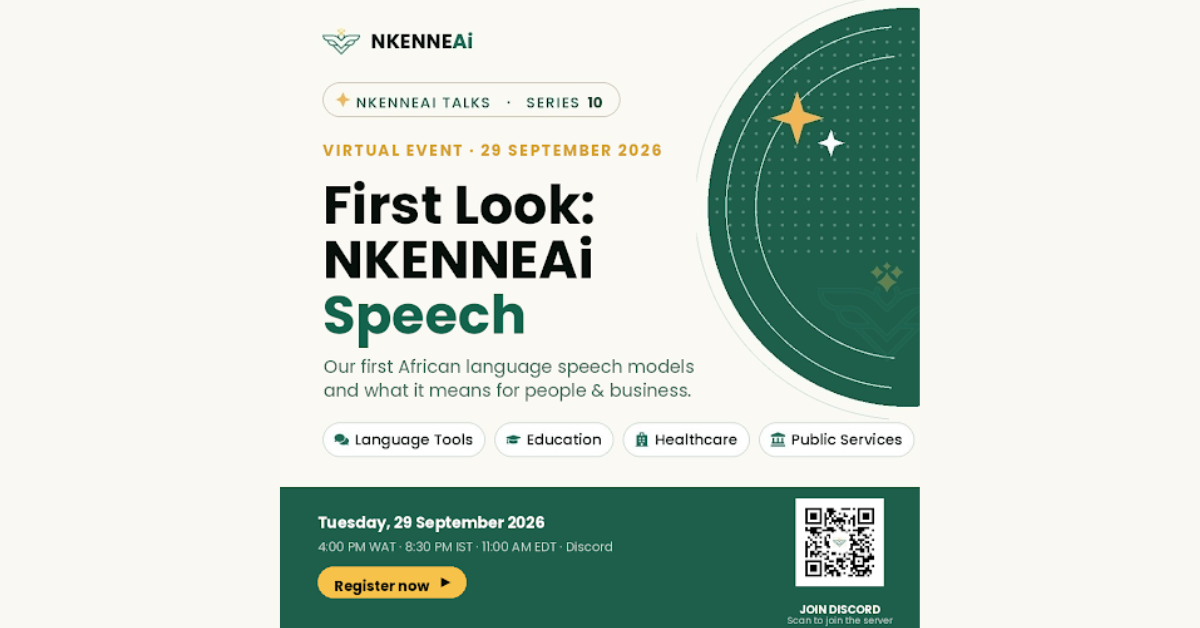
The NSF-backed company adds Speech-to-Text and Text-to-Speech to its translation platform, with a live public demo on 29 September. Register free here.
NKENNEAi, the AI infrastructure arm of African language learning platform NKENNE, today announced its first speech models: Speech-to-Text (STT) and Text-to-Speech (TTS), launching in Swahili. The models join NKENNEAi’s existing text translation models and will be shown publicly for the first time at a free live event on 29 September 2026.
The launch addresses a widening gap in global AI. Voice assistants, transcription tools and customer service systems now work well in English and other widely supported languages but often fail for the hundreds of millions of Africans who speak African languages. That gap matters most where voice is essential: health clinics, government services, farming advisories and call centres, where people are more likely to speak than to type.
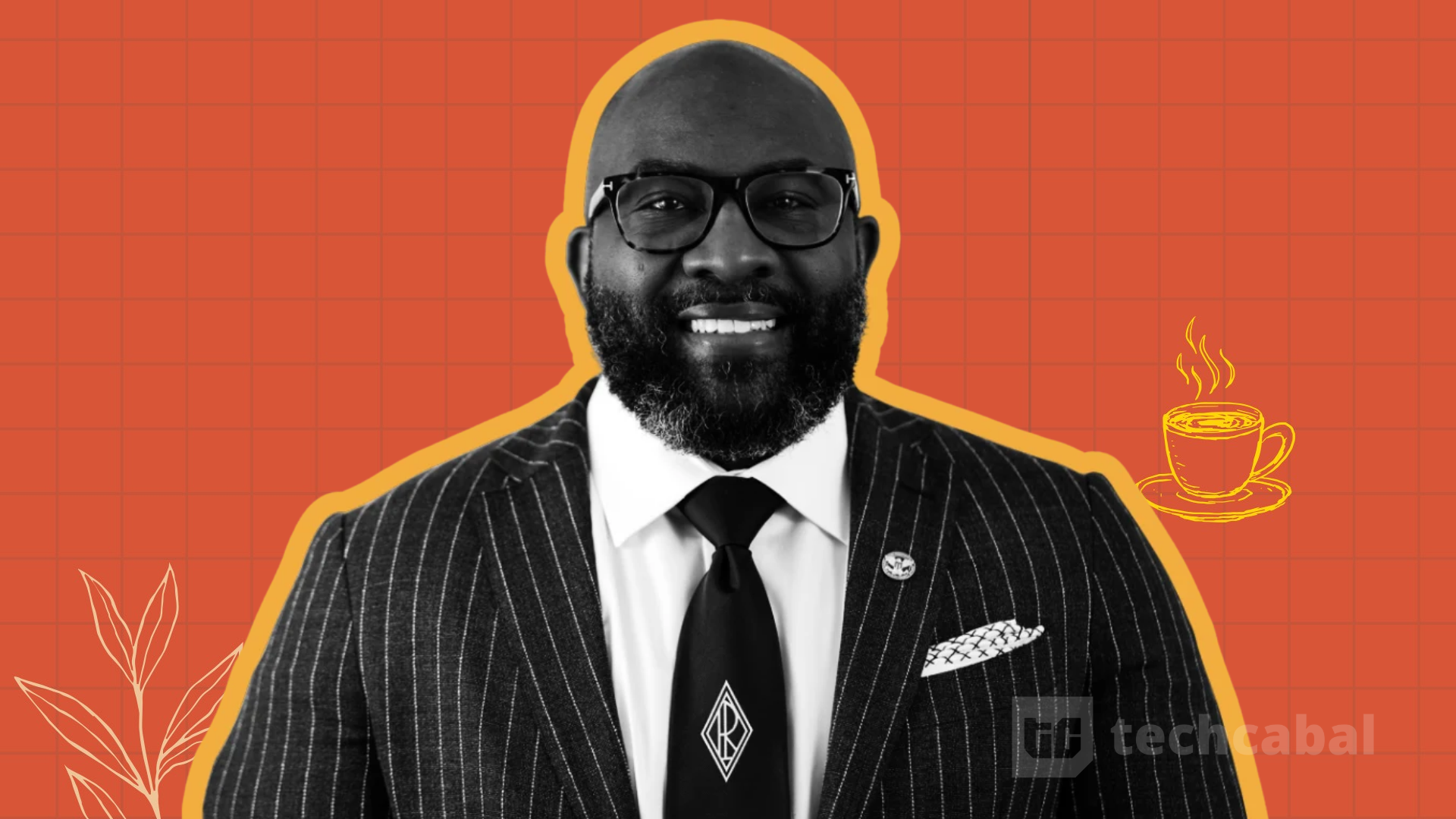
“For most Africans, the most natural way to use technology is to talk to it,” said Michael Odokara-Okigbo, Founder and CEO of NKENNE and NKENNEAi. “Text translation was our first step. Speech is where AI starts to reach everyone else: the farmer, the patient, the grandmother who has never typed a search query. Swahili is our first language, not our last.”
Built for how Africans actually speak
General-purpose speech models are usually trained on large amounts of data scraped from the web, which underrepresents African languages and flattens how they are really spoken. NKENNEAi takes a different approach. Its models are built on a data pipeline designed around two features that generic systems tend to miss: tone and dialect.
Many African languages are tonal, meaning the pitch of a syllable changes the meaning of a word. In Yoruba and Igbo, words spelled the same way can mean entirely different things depending on tone. A model that ignores tone will mishear speech and mispronounce text. NKENNEAi’s pipeline annotates tone in its training data and has native speakers validate it, a foundation that will carry into the company’s upcoming Yoruba and Igbo speech releases.
Dialect variation is the other challenge. Swahili is spoken by more than 100 million people across East and Central Africa, and it sounds different in Zanzibar, Mombasa, Nairobi and Kinshasa. Speakers also regularly mix it with English and local languages. NKENNEAi’s pipeline tracks the regional and dialect background of its speech data and uses native-speaker review so its models reflect real speech rather than a single textbook standard.
NKENNEAi’s speech models were trained on more than 65,000 hours of audio.
“Accuracy in African languages isn’t only a question of more data. It’s a question of the right data,” said Shaikh Abdul Bari, Lead AI Engineer at NKENNEAi. “We designed our pipeline so that tone, dialect and cultural context are part of training from day one, not problems to patch later.”
Backed by the NSF, building with NITDA and T2 Mobile
NKENNEAi’s research is supported by a $1 million Small Business Innovation Research (SBIR) Phase II award from the U.S. National Science Foundation for its AI-enabled African language database.
In Nigeria, NKENNEAi has partnered with the National Information Technology Development Agency (NITDA) on edge AI: African language models that run offline, directly on devices, so communities with limited or no internet access can still use language technology. The partnership was announced at a meeting between NKENNEAi and NITDA.
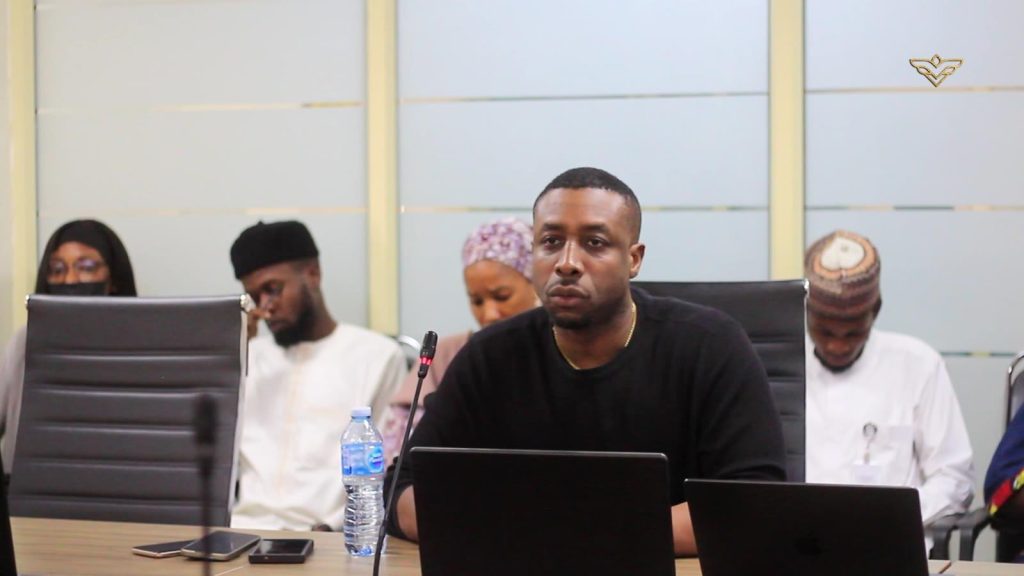
Watch the NKENNEAi and NITDA partnership meeting HERE.
NKENNEAi has also partnered with Nigerian telecom operator T2 Mobile to bring local-language customer experience to mobile subscribers.
From learning app to AI infrastructure
NKENNEAi grew out of NKENNE, a language learning app used by more than 400,000 learners across 15 African languages. Years of building courses with native-speaker linguists gave the company a deep base of high-quality, validated language data, which now powers its AI products.
NKENNEAi offers translation, speech-to-text and text-to-speech to governments, healthcare providers, telecom operators, financial services companies and NGOs that need to serve people in their own languages. Nigerian Pidgin, Yoruba, Igbo and Somali speech models are planned next.
Hear it first. Live, free, 29 September
The public will hear NKENNEAi’s Swahili models for the first time at NKENNEAi Talks on Tuesday, 29 September 2026, at 4:00 PM WAT / 11:00 AM EDT, led by Shaikh Abdul Bari. Registered attendees will:
- Watch the Swahili models speak and transcribe live
- Get a first look at the languages coming next
- Put questions directly to the team that built them
- Be eligible for surprises and giveaways, for live attendees only
Places are free but limited to registered attendees.
Reserve your place: https://nkenneai.webinarninja.com/live-webinars/10840634/register
About NKENNEAi
NKENNEAi builds AI infrastructure for African languages, including translation, speech-to-text and text-to-speech, for businesses, governments and organisations across Africa and the diaspora. It is the AI arm of NKENNE, the African language learning platform used by more than 400,000 learners. Learn more at www.nkenne.ai.