Last year, 37 African tech startups raised a total of $767 million in 43 debt rounds, indicating the rise of the debt funding class and increasing global lender confidence in African tech, per Partech’s report on venture capital funding in Africa.
“Africa’s tech ecosystem has set its sights on another asset class to help fuel growth,” the report reads. “While debt funding remains widely underreported and undisclosed, it is growing to prominence in the fundraising strategy of African startups.”
It’s the first time Partech will be reporting on debt in its annual report. According to its findings, Nigerian startups raised 45% or $345 million of the total amount of debt recorded, the fintech sector accounted for over 54%, and there were 34 unique debt investors, with Lendable and the IFC being some of the most active.
“As the [African tech startup] ecosystem matures, more companies will do a combination of debt and equity [funding rounds],” said Dare Okoudjou, CEO and founder of MFS Africa in October 2021. Okoudjou’s statement came after the pan-African fintech giant closed a $100 million Series C financing round—split between $70 million equity and $30 million debt.
Most startups looking to raise money during their formative years typically consider equity, which requires that founders give away shares in their business in exchange for capital. At that stage, the venture is extremely risky and thus doesn’t appeal to most financing options (like debt that requires repayment at an agreed-upon date with interest) except venture capital.
“Debt investors usually look for predictable cash flows or transferable assets (such as real estate) to secure their exposures. For most startups, both of these are in short supply,” Rahul Shah, Head of Financials Equity Research at Tellimer, told TechCabal in an interview.
Because the majority of startups are early-stage, debt takes up a small slice of the broader market for private tech financing. According to Ayobamigbe Teriba, an ex-analyst at Ingressive Capital, debt financing is viable to businesses but tricky.
“A lot of [early-stage] companies don’t consider it [debt] because of the criteria tied to accessing them, which is different from equity,” he said. “While it allows founders retain ownership, access criteria can be more tedious than equity funding that’s been the anchor in the ecosystem and is based on stages of the startups.”
But as an ecosystem matures and growing startups choose to stay private longer, funding alternatives like debt become viable and interest grows. “As startups grow and achieve some predictability, debt financing can be a useful instrument,” the Partech report notes. “It helps accelerate growth while limiting dilution from equity rounds.”
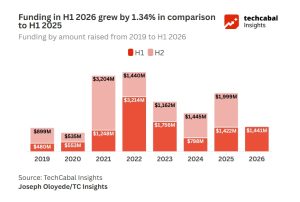
There’s no available data on how much debt African startups have attracted over the years. But several funding announcements last year—when Africa’s venture capital funding hit the $5 billion mark—suggest 2021 saw an acceleration in serious appetite for debt financing. Apart from MFS Africa, Moove, Trella, and TradeDepot are some of the startups that announced debt rounds.
Because the ecosystem is at a stage where further financing is needed by many fast-growing startups, more debt financing announcements should be expected this year, predicts Kunle Akinola, an investment analyst at Lagos-based private equity firm Platform Capital.
“Africa minted 5 new unicorns in 2021, which indicates growth. As a founder of one of these or another growth-stage company, you probably don’t want to be issuing equity unnecessarily to finance acquisitions or capital expenses during growth and expansion,” Akinola said.
The Partech report notes, in addition, that strategic debt players have launched dedicated debt funds targeted to emerging markets – Africa in particular.
Last October, emerging markets-focused lender Lendable announced a plan to raise a $100 million fund targeting African and Asian fintech companies. It participated in MFS Africa’s $100 million funding round with $30 million debt and has backed many startups in Africa.
Development finance institutions like the United Kingdom’s CDC, the Dutch development bank, and the IFC are also leaders in this financing segment. The latter has so far deployed debt to back TradeDepot, Bolt, Kobo360, etc. “I expect we’ll see a major uptick in the deployment of debt by existing players and new entrants,” Teriba said.
With the growing uptick in debt funding activity in Africa, which companies are best suited for the financing option?
Per Rahul Shah, industries with debt-friendly assets or business models have a better chance of accessing this financing source. “For example, financial companies looking to fund their lending, particularly where they can point to strong risk management to reduce the uncertainty in repayment cashflows,” he said.
In MFS Africa’s case, it raised debt funding to finance the floats needed for real-time settlements. “We realized we don’t need to raise equity since there is a debt market for that,” the CEO said at the time.
Another emerging sector with access to debt financing is renewable energy: physical infrastructure (such as solar panels) and supply contracts can give debt investors the comfort that they will be repaid. In this space, West Africa-focused solar providers like Starsight and Daystar Power have largely leveraged debt to fund operations.
“In such cases, debt financing can make more sense than equity financing; asset and liability cash flows are better-matched, and returns to equity-holders can be enhanced,” the Tellimer head said.
Short-term debt financing can also be accessed if it is backed by inventory; for example, e-commerce retailers and their suppliers. In contrast, companies with non-transferable intangible assets (such as early-stage biotech) would likely struggle to obtain debt finance.
Essentially, debt is hinged on the cash flow or revenue models of companies. Once the models become reliable and the product-market fit is underlined, debt investors become more open to funding a startup.
Based on the ongoing trend, Africa is poised to witness a surge in founders seeking debt financing for their startups in the coming years.
“We are starting from a very low base; in that sense, volumes can only increase from here,” Shah said. “As the current cadre of African startups matures, they will become more attractive to debt investors given they have demonstrable track records. And as the continent’s startup debt investors become more experienced, their risk appetite will improve.”
Teriba adds that more startups are likely to engage capital markets, institutional lenders for credit to “expand and stabilise their business offerings.”
While the near-term growth prospects are strong, a key medium-term headwind is the global monetary tightening cycle as developed countries, where the bulk of Africa’s startup funding comes from, roll back monetary measures meant to help businesses tide over the COVID-19 pandemic.
“The era of cheap and plentiful money is coming to an end, and that will ultimately constrain end-investor appetite for the riskiest forms of debt,” Shah added.
If you enjoyed reading this article, please share it in your WhatsApp groups and Telegram channels.