
Eric Okechukwu started InterSpace as a music publishing company in 2021. Five years later, it is a distribution technology group with staff across five countries, over 15,000 artists, more than 100 label clients, and a newly launched enterprise white-label platform called ToneGrid that already has 24 partners running on its backend. The InterSpace Group, announced today, is the holding structure that formalizes what the company quietly became along the way.
The timing matters. Independent music distribution is in the middle of a painful consolidation. Downtown Music Holdings is restructuring CD Baby and reportedly shopping itself to private equity. DistroKid cut half its unionized staff. UMG and Warner have each shed hundreds of roles. The majors are pulling infrastructure inward. The aggregator layer is thinning. And into that landscape steps a company that took none of the usual routes to get here: no venture capital, no acquisition roll-up, no executive team imported from a major label.
What InterSpace actually built
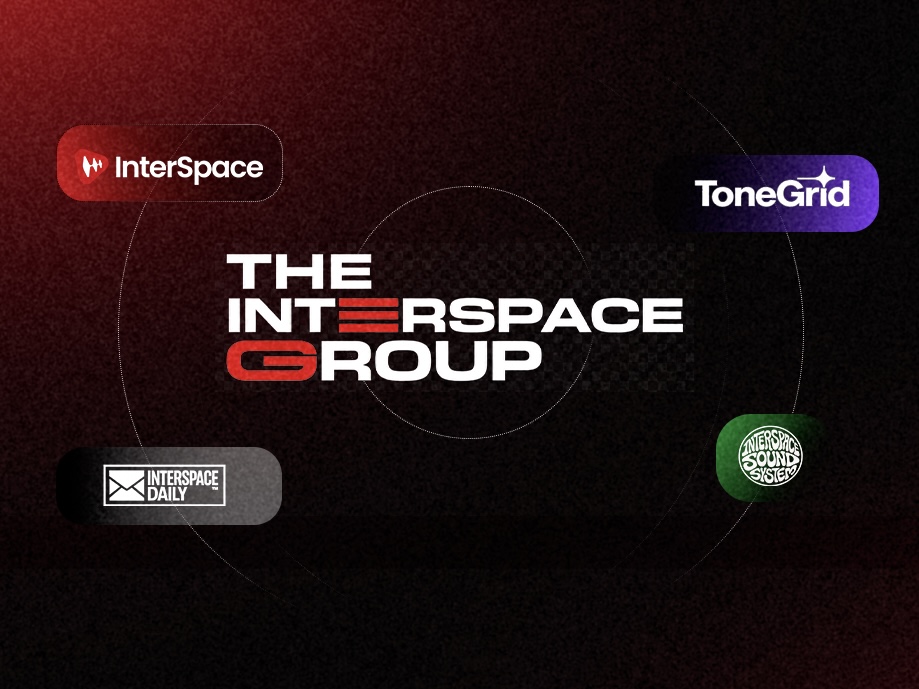
The InterSpace Group is a Port Harcourt-based holding company sitting over five entities: InterSpace Distribution, the direct-to-artist distribution platform; ToneGrid, the white-label distribution backend; InterSpace Sound System, an online radio and DJ curation platform; InterSpace Daily, a music business editorial arm; and InterSpace SmartLinks, a smart-link product acquired in April 2026.
InterSpace Distribution has been running since 2021 and now serves over 15,000 artists and more than 100 labels, with strong catalogue growth in Asia and Latin America alongside its African base. It routes releases through a partner network to DSPs globally, runs its own content management system, and recently upgraded its delivery pipeline to DDEX ERN 4.3 — the same standard that Spotify uses in its supply chain. The group employs more than ten people across Nigeria, India, Singapore, South Africa, and the United States, with the majority of staff and board members based in Nigeria.
Okechukwu, a self-taught developer, architected the technology stack and led its development over nearly two years alongside a small engineering team, building the platform on infrastructure the group configured internally. The result is a company that owns its entire technical foundation without reliance on outside capital and carries none of the overhead or investor pressure currently forcing layoffs across the sector.
ToneGrid and the white-label bet
ToneGrid is the product that turns InterSpace from a distribution company into an infrastructure company. It is an enterprise white-label SaaS platform: a label, sub-distributor, or music-tech startup gets a fully branded distribution operation, their logo, their colours, their domain, sitting on top of InterSpace’s delivery infrastructure. DSP connections, ISRC and UPC handling, royalty split configuration at the release and artist level, and YouTube Content ID come standard.
The platform is not chasing the DistroKid or TuneCore user. It is targeting the label that wants to offer its own branded distribution to its roster. The sub-distributor operating across a region. The music-tech startup building an analytics or career-management product that wants distribution as an embedded feature rather than a redirect to a third party.
“We built ToneGrid because we kept seeing the same problem from different directions,” Okechukwu said. “Labels wanted their own branded distribution operation. Platforms wanted distribution as a feature, not a redirect. Nobody wanted to reinvent DSP delivery and rights infrastructure to get there.”
The numbers suggest the pitch is landing. ToneGrid has already onboarded 24 white-label clients since launch, a notable pace for an enterprise product from a bootstrapped company operating outside the traditional music-tech corridors of London, Berlin, and New York.
Building the partnership layer
The group announcement comes alongside two strategic partnerships that extend InterSpace’s platform beyond core distribution.
The first is with ACRCloud, the audio fingerprinting and content recognition company. The deal gives InterSpace enhanced content protection capabilities across its platform, a meaningful addition for a company asking labels to route their entire catalogue pipeline through its infrastructure. Content identification and anti-piracy tooling are increasingly table stakes for any distributor trying to earn trust from rights holders, and the ACRCloud integration addresses that directly.
The second is with Rotor Videos, the automated music video creation platform owned by LyricFind. The partnership gives artists and labels on InterSpace’s platform access to Rotor’s video and lyric video generation tools, adding a visual content layer to what has been a primarily audio-focused delivery pipeline. For a distribution company positioning itself as full-stack infrastructure, video tooling fills a gap that artists would otherwise solve with third-party services outside the platform. It also strengthens ToneGrid’s pitch to white-label clients: labels licensing the backend get video creation capabilities bundled into the platform they offer their artists, rather than having to source or build that integration themselves.
Together, the two deals signal a deliberate strategy: rather than building every feature internally, InterSpace is assembling a partnership layer around its core delivery infrastructure. Content protection from ACRCloud, video tooling from Rotor, smart links from the April acquisition. The approach lets a small team extend its platform’s surface area without the engineering cost of building each capability from scratch.
Where ToneGrid fits in the competitive picture
White-label distribution is not new. FUGA, owned by Downtown Music Holdings, is the established player, powering distribution backends for companies across the independent sector. Revelator offers a similar proposition. Both are enterprise-focused, with deal structures built around minimum guarantees and revenue shares negotiated case by case.
ToneGrid is aiming at a different slice of the market: labels, regional distributors, and startups that want their own branded distribution operation but would not clear the revenue thresholds or minimum guarantees that an enterprise deal with FUGA or Revelator typically requires. That gap is real. Over the past two years, the independent sector has watched the aggregator layer consolidate and the majors restructure. A growing number of labels are now asking whether they should control their own distribution infrastructure rather than renting it from a platform whose current form may not last.
The risk is the same one every infrastructure play faces. DSP connections, royalty accounting, and rights management are table stakes. The harder part is trust. Labels are handing over their catalogue pipeline to a backend they do not control. A five-year-old, self-funded company based in Port Harcourt, built largely by one person, has to clear a different credibility bar than a Downtown-owned entity with decades of label relationships. The DDEX ERN 4.3 upgrade, the ACRCloud partnership, and the Rotor Videos integration are steps toward closing that credibility gap, but the gap is still there.
The counterargument: the technology stack is real and has been running in production for five years across 15,000 artists. And the bootstrapped approach means InterSpace is not burning through a runway or answering to investors who need a liquidity event, the exact pressures that are currently reshaping its competitors.
Why a holding company, and why now
The group structure separates the direct-to-artist business from the B2B infrastructure business. InterSpace Distribution and ToneGrid have different customer bases, different sales motions, and different unit economics. Keeping them under one product umbrella would have muddied both stories. At the holding company level, InterSpace can pursue investment, partnerships, and expansion without tying every conversation to a single product line.
ToneGrid brings a fundamentally different revenue model into the group: recurring SaaS rather than per-release distribution fees. That shift arrives at a moment when the independent distribution sector is in flux and labels are actively re-evaluating their infrastructure options.
The SmartLinks acquisition, closed in April 2026, rounds out the product set with a unified release-linking tool for artist marketing, the kind of feature that distribution platforms increasingly bundle to keep artists inside their ecosystem rather than pushing them toward third-party link services.
The trajectory matters because it explains how a publishing company in Port Harcourt ended up building white-label distribution infrastructure. Okechukwu launched InterSpace in 2021 because he saw a straightforward problem: independent artists and labels across Africa had catalogues but no reliable, affordable pipeline to get their music onto streaming platforms globally. The existing options were too expensive, too slow, or built for markets with different infrastructure realities.
So the company built its own content management system, established DSP relationships through a partner network, and grew its artist base organically. The publishing roots never disappeared, they informed how the distribution platform handled rights, splits, and royalties from day one.
Okechukwu has been named one of Nigeria’s top five music tech founders by YNaija. He describes the group’s operating philosophy as “Don’t Dull”, a Nigerian pidgin phrase that roughly translates to “don’t slow down, don’t lose focus.”
“This isn’t a rebrand,” Okechukwu said. “It’s a recognition of what we’ve actually become. InterSpace Distribution was where this started, but over the last few years we’ve built out infrastructure, tooling, and products that go well beyond distribution alone. Bringing them under one group makes the structure match the reality.”
What comes next
The group has stated its intent to become infrastructure for independent music distribution globally, with particular focus on Africa, Latin America, and Southeast Asia, regions where the major distribution players have thin direct presence and where local labels and distributors are building rosters without their own delivery infrastructure. The platform’s recent catalogue growth in Asia and Latin America suggests those markets are already responding.
ToneGrid’s white-label model is the mechanism: InterSpace’s infrastructure reaches artists through the labels and platforms that adopt it, not only through its own direct-to-artist products. Whether the market buys that proposition at scale is the open question. The company is five years old, self-funded, and competing in a category where the incumbent was just acquired by a private equity-backed consolidator.
With 24 white-label clients already onboarded, 15,000 artists on the platform, a DDEX pipeline matched to Spotify’s delivery standards, content protection through ACRCloud, and video tooling via Rotor Videos, the early infrastructure is there. The question is no longer whether Okechukwu can build the technology. It is whether an African-founded, bootstrapped infrastructure company can earn the trust and scale to become a serious alternative in global music distribution.
“We’re still early,” Okechukwu said. “But the goal has always been bigger than any one product. This structure gives us room to grow into that.”