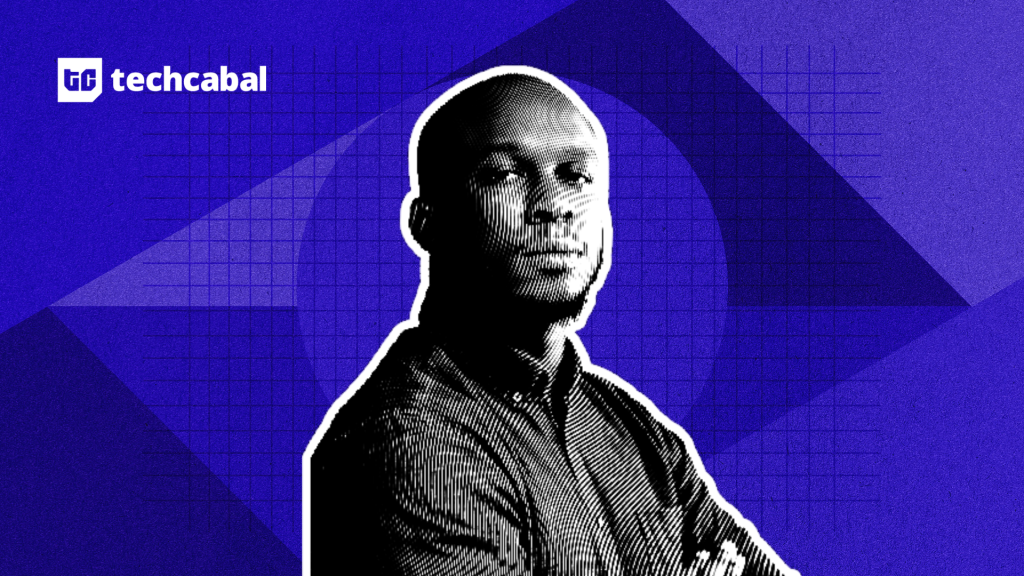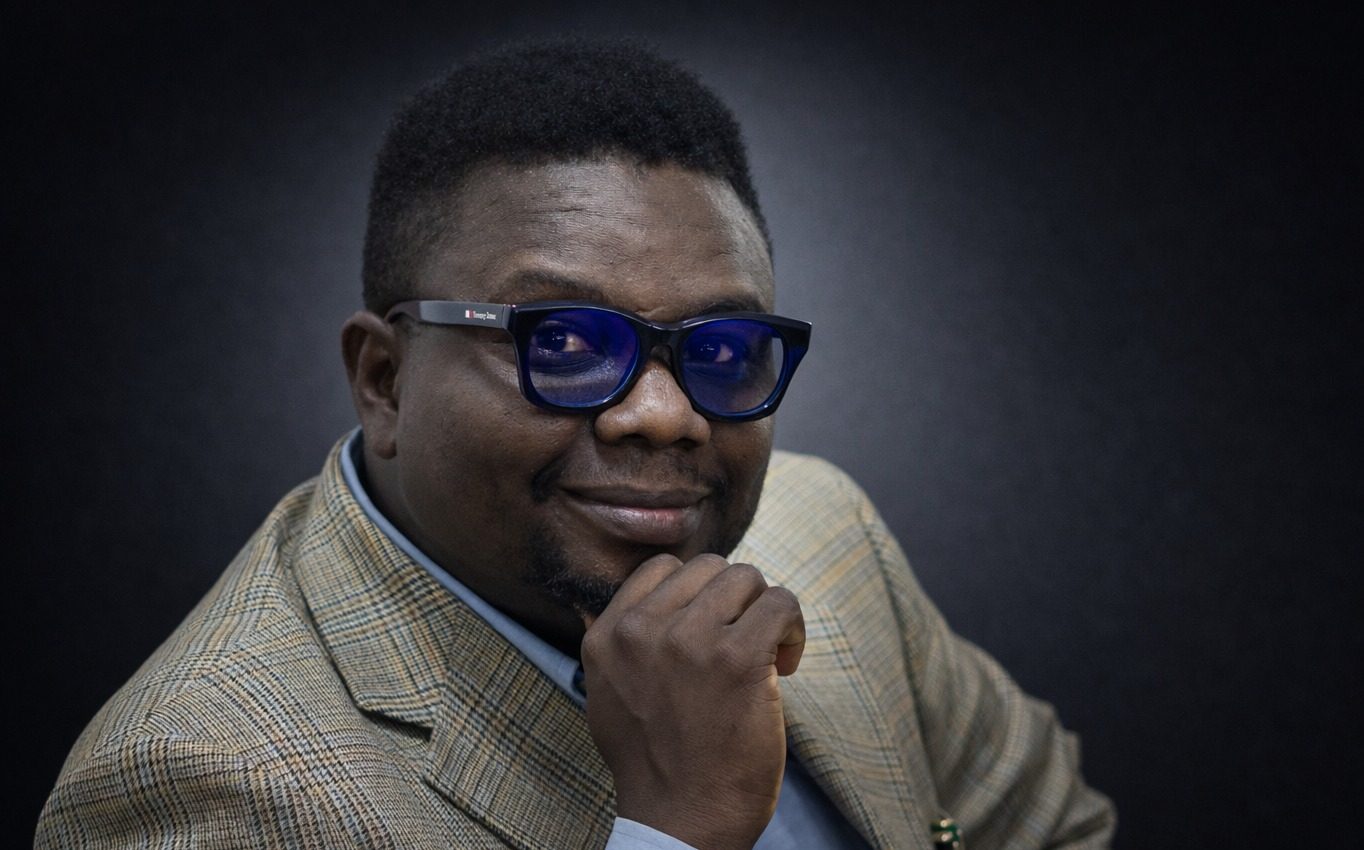
Folajimi spent 10 years studying medicine in a state university, after weathering strikes and accreditation challenges. He spent the next 12 years perfecting the clinical skills and acumen needed to run a large private hospital in Lagos, only to quit at 40 to pursue health documentary filmmaking, travelling around the country with a camera and a small crew. Now he runs Recon Health Media, a health and environment media company, and an AI start-up, AEyeCare.
Your career has cut across diverse fields. What inspired your cross-disciplinary pivots?
I think you will agree with me that life is a journey, and one’s career, being part of one’s life, is also a journey, so it can’t stay in one place. I think one major factor from childhood about me is that I have been passionate about both the sciences and the arts, and up till now, I think it’s a disservice to the learning population to divide them apart. I really don’t see a difference in them per se.
Also, if you try to think just a few steps ahead of your basic needs and aspirations as a person, you will find yourself in a place where your priorities change, and you really want to make the world a better place by providing solutions.
For me, that reflection came in the first few months of my housemanship at Lagos University Teaching Hospital. It occurred to me that the Nigerian patient was really ignorant indeed about their health affairs, and I dare say had been misinformed by the media. Everyone thinks it’s primarily the job of the doctor in the hospital to inform the patient; I disagree; I think it is the job of the media to inform the patient. If the doctor will do it, the doctor has to go into the media space.
People think the healthcare system and infrastructure are our greatest problem. It isn’t, from my perspective; the ignorance of the Nigerian people is the biggest threat in our healthcare sector.
Let me explain: it has been proven in public health that wherever you find ignorance, just around the corner from there, you will find poverty and disease. We call it the vicious cycle of poverty, and I think that ignorance is the weakest link in that cycle. The government is becoming aware of this, unlike two decades ago, but we are yet to put our skin in it as a people and as a government.
If you look at this as a Physician, it will change your worldview from curative practice to a preventive one. Hence the “restless” nature. So you see why I can’t stay in one place.
Was there a defining moment with a patient that convinced you that clinical medicine alone couldn’t solve the health problems you saw?
My very first patient when I arrived in the cardiology unit at LUTH was so happy with me. I was uncertain because this was the first patient I was seeing on my own. So I was doing all the details, listening to everything, taking all the notes, cross-checking with senior colleagues, and then she told me she had never been attended to with such detail in the hospital. She’s still a family friend up till now. Her response boosted my confidence in clearly communicating with patients, and made me realise that communication with patients is actually 50% of the job; the drugs will do the other 50%.
The other defining moment was when a patient came to meet me after a general ward round. [The patient] was trying to say that most doctors were not approachable, but I think it had to do with a bit of empathy. After the ward round, I was the one they approached.
Those two moments were defining, even for my own clinical practice. Patients want you to communicate with them, not just give them drugs. But I realised that being empathetic, despite the load, despite the burden, despite the poor pay, and being able to communicate with patients properly was the hidden secret for a successful medical career. Some patients will test your limits, no doubt, but you have to be steadfast.
Most doctors who leave clinical practice in Nigeria leave the country, also known as japa. Why haven’t you left the country for greener pastures?
I am still in healthcare 100%, its like I moved from clinical practice to a not-so-popular part of Public Health. I will say that medical school training moulds Doctors to be great healthcare workers, not healthcare owners. It is natural for a worker to gravitate to where he can earn the best bucks for his/her services. I do not think it is a Nigerian problem per se. The Global South generally loses to the Global North here. As for me, sincerely, I didn’t give it so much thought. I had always believed one can be successful in Nigeria; you can start a great thing from a small place.
You started Recon Health Media in 2010, and your AI start-up, AEyeCare, in 2023. What has success and impact looked like for you so far? And how has running a business in the country been, compared to if you had run it abroad?
This is a tough one. Running a business anywhere in the world is not a walk in the park. Up to 70% of businesses in the US fail. Healthcare and media are also heavily regulated sectors. One thing is clear: if I were earning a salary, you cannot compare a developed nation to Nigeria, but in running a business, the metrics are different, the maturation period is different, and the stakes are also different. A business in the US is likely to do better when successful because they have a bigger economy, and also a business in the developed world is looking and positioning itself, or rather is better positioned, for the global market compared to a business from Nigeria. As you earlier stated, I appear like a restless fellow; maybe I might consider moving the business abroad to better postion in for global scale. But at the very least, we started here, and we are content with that for now. We can “start” a great thing from a small place.
How have you ensured that you maintained integrity with your health media organisation, Recon Health Media?
I think the best attention is the attention that you can have and sustain. You can only do that with accuracy because trust is a big issue with social media content. If you are playing the long game, you will focus on being trustworthy with engaging, accurate and useful information and not just being sensational. Slow and steady still wins the race even in this information age.
Through AEyeCare, you’re working at the intersection of healthcare technology and innovation. What problem are you trying to solve that traditional healthcare systems have not yet solved?
Moving the healthcare mindset in Nigeria from a curative one to a preventive one. People see doctors and hospitals as places you go when you are sick. We want to change it so that hospitals and doctors are people you should talk to while you are still healthy to prevent illness.
People, by default, think they are healthy because they wake up and can get out of bed and do their daily work. That mindset has been the reason behind thousands of deaths in Nigeria.
At AeyeCare, we are enabling lower-cadre health workers to contribute much more to quality care, and we have an abundance of them. It also falls in line with the federal government’s task-shifting policy, which allows lower-cadre healthcare workers to do some of the things assigned to more senior healthcare workers, to help fill the gap created by the medical brain drain and make more of our people useful. AEyeCare is going to make a lot more people useful in healthcare and more impactful; that’s what we want to deliver.
Has your medical training shaped the way you lead teams, build companies, and make difficult decisions?
If anything, being a clinician has been of tremendous help; you are inclined to make use of data and a logical process to get to a conclusion, and it makes you less likely to jump on emotional bandwagons. You like to see evidence; you want to make decisions based on this; you want to see how things work in real time; it’s sort of ingrained in you to have it that way. You are not quick to guess or assume or trust hearsay. That’s one beauty of it: if you leave clinical practice and go into public health, or into anything else, the fact that you want to follow evidence, you want the data, you want the proof, will always be with you.
In one word, when your career is eventually written about decades from now, what do you hope people will say was your greatest contribution to medicine and to society?
Outstanding
AI is reshaping healthcare, and there’s a growing concern among healthcare stakeholders that AI may perhaps replace doctors. Do you believe physicians should fear AI, or should they fear physicians who know how to use AI?
I think the influence of AI in healthcare is somehow exaggerated. AI has a role in healthcare, but human guidance will always be needed. AI is going to make healthcare workers deliver faster, better and more relevant output. AI is going to allow lower-cadre healthcare workers to contribute much more to the delivery of quality healthcare. It’s only in certain fields where you might feel AI would completely dislodge a skill set, but for those skill sets, doctors can actually upgrade their expertise and be two or three steps ahead of AI. If you feel what you’re doing right now can be replaced by AI, the onus is on you to take your career two or three steps further and remain relevant. But overall, AI is a welcome development in healthcare.
In one word, if healthcare communication disappeared tomorrow, what do you think would happen to public health over the next decade?
Catastrophe
If a young doctor is looking to pivot from medicine, just like you have, what questions would you ask before encouraging or discouraging that decision?
Will I need to probe and ask him questions? What drives you? What are you chasing? What is chasing you? And before he answers, I will add this for clarification. To thyself, O man, be true.