
Good morning. ☀️️
Last week, TechCabal Insights published a data report on Africa’s climate-tech sector, and the most revealing detail is that attention is returning to the sector: funding grew 57% from the previous year in 2025. After a long lull, climate-tech startups are back on investors’ radar, raising bigger questions about what’s quietly changing in the market—and why now.
We answer those questions in our report brief. Read it here now.

Streaming
MultiChoice plans to cut DStv subscription prices

MultiChoice, the pan-African streaming giant now owned by Canal+, has recently made strategic moves to address years of operational losses.
Biggest on the list, the streamer has announced plans to discontinue Showmax, the more nimble subscription video-on-demand (SVOD) app—although it hasn’t given a timeline yet; it also plans to list the group company, Canal+, on the Johannesburg Stock Exchange (JSE) only months after it delisted in December 2025; it plans to hire more employees, and refocus on exclusive African content, but this time, created for Canal+.
The company also cut decoder prices for DStv, one of its two pay-TV businesses, in January 2026. And now, Canal+ is looking to slash DStv subscription prices entirely, according to Group CEO Maxime Saada.
Canal+ is admitting that the old MultiChoice model—high average revenue per user (ARPU), hardware-led, with a loss-making streamer glued on top—has run out of road. Price cuts on decoders and, potentially, DStv subs are not charity; they are a volume play.
Cheaper entry points make it easier to stabilise or grow subscriber numbers, which matters if you want to pitch Canal+ to JSE retail investors as a growth story rather than a shrinking cash cow. Lower prices also blunt competitors, while a tighter focus on Afrikaans, Zulu, and other local-language content keeps the one moat global streamers cannot easily copy.
Cheaper decoders and subscriptions make it easier to keep households inside the DStv universe at a time when Netflix, YouTube, and piracy are all competing for the same monthly wallet.
Goodbye to the super app? In October 2025, Saada previously floated the idea of a “super app”—a single platform where customers could manage DStv, Showmax, and other services in one place. With Showmax on the chopping block and Canal+ being rolled out as the primary streaming service, that vision has likely shifted course.
Instead of a neutral app that aggregates content from global streamers, a Canal+-branded ecosystem is emerging; one that bundles DStv channels, Canal+ streaming, and local exclusives, while rival platforms remain separate apps.


We are expanding across Africa!
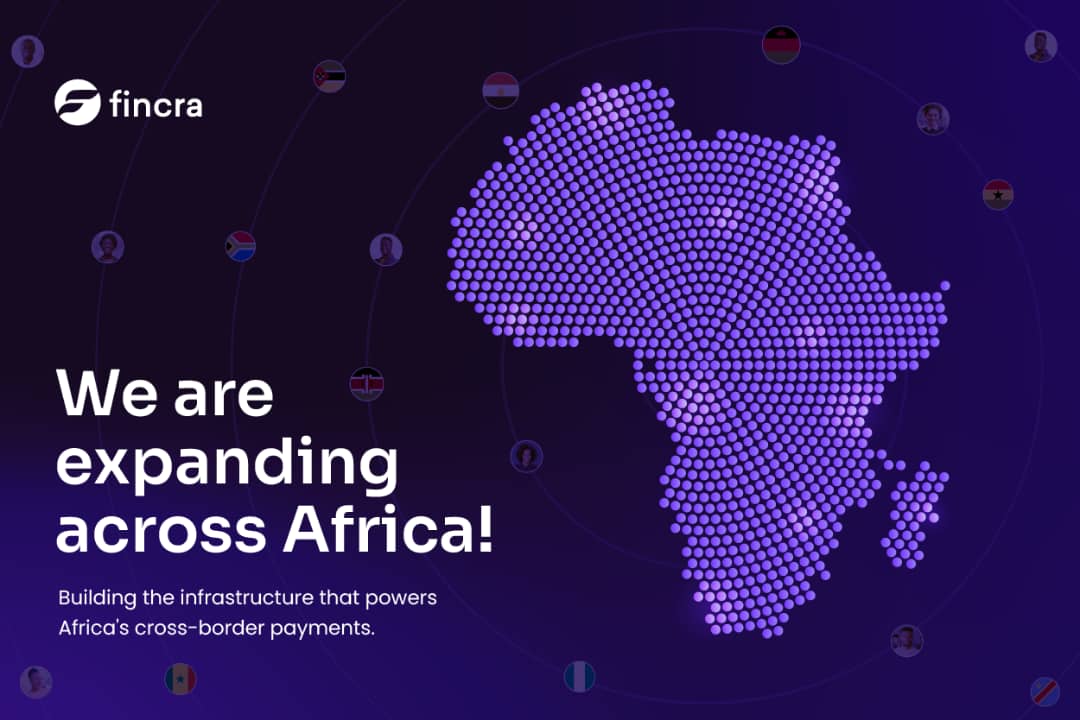
Fincra is expanding across Africa, building the financial infrastructure that powers Africa’s cross-border payments. Build with us. Explore open roles.
Policy
The latest moves in CBN’s anti-fraud crackdown

The Central Bank of Nigeria (CBN) is on a regulatory roll lately. Barely a week after formally welcoming the use of artificial intelligence in its money laundering fight, the regulator has rolled out another set of rules aimed at tightening digital banking security to make it harder for fraudsters to break into bank accounts.
What exactly is changing: The latest directive introduces stricter verification requirements, new limits on freshly activated banking apps, and a controversial rule around the phone numbers linked to Bank Verification Numbers (BVNs). Financial institutions have until July 1, 2026, to comply with these measures.
Liveness verification: When a user opens or reactivates an account digitally, banks must now verify that the person behind the screen is actually present, through selfies or face scans.
Real-time identity validation: Banks must instantly cross-check customers against the BVN or National Identity Number databases before activating accounts.
Device binding: A banking app can only run on one device at a time. If a user switches phones, the system must trigger additional security authentication before the app becomes operational, with transactions capped at ₦20,000 ($14.43) for the first 24 hours. This gives banks a window to detect suspicious behaviour before larger sums can be transferred.
One-time BVN-phone number changes: The phone number linked to your BVN can now be changed only once in a lifetime.
Nigerians are… not impressed: If social media reactions are anything to go by, Nigerians are not thrilled about these new fraud prevention measures. Many worry about practical realities, such as when someone loses their SIM card or if a telecom operator reassigns the inactive number, which happens fairly often in Nigeria’s mobile ecosystem. While the policy is aimed at fraud prevention, many people see it as another layer of friction in banking.
Find your next role at Paga. Join the team building best-in-class infrastructure for African fintech.

Paga Engine is transforming Africa’s payment ecosystem with best-in-class infrastructure, empowering top businesses to scale faster. Join us to build. Find your next role.
Companies
South Africa’s government isn’t ready to bury its Post Office just yet

The South African Post Office (SAPO) has been wobbling for years. The government-run postal service has been under business rescue since July 2023, a legal process meant to stabilise struggling companies and give them a chance to recover. However, the rescue practitioners overseeing the process have indicated they intend to file for liquidation, basically admitting the rescue plan may no longer be viable.
The pushback: Communications Minister Solly Malatsi said the talk of liquidation is premature, as the government is still discussing what the Post Office’s future should look like.
How did SAPO get here? The post office’s business rescue plan relied on R3.8 billion ($224 million) in additional state funding, intended to pay creditors, upgrade infrastructure, digitise operations, and provide working capital. The government released R2.4 billion ($142 million) in the first phase, but the second part of the money never came, and the National Treasury has repeatedly declined to include it in the national budget. Without that funding, the rescue practitioners say the plan to rescue SAPO cannot succeed.
Why the government that couldn’t keep it alive, wouldn’t let it die: The post office, wobbly as it may be, still somehow employs over 5,000 people, and a liquidation would most likely wipe out thousands of jobs overnight.
There’s also friction within the government about what the post office could become. Ideas on the table include transforming it into a last-mile logistics platform for e-commerce, using its nationwide footprint to deliver parcels. Another proposal involves bringing in private-sector partners for collaboration, with the government having already received more than a hundred expressions of interest.
While the rescue practitioners are ready to wrap it up, the government is still weighing the social and economic consequences of pulling the plug. It’s a bit of a tricky situation; pull the plug or brave a pivot? What South Africa’s got in its hand is a debilitating limbo cosplaying as a postal business.
Enjoy affordable fares to Qatar, China, and Singapore on Wakanow

Fly farther for less with unbeatable fares to Doha, China, Singapore, and New York on Qatar Airways. Book exclusively at wakanow.com and turn your travel dreams into reality. Seamless booking, world-class comfort, and unforgettable journeys start here. Download the app today!
CRYPTO TRACKER
The World Wide Web3
Source:

|
Coin Name |
Current Value |
Day |
Month |
|---|---|---|---|
 Bitcoin Bitcoin |
$73,845 |
+ 3.33% |
+ 7.28% |
| Ether |
$2,261 |
+ 7.51% |
+ 10.15% |
| World Mobile Token |
$0.09482 |
+ 7.74% |
+ 15.39% |
| Solana |
$93.71 |
+ 6.18% |
+ 10.31% |
* Data as of 06.17 AM WAT, March 16, 2026.
JOB OPENINGS
- Big Cabal Media — Senior Motion Designer, YouTube Growth Strategist, Quality Assurance Engineer, Editor-in-Chief (TechCabal) — Lagos, Nigeria
- Fincra — Country Manager, Kenya — Remote (Kenya)
- Fincra — Country Manager, Mozambique — Remote (Mozambique)
- Fincra — Country Manager, South Africa — Remote (South Africa)
- Fincra — Senior Product Engineer, Senior Marketing Specialist, and several other roles — Remote (anywhere in the world)
There are more jobs on TechCabal’s job board. If you have job opportunities to share, please submit them at bit.ly/tcxjobs.

Written by: Opeyemi Kareem and Emmanuel Nwosu
Edited by: Emmanuel Nwosu & Ganiu Oloruntade
Want more of TechCabal?
Sign up for our insightful newsletters on the business and economy of tech in Africa.
- The Next Wave: futuristic analysis of the business of tech in Africa.
- Francophone Weekly by TechCabal: insider insights and analysis of Francophone’s tech ecosystem
P:S If you’re often missing TC Daily in your inbox, check your Promotions folder and move any edition of TC Daily from “Promotions” to your “Main” or “Primary” folder and TC Daily will always come to you.