This is Follow the Money, our weekly series that unpacks the earnings, business, and scaling strategies of African fintechs, financial institutions, companies, and governments. A new edition drops every Monday.
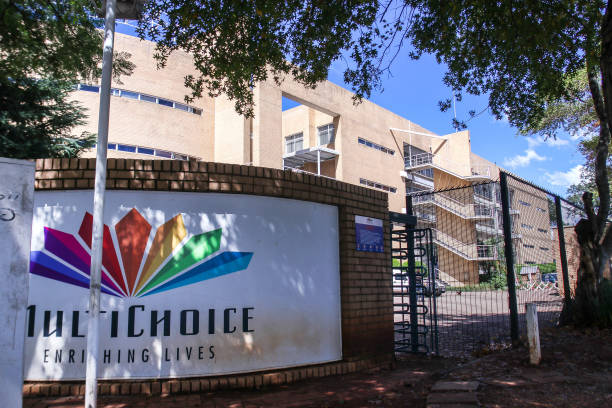
MultiChoice still dominates Africa’s broadcasting market with 14.5 million subscribers, but its fast-growing bets now sit outside traditional television: in decoder-free Internet streaming and payments.
The company, which previously operated the now-shuttered Showmax streaming platform, is now leaning on a two-pronged strategy built around DStv Stream, its premium Internet TV service, and payments business, Moment, to offset pressure on its traditional pay-TV operations.
DStv Stream reflects Canal+’s effort to streamline MultiChoice’s overlapping streaming bets after years of heavy losses and rising platform costs at Showmax, in a market where subscriber scale never matched the level of investment. Rather than exiting streaming, MultiChoice is consolidating around higher-margin businesses as it seeks more capital-efficient sources of growth.
Why DStv Stream works better
Unlike Showmax, DStv Stream was never designed as a low-cost mass-market platform.
Originally launched as DStv Now before a July 2023 relaunch, DStv Stream offers the company’s full premium pay-TV experience over the Internet, including more than 150 live channels, the SuperSport network, news channels, and on-demand programming.
The platform targets consumers willing to pay for premium entertainment but unwilling to install a satellite dish or decoder.
Showmax, a mobile-first, on-demand service, depended on attracting millions of lower-paying users to justify its licencing and content spend. DStv Stream, by contrast, generates significantly higher revenue per customer because it attracts a more premium subscriber base anchored by premium content.
Following its relaunch in 2023, DStv Stream’s standalone subscriber base grew 139%, with more than 90% of those being entirely new customers who had never subscribed to MultiChoice, according to its 2024 report.
In 2024, the company said the platform’s growth skewed heavily toward Premium-tier subscribers, a more profitable customer segment than Showmax’s entry-level audience.
While MultiChoice does not disclose DStv Stream’s exact revenue figures, it reported that revenue nearly tripled in 2024 after the relaunch, before growing another 48% in 2025.
Across the broader group, however, the company lost 96,000 Premium subscribers, including Compact Plus customers, in 2025, signalling a dwindling base at its highest-paying tier.
It shows the headwinds the pay-TV business has to deal with, where Premium subscribers are logging off due to costs. DStv Stream, at R699 ($42) without a decoder or dish, is a cheaper entry point into the same content, and therein lies the opportunity.
The economics improve further because DStv Stream eliminates one of MultiChoice’s highest costs: subsidising decoders. In 2024, MultiChoice spent $132 million subsidising decoders; by 2025, that cost fell to $54 million, partly because more customers were shifting toward decoder-free streaming.
Every DStv Stream subscriber costs a fraction of what a traditional satellite customer costs to acquire.
The company is now trying to convert former Showmax users into DStv Stream customers. After Showmax’s shutdown, MultiChoice offered subscribers a free DStv Stream trial followed by a discounted R99 ($6) entry-tier package.
The company is playing a high-risk, high-reward bet that price value and its deeper content library will nudge former Showmax users to higher-tier plans on DStv Stream.
MultiChoice Total Revenue (5-Year)
Macro-headwinds hit hard in FY25, pulling total revenue down to ZAR 50.8B.
With Canal+ committing $115 million toward MultiChoice investment, it could deepen local content production, where shows like Adulting, Youngins, and The Real Housewives franchise already attract high viewership.
If Premium subscribers continue to make up a bulk of DStv Stream’s base, the high-margin economics of the platform could sustain the content investment Canal+ is betting on.
Moment and the fintech play
Moment, a fintech platform partly owned by MultiChoice, started as a cost-cutting play. In 2023, when MultiChoice launched it as a joint venture with Rapyd, General Catalyst, Entrée Capital, and Raba, the company said it was paying over $60 million annually in third-party transaction fees. Moment was built to bring those payments in-house.
That year, MultiChoice paid $3.3 million for an initial 25.5% stake. It later invested R151 million ($8 million) in Moment’s Seed+ round, which closed in May 2024 at a post-money valuation of $82 million, according to its report.
MultiChoice initially increased its shareholding to 29.6% on a fully diluted basis. However, capital contributions from other investors in that round diluted MultiChoice’s stake to 28.5%. The company has also committed an additional $6.5 million through a simple agreement for future equity (SAFE) note, earmarked for conversion in a funding round expected in 2025.
As an aggregator connected to over 200 payment partners, Moment processed $635 million in total payment volume (TPV) in 2025, a sevenfold increase from $85 million the previous year.
Moment grew because MultiChoice embedded it deeply into its own ecosystem: it processed 56% of the group company’s payment volumes in 2025, up from 20% the prior year, and within South Africa alone, its share grew to 81%, according to its report.
With Moment in the picture, MultiChoice reported a 5% cost savings in 2025; that uplift might seem small, but it possibly accounts for millions of dollars. By 2025, Moment’s annualised run rate, a projection of its expected annual revenue, had crossed $1 billion, according to Mawela.
Moment has joined real-time payment networks in 18 countries and expanded into local and cross-border card payments across the 44 markets it covers, according to the MultiChoice 2025 report.
In South Africa, it was the first to launch PayShap for instant consumer-to-merchant payments. The next step is to grow its share of MultiChoice’s payment flows from 56% toward near-100% and push further into Africa’s mass economy.
DStv Stream and Moment are MultiChoice’s dominant bets.
Why Irdeto, NMSIS, and KingMakers are smaller bets
Other MultiChoice subsidiaries continue to contribute revenue, but none currently appear as strategically important as DStv Stream and Moment.
Irdeto, the group’s cybersecurity and content protection business, contributed 4% of group revenue in 2025. Yet, trading profit still fell from R400 million ($24 million) to R300 million ($18 million).
Irdeto: The Profit Squeeze
External B2B customer base vs. Trading Profit over 5 years.
| Year | B2B Customers | Trading Profit (ZAR) |
|---|---|---|
| FY21 | 405 | 0.6 Billion |
| FY22 | 392 | 0.5 Billion |
| FY23 | 382 | 0.6 Billion |
| FY24 | 419 | 0.4 Billion |
| FY25 | 357 | 0.3 Billion |
Nearly half of Irdeto’s revenue still comes from MultiChoice itself, limiting its independence from the parent company’s performance.
NMS Insurance Services (NMSIS), which provides products such as decoder insurance and funeral cover, remains profitable and generated R425 million ($25.5 million) in trading profit in 2025. Yet, the business operates in a relatively narrow insurance segment despite MultiChoice selling a 60% stake to South African financial services company Sanlam in 2024.
NMSIS: The Profitable Safety Net
The micro-insurance division continues to print reliable trading profits year-over-year.
KingMakers, MultiChoice’s partly-owned betting subsidiary behind the BetKing and SuperSportBet brands, continues to struggle with currency volatility despite growth in online sports betting.
Though its Nigerian business is profitable, currency depreciation pressured KingMakers’ operations. The broader company, including Nigeria and South Africa, recorded $34 million loss after tax in 2025.
KingMakers: The Cost of Expansion
Revenue peaked in FY23, but currency depreciation has kept the betting subsidiary in a net loss position.
The company has also struggled to compete with dominant betting companies, such as Betway and Hollywoodbets in South Africa’s rapidly growing gambling market, which is now worth R74.5 billion ($4.5 billion) in gross gambling revenue (GGR), according to 2025 data from the National Gambling Board.
GGR is the amount these companies keep after paying out winnings to bettors.
While Irdeto, NMSIS, and KingMakers remain relevant businesses to MultiChoice’s portfolio, they are not positioned to reshape its future in the way DStv Stream and Moment potentially could.
The MultiChoice Ecosystem
Tap a unit to see its role in the new digital bundle.
MultiChoice realised years ago that its 41-year-old legacy TV business needed anchors to survive. It has since built an ecosystem that looks like this: a new subscriber can either pay for DStv services with or without the decoder; make MultiChoice-related payments using Moment; insure their decoder; stream content using DStv Internet, its fixed wireless access (FWA) service; and earn an extra bit of income betting on their favourite sports teams, all as part of entertainment value-added services.
Canal+, no stranger to this kind of play, will see a reason to bundle content, connectivity, and financial services for the same consumer.