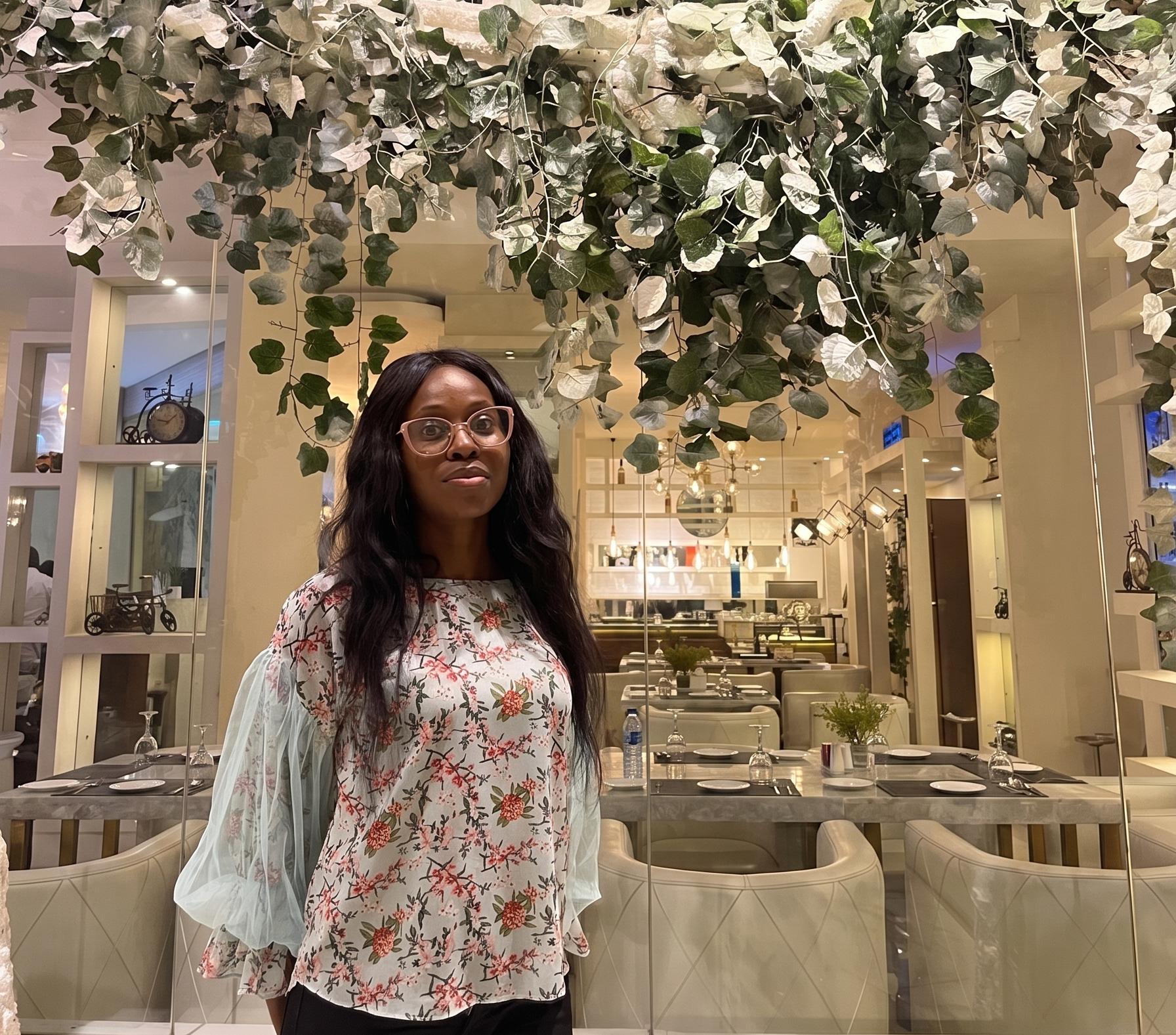
Somtochi Onyekwere is an open-source maintainer and a Senior Software Engineer with over five years of experience building reliable, scalable systems that help developers deploy applications at global technology companies. At Fly.io, she works on Corrosion, the open-source distributed system behind the networking layer. Before Fly, she was a Developer Experience Engineer and maintainer of FluxCD, an open-source project for GitOps on Kubernetes that powers enterprise developer platforms at companies like Microsoft and ControlPlane.
Alongside her engineering work, Somtochi is passionate about building community, a thread that runs back to her time at the Federal University of Technology, Owerri, as a GitHub Campus Expert and Ingressive Campus Ambassador. Today, she co-organises Kubernetes Community Days Nigeria, whose third edition last year drew over 500 attendees from across Africa.
- Explain your job to a five-year-old.
I work on the tools that let other people run their websites and apps, the ones you use on your phone every day. It’s a bit like building houses for people. Normally, if you wanted a house, you’d have to buy the land, gather the materials, and put it all together yourself. The companies I work with handle all of that for you. You just show up with your stuff and move in.
- What do you love about your job, and what frustrates you?
What I love about my job is the kind of problems I get to solve and the people I get to solve them with. Fly.io has some of the most outstanding engineers I’ve had the opportunity to work with. On the problem side, I enjoy working on distributed systems and figuring out how to scale them while keeping them reliable.
You start to encounter interesting problems when you take a programme from running on a single computer to running across multiple computers. It breaks many of the assumptions programmers are used to working with. I also like that we care about developer experience and make it easy for users to deploy and scale their applications.
What both frustrates and excites me is Murphy’s Law: anything that can break will break. We work on systems that can fail but still need to be reliable enough to meet user needs.
I remember sitting through my first incident and watching everyone move with urgency, fixing what was broken, and making sure things returned to normal. Now that I’ve had my own share of incidents, I’ve become better at debugging under pressure and learned to think about different failure modes from the start.
- What’s a ‘GOAT moment’ in your tech career so far? Tell us in a short story.
When my previous company, Weaveworks, shut down, I decided to be intentional about the type of company I joined next. I made a list of companies doing interesting things in the infrastructure space—companies whose engineering blogs I’d been reading for fun—and started applying.
Fly.io was at the top of that list, and the interview process was tough. But making it through wasn’t the end of the challenge. I wanted to bring that same intentionality to the work I did at Fly.io. I worked on two other projects before landing on Corrosion, but it was by far the toughest. To make things harder, it was written in a language I didn’t know.
So I learned it quickly, and within a few months I was contributing meaningfully to the codebase. Eventually, I became the primary developer on it. Going from “I’ve never written this language” to “I own this system” in that span is something I’m quietly proud of, partly because of the technical leap, but also because it reminded me that being a great engineer means taking unknown or unclear problems, breaking them down, and finding solutions.
- You’ve spent years building community from student meetups during university days to co-organising Kubernetes Community Days Nigeria. Why does community work matter to you alongside engineering?
Community and engineering have never been separate for me. They’ve always gone hand in hand. Open-source is where I honed my craft when I was starting out and learned how engineering works in the real world: people sharing what they know, working through ideas in public, and taking part in the conversations that shape what a project becomes.
That belief has shaped how I show up. As a student, I organised tech meetups as a GitHub Campus Expert and Ingressive Campus Ambassador, helping about fifty students build the skills needed to get started in the industry. Later, I advocated for a dedicated space for Africans in the Kubernetes Slack community, a group that has grown to more than 450 members.
Today, I co-organise Kubernetes Community Days Nigeria, whose most recent edition brought together over 500 attendees and speakers from across Africa to learn, share, and build together.
I’ve gained a lot from the community: mentors, collaborators, friends, and opportunities. That’s exactly why I keep investing in the next generation of engineers. Whether it’s mentoring a student through their first pull request (PR) or helping someone prepare for their first conference talk, the goal is the same: leave the community stronger than I found it.
- Did your 16-year-old self ever imagine she’d end up in software engineering?
Sixteen-year-old me had a lot of interests: maths, physics, engineering, writing, and teaching. A lot of paths seemed exciting and viable back then. I’d just finished secondary school and was watching movies to pass the time. I always found myself drawn to the ones with a hacker at a computer, typing furiously, solving impossible problems, and helping the rest of the crew pull off the mission.
So the seeds were already there. I figured I’d at least give it a try. But sixteen-year-old me had no idea how far it could go, and I think she’d be pretty excited to see what I’m doing now.
- What else would you be doing if not software engineering?
I’ll probably explore being a fiction writer. I don’t write as much these days, but I still love good storytelling and using words as an art form and means of expression.