African commerce is, by nature, borderless. Businesses source, sell, hire and settle across multiple countries. However, moving money between African markets means navigating multiple banking relationships, slow settlement windows and compliance checks that vary by corridor.
According to Remittance Prices Worldwide, Sub-Saharan Africa remains the most expensive region to send money to, at an average total cost of 8.78 per cent. For founders and finance teams, securing a customer base of trusted suppliers is one friction. But paying and getting paid is another source of friction.
Regulation as infrastructure

This is where Oneremit’s approach begins, by treating regulatory compliance as the foundation the rest of the system is built on. Oneremit, a cross-border payment platform, holds active licences as a Registered Money Services Business with FINTRAC and a Registered Payment Service Provider with the Bank of Canada, a Registered Money Services Business with FinCEN in the US, and an International Money Transfer Operator licence from the CBN in Nigeria. Licences with the Bank of Ghana and the UK’s FCA are in progress, extending that regulated footprint further across the corridors African businesses use.
With these regulations, banks and payment partners can integrate more deeply with regulated players, enabling faster settlement and more predictable payment corridors for the businesses using them. In cross-border payments, trust is infrastructure, and trust is built jurisdiction by jurisdiction.
Beyond a selected focus on a payment interface, Oneremit is investing across the underlying remittance ecosystem required for cross-border settlement, such as regulatory coverage, payment corridors, compliance, transaction monitoring, technology partnerships and human support.
Evidence of demand
The scale of the shift is revealed in the numbers. According to Oneremit, the fintech has processed more than $200 million in outgoing cross-border transaction volume within 18 months of operation, signalling that demand for regulated, business-grade cross-border infrastructure among African companies is not theoretical.
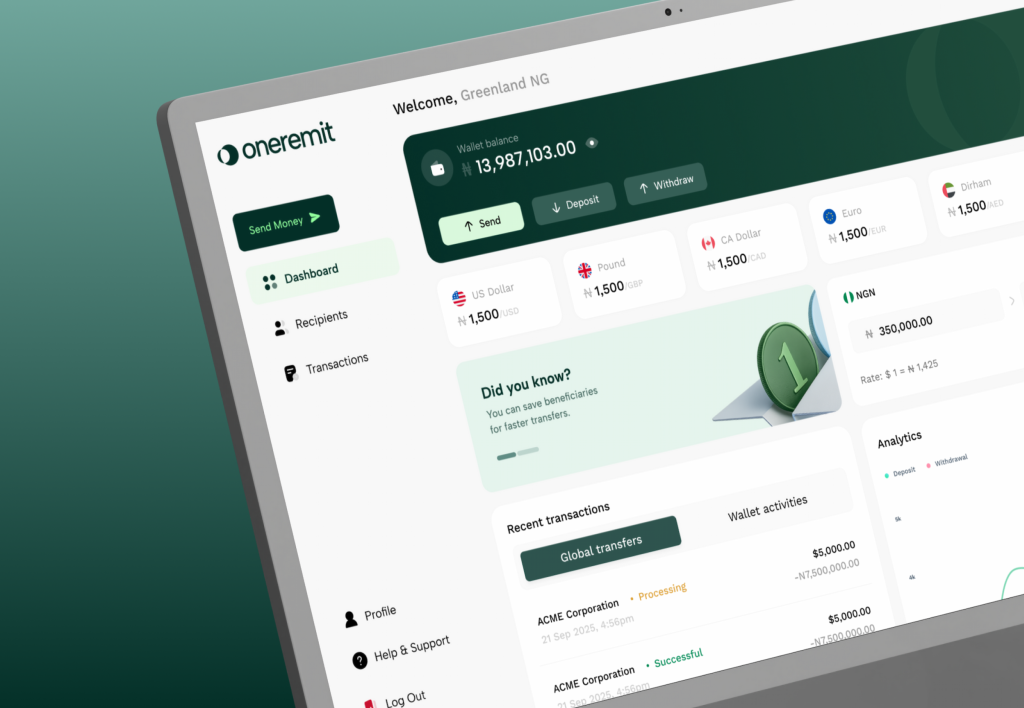
Oneremit’s near-term priorities are geographic and regulatory: additional licences, wider corridor coverage and continued investment in the technology layer connecting them. As more African businesses source, sell and hire across borders as a matter of course, the infrastructure moving their money will need to become as reliable as the infrastructure moving their goods.
For businesses ready to get started with Oneremit, visit https://business.oneremit.co/sign-up