
Good morning.☀️
In Africa, particularly East Africa, Standard Chartered appears to be narrowing its focus toward wealthy clients. But internationally, its growth strategy is decidedly crypto-first.
Bloomberg reported that StanChart’s investment arm backed Hong Kong-based crypto trading firm GSR at a $1 billion valuation, the latest in a string of digital asset moves. The UK bank turned bullish on crypto in 2025, becoming one of the first major banks to offer spot crypto trading, and was reportedly weighing an acquisition of crypto custodian Zodia in April 2026.
While StanChart tilts toward wealthy clients in Africa, its international strategy hinges on crypto, where other major systemic banks, including HSBC and JP Morgan, have made defining moves across several jurisdictions.
Get smarter about Francophone Africa—the startups, tech policies, and institutions building the pipelines for ecosystem growth.

Banking
Standard Chartered is moving to sell its East Africa headquarters
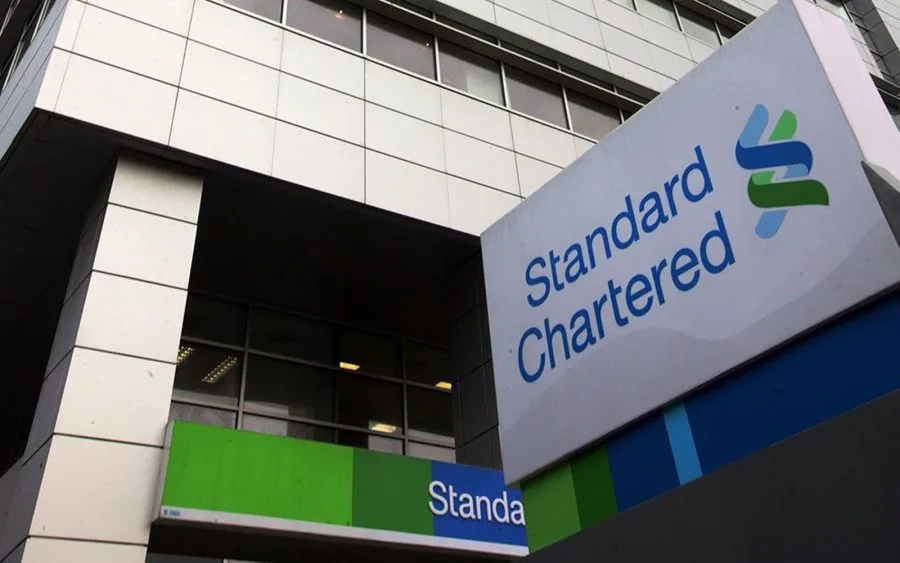
Standard Chartered (StanChart) Kenya, the country’s eighth-largest bank by assets, is putting its East African headquarters in Nairobi up for sale, Bloomberg reported on Monday.
The seven-storey building, sitting on 1.88 acres in the capital city, will likely be collateral damage in a market where the lender cut employees by 5.9% in 2025. StanChart has already sold two other properties in Kenya, including one in Nyeri, in 2025, signalling a reduction in its physical assets.
State of play: StanChart Kenya has steadily reduced its workforce since 2014, cutting headcount from a peak of 2,048 to 942 by the end of 2025, as it prioritises wealth banking.
While the move could signal its continued downsizing or refocus, StanChart said it still plans to maintain an active presence in Kenya.
And this explanation tracks as the lender recently said it wants to target Kenyan high-net-worth individuals (HNWIs), strategically reducing its operations in retail banking, where larger Kenyan banks, like Equity and KCB, hold all the leverage. According to the National Taxpayers Association (NTA), Kenya has 7,200 HNWIs, one of the highest in Africa, and a sizeable market for StanChart to aggressively pursue.
Between the lines: StanChart’s overall assets under management for its affluent banking segment have grown steadily over the past decade. The bank’s affluent assets under management (AUM) now stand at $447 billion, up at a compound annual growth rate of 11% since 2017. Growth has been sharpest in recent years, with affluent AUM rising 64% between 2023 and 2025, the strongest two-year run in the period, signalling that the bank is simply following the money upmarket.
It is a strategy that is playing out in Kenya, too, where the bank has been pivoting toward the affluent segment.
Zoom out: StanChart is expanding in Africa, launching full banking operations in Egypt in 2024 and opening a representative office in Casablanca, Morocco.


3i Africa Summit 2026
Doing business in African markets? Fincra’s financial infrastructure gives your business reliable payment rails across 20+ markets. Start here.
Policy
South Africa wants to put your ID on your phone
Last Thursday, South Africa’s Home Affairs, its digital identity and immigration authority, withdrew a draft policy after it cited non-existent sources fabricated by AI and suspended two officials.
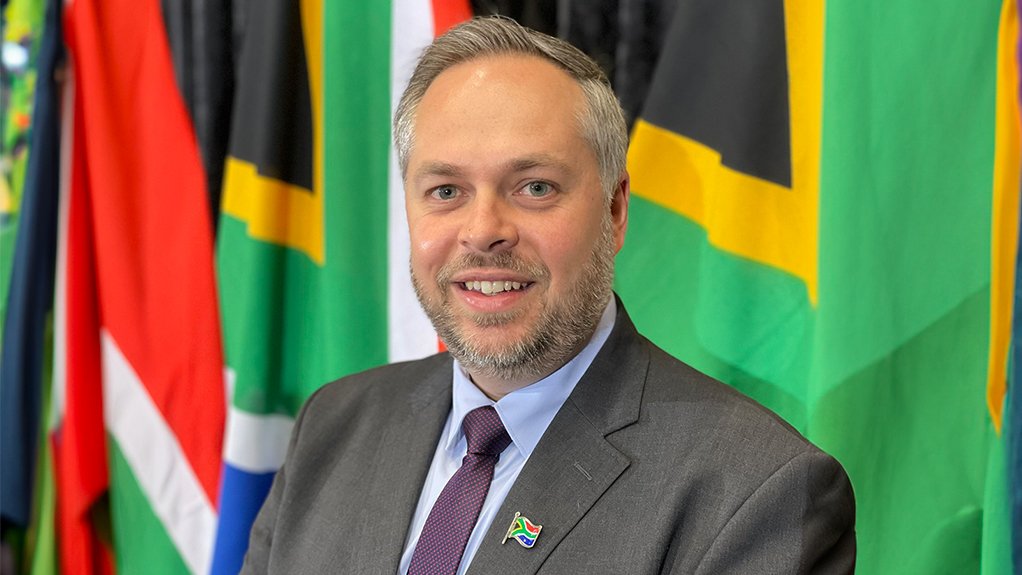
On Tuesday, the same department is back with another draft, and this one is more ambitious than anything it has tried before. Home Affairs Minister Leon Schreiber has gazetted draft regulations for South Africa’s national digital identity system, built around a smartphone app called MyMzansi.
What is changing: The proposed rules allow South Africans to store digital versions of their ID, birth certificate, and marriage certificate on their phones, and verify their identity remotely using facial recognition, no Home Affairs queue required. Public comments are open until June 6.
The digital ID app isn’t replacing physical Smart ID cards. It sits alongside them, as a mobile boarding pass next to a printed ticket.
Banks, insurers, and government platforms can also verify identities through a secure digital link, and every check has to be logged and kept on record for seven years.
Law enforcement will also need a warrant to access population register data through the app. Misuse, such as enrolling under a false identity or bypassing facial recognition, carries a fine or up to 2 years in prison.
Zoom out: The infrastructure will sit inside the South African Revenue Service’s (SARB) hosting environment, with facial recognition as the primary biometric. The draft will require enrollment points in every municipality, and says it will provide a setting for people without smartphones to enrol.
PalmPay – Built for Ambition. Built for You.
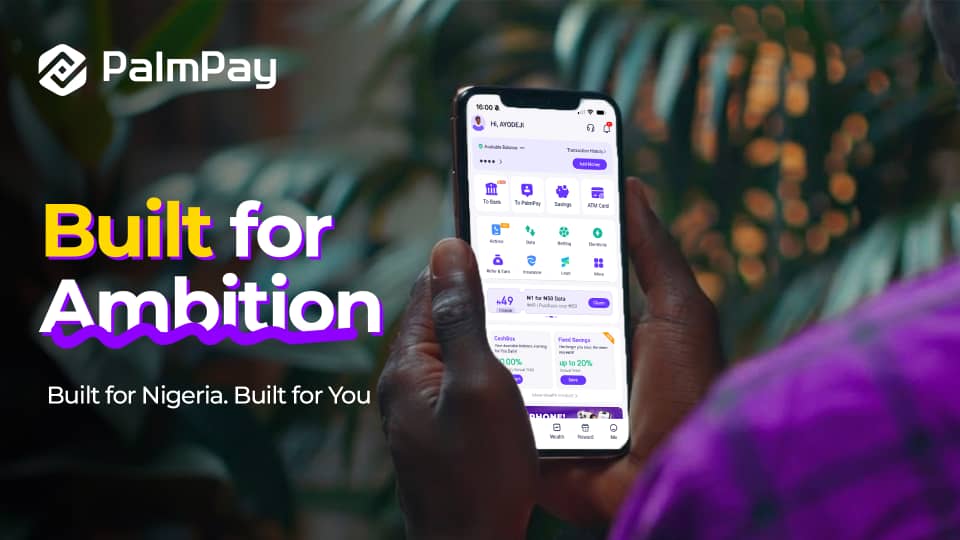
PalmPay is Built for Ambition. Built for Nigeria. Built for You. With over 35 million users and a 99.9% transaction success rate, PalmPay is making digital banking safer, simpler, and more reliable for everyday Nigerians. Download the app to learn more.
Telecoms
Mauritania is getting its second submarine cable

For years, Mauritania has been connected to the world by a single thread: the Africa Coast to Europe (ACE) cable system, running along West Africa’s coast to Europe. One cut and the country’s entire international Internet connection goes dark. That is about to change.
Mauritania has begun coastal installation of a second submarine cable operated by EllaLink, a cable linking Nouadhibou, a city in northwestern Mauritania, to Madrid, Spain. The cable carries an initial capacity of 200 Gigabits per second (Gbps), scalable to 12 Terabits per second (Tbps), with a direct onward link to South America.
Full deployment is expected in August 2026, completing a project that began in July 2025, with service launching by January 2027. The cable is backed by the European Investment Bank, the European Union’s Connecting Europe Facility Digital (CEF Digital) programme, and $34.5 million in funding.
Between the lines: As of 2025, only 37.4% of Mauritanians use the Internet, leaving 3.35 million people offline. The Internet Society rates the country’s upstream diversity as poor, and one Gigabyte (GB) of mobile data costs 19.5% of the average monthly income.
A second cable solves the redundancy problem and should, in theory, push wholesale bandwidth costs down. But Mauritania completed a 4,000-kilometre (km) national fibre backbone in 2021 with a promise of a 25% cut in mobile data prices. Internet prices have risen 8% since. Without regulatory pressure on operators, the cable upgrades the backbone while everyday costs stay high.
The bigger opportunity is regional. Mauritania now sits on a transatlantic route, positioning it as a potential transit point for traffic across West Africa and the Atlantic. Whether that translates into a genuine digital economy story depends on what gets built once the cable lands.
Moonshot is back!

Moonshot 2026 is coming! Join us at the National Theatre, Lagos on October 28 & 29 for two days of tech and innovation. Grab your early bird tickets now and get 15% off.
TECHCABAL 4.0

TC Insiders are reading something you’re not. Gated exclusives and deeper analysis—available only to Insiders. Free to join.
Fintech
Vodacom partners Thunes to enable Tanzanians make payments to China

Vodacom Tanzania, the country’s largest telecom operator, has partnered with Thunes, a global B2B cross-border payments infrastructure company, to allow Tanzanians to pay merchants in Uganda and China directly from their M-PESA wallets.
If you’re wondering why you’re hearing ‘Vodacom’, not ‘Safaricom’: Although both companies own the M-PESA brand, Vodacom controls a 55% stake in Safaricom after acquiring an additional 20% of the company from the Kenyan government and its parent company, Vodafone, in 2025.
What the Thunes partnership will do: Through Thunes’ Direct Global Network, M-PESA users in Tanzania can send money to Uganda via MTN MoMo, a mobile money platform, and to China through the Alipay network, all from a USSD menu or app they already use daily. It means a Tanzanian trader can pay a supplier in China and Uganda without relying on banks or middlemen.
It’s built on an earlier partnership: In November 2025, Vodacom partnered with the global payments network provider Visa and other providers to launch M-PESA Global Payment. This was a suite of international payment features on M-PESA that would allow its 22 million users to pay merchants in China, Dubai, Uganda, and anywhere Visa is accepted, directly from their phones.
Why this matters: Making cross-border payments often involves delays, high transaction fees, or high currency conversion rates. In September 2025, Tanzania had imported goods worth $862 million from China, while bilateral trade with Uganda reached about $2.23 billion in 2024. So, Vodacom is plugging into existing demand and making it more predictable.
Naira Life 2026 is here!

Join 2,000+ in Lagos on August 22 for unfiltered wealth strategies, investment clinics, pitch competitions, and real talk about building long-term financial power. Get 15% off early bird tickets.
CRYPTO TRACKER
The World Wide Web3
Source:

|
Coin Name |
Current Value |
Day |
Month |
|---|---|---|---|
 Bitcoin Bitcoin |
$79,907 |
+ 2.24% |
+ 19.42% |
| Ether |
$2,372 |
+ 3.06% |
+ 15.53% |
| XRP |
$1.41 |
+ 1.90% |
+ 7.06% |
| Solana |
$85.35 |
+ 1.86% |
+ 6.33% |
* Data as of 06.50 AM WAT, May 6, 2026.
Opportunities
- The Stellar Development Foundation has launched its first accelerator programme targeting Europe, the Middle East, and Africa, partnering with blockchain venture firm CV Labs to back ten early-stage startups building payments infrastructure, tokenised assets, and decentralised finance applications. The 12-week programme, beginning August 2026, will run primarily remotely but includes an on-site component in Cape Town and concludes with a demo day at Stellar’s Meridian conference in Lisbon in October. Each selected startup can receive up to $150,000 in XLM, Stellar’s native token, in initial funding. Apply by July.
- The Future Investment Initiative Institute (FII), in partnership with MIT Solve, has launched the 2026 FII Innovators Pitch, inviting startups building with AI and frontier technologies to apply. The programme targets solutions across sustainability, healthcare, AI & robotics, and education. Selected startups will pitch live at the 10th Future Investment Initiative in Riyadh, Saudi Arabia, this October (all expenses covered) and join the FII Ventures Programme, gaining access to investors, policymakers, and global partners to support their growth. Apply here.
- Google and UpSkill Universe have partnered to relaunch Hustle Academy, now offering free AI and business training to individuals and small businesses across Africa. The programme features 60-minute expert-led webinars and 1-day bootcamps (3–5 hours), covering digital marketing, e-commerce, business strategy, financial management, and AI tools. Open to students, jobseekers, entrepreneurs, and past applicants, it provides practical, hands-on skills that can be immediately applied to grow careers or businesses. Apply here.
- Google for Startups: Africa, a three-month hybrid accelerator for growth-stage startups on the continent, is now accepting applications. The accelerator will provides equity-free support for the duration of the programme, mentorship, training, cloud credits, and access to Google’s AI products designed to bring the best of its programmes, products, people, and technology to communities across Africa. Apply here.

Written by: Opeyemi Kareem and Zia Yusuf
Edited by: Emmanuel Nwosu and Ganiu Oloruntade
Want more of TechCabal?
Sign up for our insightful newsletters on the business and economy of tech in Africa.
- The Next Wave: futuristic analysis of the business of tech in Africa.
- Francophone Weekly by TechCabal: insider insights and analysis of Francophone’s tech ecosystem
P:S If you’re often missing TC Daily in your inbox, check your Promotions folder and move any edition of TC Daily from “Promotions” to your “Main” or “Primary” folder and TC Daily will always come to you.