AI won’t replace qualitative researchers. But researchers who work with AI will outpace those who don’t.
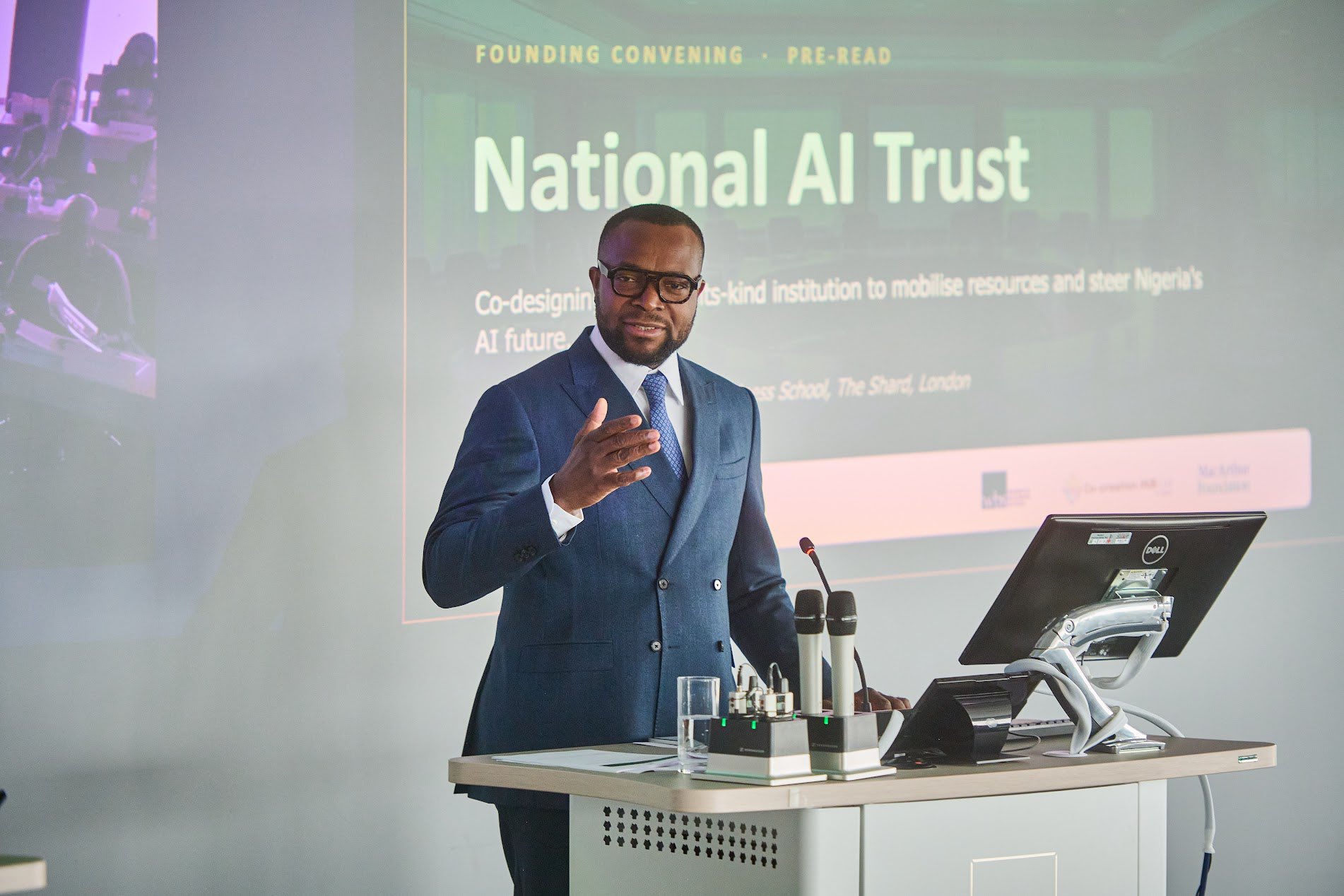
By Oladapo Awoyinka · Originally presented at UX Glasgow, February 2026
Artificial intelligence is often framed as a productivity tool. That framing misses its more compelling role: helping researchers understand people better, not just work faster. Nowhere is this more relevant than in qualitative UX research, where the real challenge is never collecting data. It is making sense of it quickly enough to influence decisions.
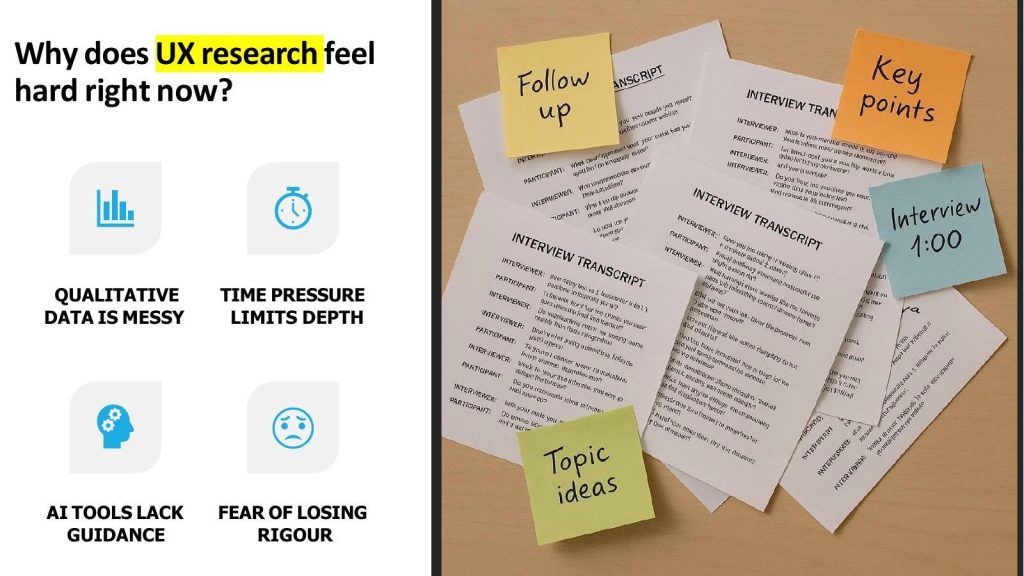
Four pressures make this harder than it should be: messy transcripts, time constraints, the absence of agreed frameworks for AI use in research, and a legitimate fear of compromising rigour. This article sets out a structured approach to all four, grounded in a VR case study from the AEC sector.
The case study: VR and stakeholder communication
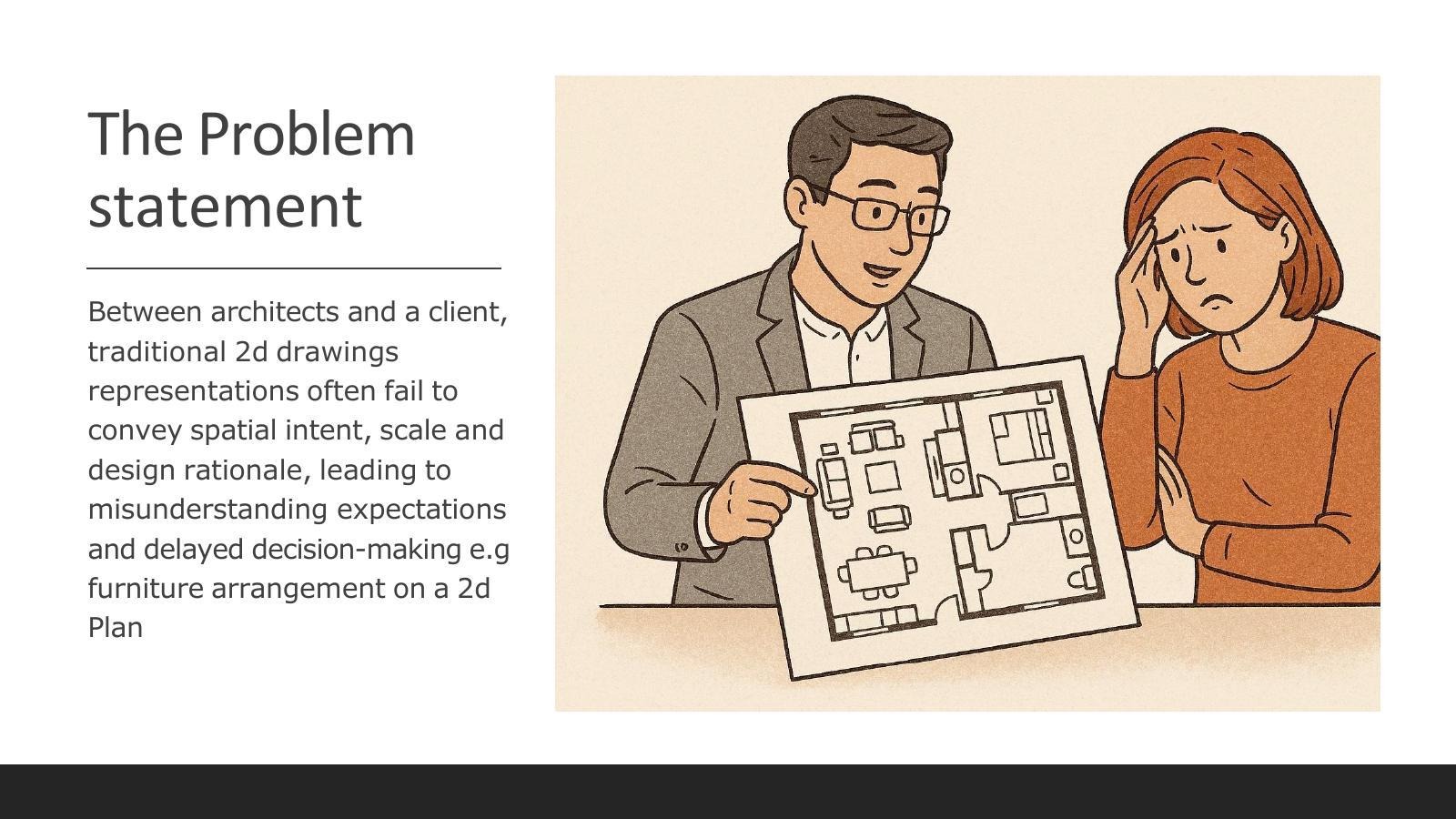
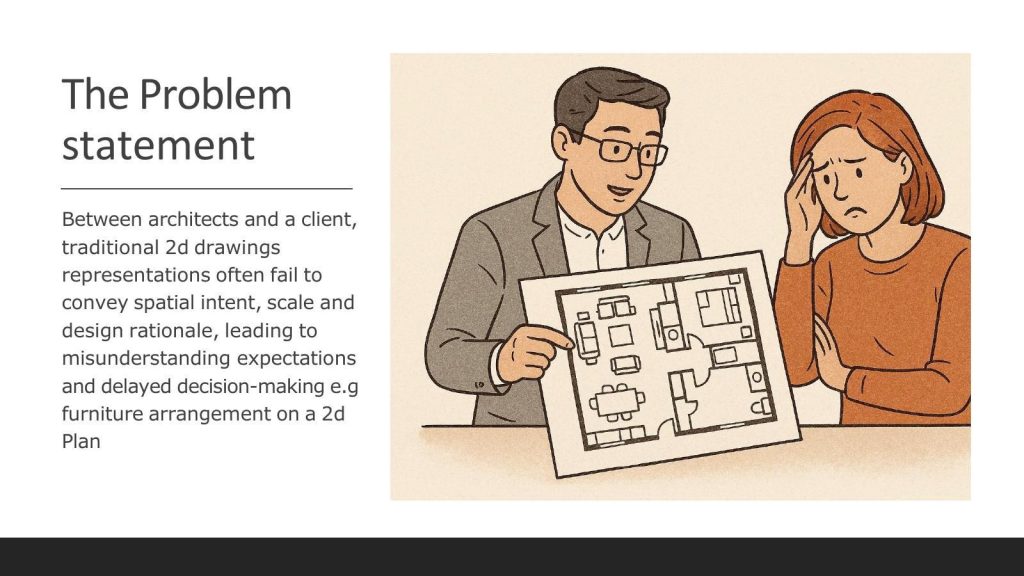
The case study explored how VR environments change the quality of communication between architects and non-technical stakeholders, clients, facilities managers, and community representatives during complex building projects. Traditional 2D drawings frequently fail to convey spatial intent and scale to non-architects, leading to misunderstood expectations and costly revision rounds. Fourteen semi-structured interviews were conducted to understand the difference VR made.
The original study was conducted during my MSc in User Experience and Interaction Design at Glasgow Caledonian University. After graduating, I revisited the data and applied an AI-assisted thematic analysis workflow I had not used at the time, exploring retrospectively how it could have strengthened the analytical process.
The Framework: Four stages, AI-assisted
The analysis applied Naeem et al.’s (2023) systematic thematic analysis approach, where themes are derived from research gaps and research questions not merely data patterns, as in Braun and Clarke’s (2006) traditional model. AI supported the first four stages.
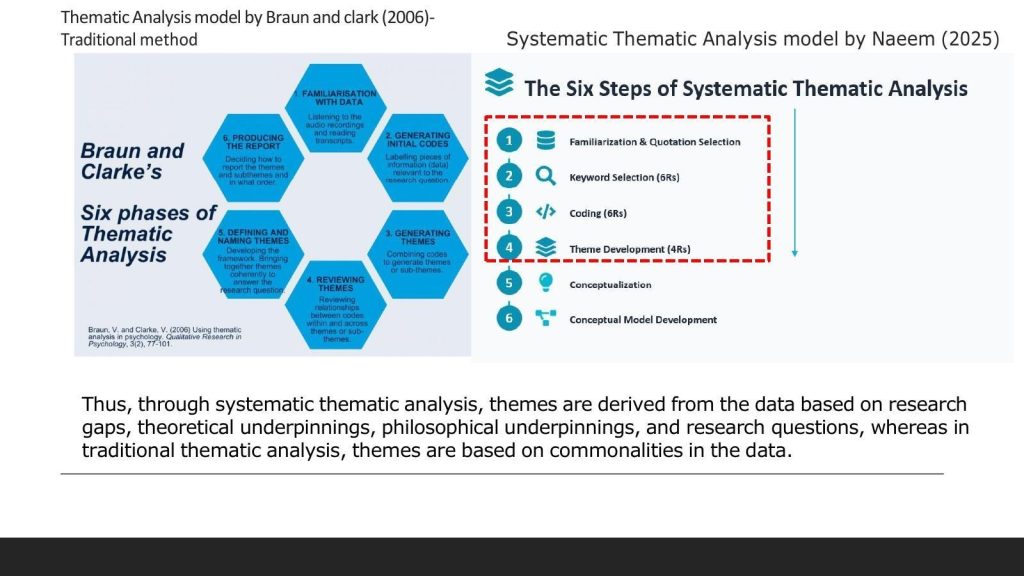
Fig. 3 — Braun & Clarke’s (2006) traditional model vs. Naeem et al.’s (2023) systematic approach.
In Stage 1, ChatGPT was familiarised with the research context, methodology, and theoretical framework before any data was submitted. It then selected relevant quotations from transcripts. In Stage 2, keywords were identified using the 6Rs framework: Realness, Richness, Repetition, Rationale, Repartee, Regal, surfacing patterns across 14 transcripts at a pace impractical manually. In Stage 3, codes were generated and compared across participants. In Stage 4, five themes were proposed and clustered. The first , Enhanced Spatial Understanding , captured how VR reduces design misinterpretation. Human interpretation remained central at every stage; the researcher reviewed, revised, and validated all AI outputs before proceeding.
“AI reduces the structural load of analysis. The researcher retains ownership of the meaning.”
What the research revealed
Three findings emerged consistently across the 14 interviews. Participants reported that walking through a VR model significantly improved their spatial understanding of proposals, reducing confusion that 2D plans routinely produce. A second finding was fewer miscommunication cycles: real-time spatial exploration replaced abstract description in meetings and email chains, leading to faster alignment. The third was more confident decision-making among non-technical stakeholders who would otherwise defer to specialists.
AI did not produce these findings. It surfaced the recurring evidence that made them defensible across a large transcript set.
A responsibility that cannot be automated
Before applying AI to any qualitative dataset, researchers must confront an obligation that efficiency arguments do not remove. Qualitative transcripts contain people’s words and personal disclosures, shared in confidence. Passing that data into a third-party AI tool without safeguards raises real questions around consent, confidentiality, and data protection compliance.
In practice this means: anonymising transcripts before any AI processing; ensuring participant consent covers AI-assisted analysis; verifying that the AI tool’s data handling complies with GDPR and institutional requirements; and treating all AI output as a starting point, not a conclusion. The researcher remains the ethical custodian of participant data throughout. That responsibility grows when a third-party processing layer is introduced, not shrinks.
Practical takeaways
For researchers and product teams considering this approach:
- Start small: test on one interview before scaling to the full dataset.
- Validate always: check AI outputs against raw data before concluding.
- Stay in control: you are the researcher; AI is the assistant.
- Not limited to ChatGPT: the framework applies to Gemini, Copilot, Claude, and other LLMs.
- Anonymise first: remove identifying information before any transcript is submitted to an AI tool.
- Check consent and tool compliance: ensure ethics approval and data handling policies cover AI-assisted analysis.
“Skipping qualitative analysis doesn’t close the insight gap. It just means your competitors fill it first.”
The future of qualitative research is not AI replacing researchers. It is researchers working with AI to analyse evidence more efficiently while retaining full ownership of interpretation, context, and ethical responsibility. For teams building in fast-moving markets, that combination is becoming a competitive edge.
References
Braun, V., & Clarke, V. (2006). Using thematic analysis in psychology. Qualitative Research in Psychology, 3(2), 77–101.
Naeem, M., Ozuem, W., Howell, K., & Ranfagni, S. (2023). A step-by-step process of thematic analysis to develop a conceptual model in qualitative research. International Journal of Qualitative Methods, 22. https://doi.org/10.1177/16094069251333886
About the author
Oladapo Awoyinka is a UX researcher and Interaction Designer based in Scotland. He completed an MSc in User Experience and Interaction Design at Glasgow Caledonian University in November 2025 and presented this work at UX Glasgow (2026).