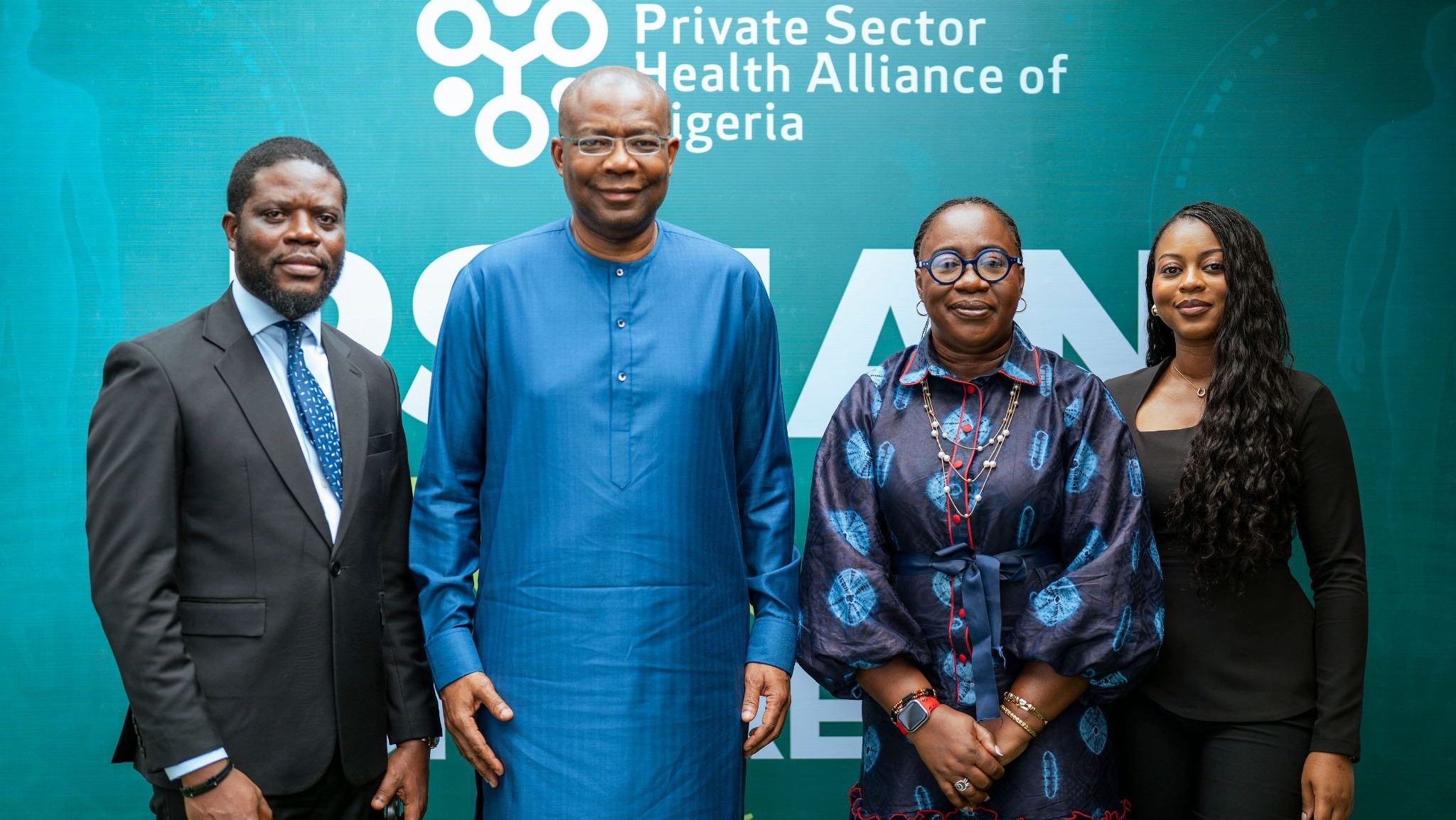
Nigeria’s health sector professionals gathered at the Radisson Blu Anchorage Hotel, Victoria Island, Lagos, on Thursday for the Private Sector Health Alliance of Nigeria’s (PSHAN) Annual Conference 2026, themed, “Driving Digital Innovation for a Healthier Nigeria.”
Chizoba Okafor, Country Head, Nigeria, at Flutterwave, drew a direct line between fintech’s interoperability gains and what healthcare still lacks.
“Millions of Nigerians move money daily. It happens because banks, regulators, fintech and technology provide interoperable systems instead of isolated ones,” Okafor said.
He noted that hospitals, insurance providers, pharmacies, laboratories, government agencies and payment providers are still largely operating in isolation from one another.
For Okafor, the stakes of getting this wrong are higher in health than in finance.
“A hospital is not only handling [just] a transaction. It is handling someone’s health [and] well-being. That means infrastructure for health must be built on real governance, real cyber security, and real data protection, not as an afterthought once something goes wrong,” he said.
This position found a practical example later in the day, when Dr Anne Adah-Ogoh, Director of Policy and Programmes at PSHAN, presented results from the Adopt-A-Healthcare Facility Programme (ADHFP), a flagship PSHAN initiative designed to revitalise underperforming primary healthcare facilities across Nigeria.
Adah-Ogoh said the programme has helped over 801,000 Nigerians access healthcare they would probably never have had, with roughly 284,000 children immunised, more than 21,000 women attended to by skilled birth attendants, and 76,500 women recorded for antenatal attendance.
“What this translates to is actual lives of people who hitherto would not have had access to health care if these primary health care centres were not revitalised, were not functional, and were not able to provide quality services,” Adah-Ogoh said.
She added that since the project’s inception, there had been no maternal mortality, no stock-outs of commodities, and no downtime in service provision across any revitalised facility.
Adah-Ogoh also pushed back on a common assumption about primary healthcare.
“Most of us have the erroneous belief that primary health care centres are hospitals that are for the poor, the vulnerable, and the downtrodden, but what the primary health care system actually is, is the first point of contact for anybody who requires a health care intervention,” she said.
She noted that if 80% of healthcare challenges could be managed at the primary level, Nigeria’s health indices could improve by at least 30 to 40%.
Building on Adah-Ogoh’s point about primary healthcare’s untapped potential, Aigboje Aig-Imoukhuede, Board Director at PSHAN, noted that technology alone cannot fix Nigeria’s health outcomes without institutional support behind it.
“Nations are transformed when innovation is supported by institution, the innovation must be supported by institution,” Aig-Imoukhuede said.
He added that policy environments must be built to let innovation work as designed, financed by patient capital and sustained through disciplined execution.
Aig-Imoukhuede illustrated the point with examples of stalled impact: lifesaving devices distributed without power to run them, or power supplied without trained workers to operate the equipment correctly. Aig-Imoukhuede closed with a direct challenge to innovators, investors and regulators.
“The measure of innovation is not the sophistication of technology, but the improvement it brings to people’s lives,” he said, urging investors to treat healthcare as “a locked-up opportunity requiring patience, partnership, and listening to policy makers and regulators.”
Where Aig-Imoukhuede spoke to policy and infrastructure, Fola Laoye, Co-founder and chief executive officer (CEO) of Iwosan Healthcare Systems, pointed to insurance coverage growth as evidence of progress.
For Laoye, the harder question for founders is not how to build a product but how to become indispensable.
“The first thing I will say is solve for a real constraint, not just invisible,” Laoye said, naming affordability, accessibility and trust as the constraints that matter most to ordinary users.
The question of what ordinary users actually need was picked up in data form by Adedayo Ojo, Associate Consultant at TechCabal Insights, who presented findings from The State of Healthtech in Nigeria 2026 report.
Ojo said the ecosystem’s progress depends on the health sector itself attracting institutional capital, both domestic and foreign, to support adoption of new solutions. He also raised what he described as a design thinking problem among founders.
“Some of the solutions that are being deployed into the ecosystem appear not to be a fit for our reality,” Ojo said, calling for closer attention to designing for “the common market, the regular person.”
He identified policy reform, infrastructure, investment, regulatory alignment, human capital development, data and interoperability as the areas requiring the most change.
Ojo’s point about a design mismatch set up the day’s first panel discussion, which brought together Kehinde Odusote-Fagbule, Senior Consultant, TechCabal Insights; Dapo Akisanya, Executive Director, AfyA Care; Dr Ola Brown, Founder and GP, Healthcap Africa; and Gbolahan Olagbaju, Head, Helium Credit, Helium Health, to discuss why healthcare struggles to attract the capital fintech has drawn.
Brown said that the sector’s funding gap is as much a narrative problem as a financial one.
“I really do think that we have a narrative problem in healthcare. I think that healthcare companies in general have had exactly the same exit narrative as fintech companies, if not better,” Brown said.
“We’re very bank and fintech centred, and we don’t talk about the healthcare wins as much as we talk about the financial services wins,” she said.
Akisanya agreed the problem was one of positioning, not just awareness. He said regulatory movement is already underway on the capital side, but questioned whether the sector is positioned to take advantage of it.
“I think the regulator is now relaxing some of the investment regulations, giving the pension funds more latitude to play specifically in the alternative states, which is where we sit,” Akisanya said.
He asked whether healthcare players have the track record and structures to convince pension funds their capital would be safe.
In the second panel session, the conversation moved from capital to making policy work for digital health in Nigeria. The session brought together Dr Ifeanyi Akaleme, Group Head, Community Banking, VFD Microfinance Bank; Dr Nana Aisha Onisarotu, Founder, ResQCore; Dr Babajide Oyeduntan, Vice President, Health Ecosystem, Interswitch; and Dr Leke Ojewale, Senior Technical Adviser (Digital Health) to the Honourable Minister of Health.
Akaleme framed access as ultimately a financing problem.
“The biggest challenge to health has been distribution, access, speed, and of course making healthcare closer to people that are in need. You cannot achieve all four without finance in the middle,” he said.
Oyeduntan agreed finance was central, but located the gap elsewhere. He highlighted that Nigeria does not lack policy so much as implementation.
“All we need is for the policies that are already in place to be properly implemented. View healthcare as an ecosystem, and not segments,” Oyeduntan said.
On implementation specifically, Ojewale pointed to work already underway.
He spoke about efforts to build a national patient registry, describing a National Council of Health-approved blueprint under the Nigerian National Digital Health Architecture (NDHA) that sets out foundational digital public goods for the sector to build on. He framed the registry problem as starting with basic identity questions.
“We are going to ask fundamental questions: Who is the patient? The second question is where is the patient being treated?,” Ojewale said.
Across sessions throughout the conference, speakers repeatedly returned to the same reference point: fintech’s playbook of interoperability, capital mobilisation and narrative-building, and what health innovation in Nigeria still needs to learn from it.