In many parts of Africa, where hand-me-downs and second-hand markets dominate the cyclic ownership of goods, people still discard items they no longer need while others nearby struggle to afford them.
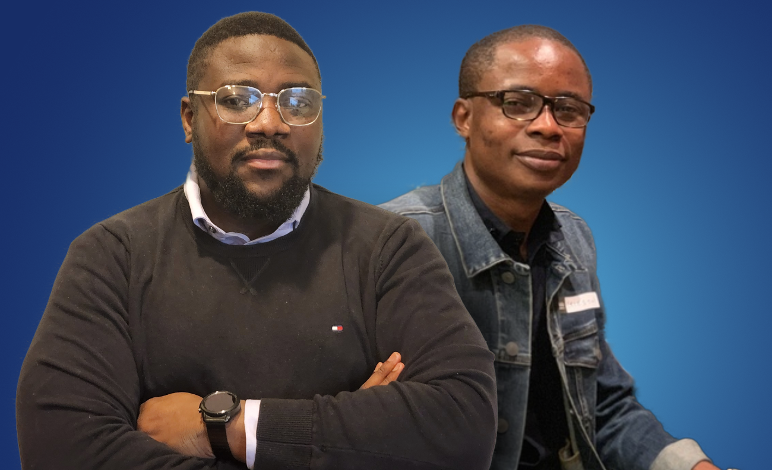
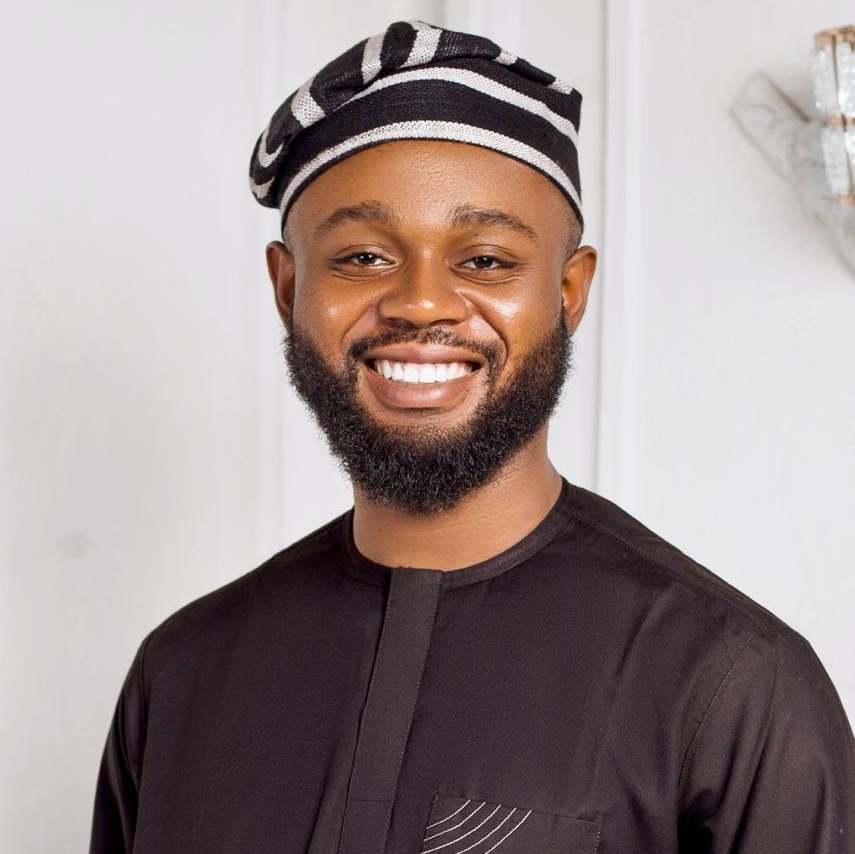
In 2024, Ugandan software developer Namwanza Ronald saw this as a challenge and founded Neibar, an app that lets people give their pre-owned items away for free, extending their lifespan while meeting real needs in low-income households.
Ronald’s mission is to cut waste and close inequality gaps in African communities by making gifting pre-owned items easy and dignified. Through the location-based app, people can list household, school, or workplace items they no longer need, and neighbors can pick them up.
“Existing platforms for used items mostly focus on buying and selling, which leaves a big gap. But Neibar set out to close that gap by reducing waste and inequality across African communities, making purposeful giving easy, accessible, and stigma-free,” Ronald told TechCabal.
How it works
The app, currently available on Android, requires users to sign up with basic information and location. That way, they can see when someone in their neighborhood is giving away an item.
A user’s dashboard displays categories of items from household goods to clothing and learning materials.
When a user lists an item to give away, others in the neighborhood are notified by email and can log in to reserve it on a first-come, first-served basis. With the app’s built-in end-to-end encrypted chats, the giver and recipient can discuss the item and agree on a safe public location for pickup.
“We encourage users to meet in public places where they know it is safe like parks, cafes, or designated community zones where they are receiving items,” Ronald said.
To stop people from hoarding items for commerce, the platform limits each user to five item reservations per day. The system also monitors user activities and can flag users who repeatedly reserve items within short intervals.
Get The Best African Tech Newsletters In Your Inbox
Giving meets need
For beneficiaries, the impact can be immediate. When Sabbi Derrick began his computer science degree at Makerere University in Uganda, he realised he needed a laptop to keep up with his coursework but he had none. He often borrowed from a friend, which left him behind in practice and struggling to keep pace with his peers. The pressure to get his own laptop grew as he entered his second year.
“I was desperate,” Derrick said. “Laptops here are so expensive. At the time, I couldn’t afford one because to buy such a gadget it would cost about UGX600,000 ($171) to UGX700,000 ($200),” he stated.
That changed when Derrick discovered Neibar on Facebook and signed up. Through the app, he received a used laptop from a stranger in his neighborhood, the same one he now relies on for coursework and coding.
“It made me improve in the course of my study because it’s what I’m using right now for school and other things that I’m doing like learning tech skills.”
In Kenya, Nabatte Kevina turned to Neibar when shopping for essentials for her growing daughter. One of those needs was a bed and she found one listed on the app that she reserved and secured.
For Kevina, the gift eased the financial pressure of buying a new bed. “When I checked the platform, I didn’t see much, but I was able to get a bed for her.”
Funding and traction
According to Ronald, Uganda has become Neibar’s strongest market, while uptake in Kenya, Nigeria, and South Africa remains slow. Outside Africa, adoption has been minimal, largely because there are no representatives promoting the platform on the ground.
The platform is currently self-funded with little contributions from family members. He affirmed that the platform will remain free for users in the long term, addingthat charging fees would undermine its mission of free and stigma-free giving, especially for households that cannot afford even second-hand markets.
While Neibar’s model is not venture capital backable, Ronald admits the platform still needs money to run. Operational costs; from maintaining the technology to supporting infrastructure remain a constant challenge for the platform to keep serving its mission.
To stay sustainable, it is exploring external funding and partnerships. The founder sees these as the best paths to secure long-term financial stability without compromising the platform’s core promise of free and open giving.
“We don’t have any funders right now, but we are exploring partnerships and funding to secure responsibility to keep the platform. So it would be a big opportunity if we could have funding.”
He also outlines a long-term vision to collect products at the end of their life cycle and recycle them into new items, creating a local circular economy in Africa.
“We want to build a circular economy system where if the last person who receives the item feels like the item can no longer be used by someone else, we want to bring back the items and recycle them into something new,” he said.
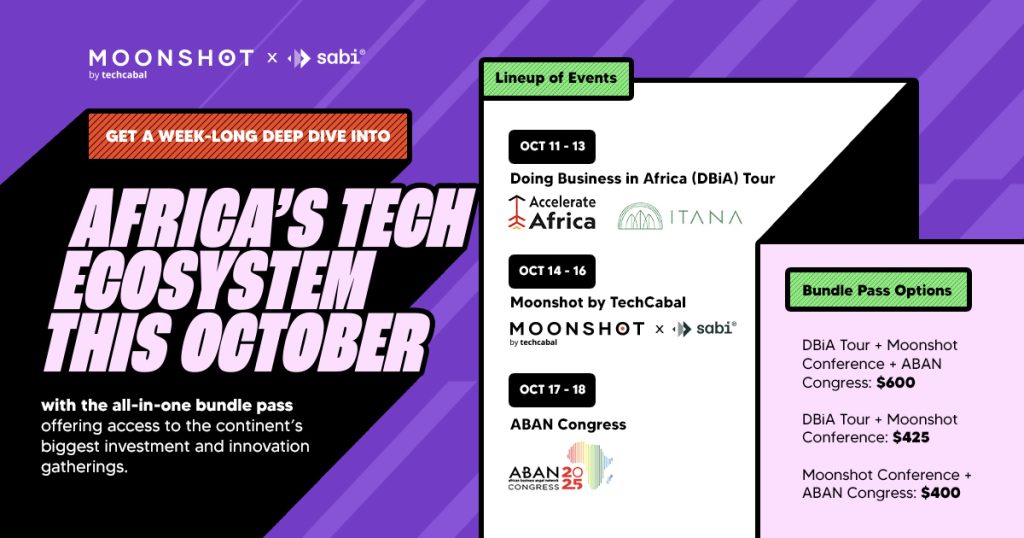
Mark your calendars! Moonshot by TechCabal is back in Lagos on October 15–16! Meet and learn from Africa’s top founders, creatives & tech leaders for 2 days of keynotes, mixers & future-forward ideas. Get your tickets now: moonshot.techcabal.com
More than 66,000 jobs in Kenya’s export processing zones (EPZs) are at risk as a US trade pact that underpins the country’s export economy is set to expire. The African Growth and Opportunity Act (Agoa), which for 25 years has allowed duty-free access for African goods into the US, lapses at midnight, Sept. 30.
Despite apparel dominating the programme, which supports over 800,000 livelihoods, tech-related jobs within the EPZs are equally significant, with approximately 3,000 to 7,000 roles, or 5 to 10% of the total workforce.
If the US Congress does not extend it, tariffs on Kenyan exports will rise above 30%, threatening years of gains in apparel and raising costs for technology service providers that depend on EPZ incentives.
Kenya’s EPZs are best known for textile firms like United Aryan, which produces Levi’s and Wrangler jeans, or Hela Clothing, which supplies PVH brands Calvin Klein and Tommy Hilfiger.
But these zones also house outsourcing and tech service companies such as Sama (a business process outsourcing firm that offers data labelling services) and Majorel (a content moderation company). They train and employ thousands of young Kenyans to label data for artificial intelligence systems, run call centres, and provide back-office support for US clients. These companies now risk losing duty-free imports of servers, networking equipment, and specialised hardware. Those costs underpin their ability to compete globally.
Get The Best African Tech Newsletters In Your Inbox
A threat to tech firms
The business models of companies like Sama and Majorel are highly sensitive to infrastructure costs. Losing EPZ exemptions means that tariffs and VAT will be applied immediately to imported computer hardware and networking equipment.
In outsourcing, contracts are priced per seat or per task. Even a small increase in the cost per worker can prompt clients to relocate projects to more affordable jurisdictions. Sama, for example, supports global AI firms by tagging images and text; therefore, a tariff-driven increase in capital expenditure for servers and equipment would erode its position as one of Nairobi’s anchor digital employers.
The same applies to Majorel, which provides multilingual customer support for multinational companies. A minor cost imbalance is enough to trigger a mass exodus of digital contracts, revealing that Nairobi’s nascent tech hub is critically dependent on an American trade waiver.
Pankaj Bedi, who chairs the apparel manufacturers and exporters sector at the Kenya Association of Manufacturers, wrote for the Star, a Kenyan newspaper, that lenders are already nervous.
“If Agoa cannot be renewed in time, Kenya must pivot immediately to a fallback plan: a Kenya–US Free Trade Agreement built on Kenya’s longstanding strategic partnership with the US and the low level of trade competition between the two countries,” Bedi said.
Financing payrolls and new contracts is becoming harder, as banks factor tariff exposure into their credit models, meaning that the squeeze runs across textiles and technology alike.
Agoa’s design gave Kenya two clear advantages: predictable access to the US market and fiscal incentives for companies inside the EPZ framework. Both are now at risk. The US administration has said it supports a one-year extension, but legislation requires congressional approval. The lack of urgency in Washington has left Nairobi’s exporters guessing.
Factories face digital gaps
On the apparel side, some Kenyan exporters have invested in digital tools to keep up with US buyers. Hela Clothing has implemented Radio-Frequency Identification (RFID) tagging and inventory management software to enhance visibility throughout its supply chain.
Ashton Apparel has piloted automated cutting machines to reduce waste. But many smaller firms still depend on manual processes. A tariff shock could tilt the economics towards automation, which in turn undermines the very jobs that Agoa was credited with creating.
US retailers are demanding detailed data on sourcing, labour conditions and environmental impact. Competitors in Bangladesh and Vietnam are already adopting blockchain platforms, such as TextileGenesis, and IoT monitoring to provide real-time reports.
Kenyan firms such as United Aryan and Hela still rely on manual audits. Suppose duty-free access is gone, the cost of lagging in compliance technology could be the difference between retaining and losing contracts.
What comes next
Kenyan officials say they are lobbying hard in Washington. President William Ruto argued last week that Agoa supports not just African exporters but also US consumers, delivering savings on everyday goods.
The Kenya Private Sector Alliance has called for a one- to two-year transition period to avoid sudden disruption. However, without congressional action, tariffs will take effect on October 1.
United Aryan cut 1,000 jobs this week, about 10% of its workforce. Business process outsourcing firms have not announced layoffs, but they face the same vulnerability. Both rely on a policy framework that may no longer exist by the time their next shipments or contracts are due.
Mark your calendars! Moonshot by TechCabal is back in Lagos on October 15–16! Meet and learn from Africa’s top founders, creatives & tech leaders for 2 days of keynotes, mixers & future-forward ideas. Get your tickets now: moonshot.techcabal.com
30 septembre 2025
Hello!
Welcome to The Next Wave: Francophone Africa, your weekly deep dive into the tech ecosystem across French-speaking Africa. By default, this newsletter is in French—but don’t worry, you can click the button below to switch to the English version.
Les stablecoins ne sont plus une expérimentation réservée aux passionnés de crypto. Dans toute l’Afrique francophone, de Dakar à Douala, d’Abidjan à Kinshasa, les stablecoins apportent discrètement une réponse à des problèmes concrets : frictions transfrontalières, pénurie de devises (principalement le dollar américain), lenteur des systèmes de paiement pour les entreprises et besoin d’une monnaie programmable et native d’Internet. Mais il ne s’agit pas simplement d’une histoire où la cryptomonnaie l’emporte. La situation est complexe : l’adoption partielle, les infrastructures inégales, la prudence réglementaire et les réponses concurrentes du secteur public (MBDC, propositions de CFA numérique) déterminent la rapidité et l’ampleur avec lesquelles les stablecoins peuvent se développer.
Plongeons-nous dans une analyse approfondie, longue, documentée et pratique, de la manière dont les stablecoins sont utilisées aujourd’hui en Afrique francophone, des facteurs qui favorisent leur développement, de ceux qui les freinent, et des fondateurs et projets qui jouent un rôle central dans cette histoire.
Stablecoins : les cas d’utilisation qui font grimper les chiffres
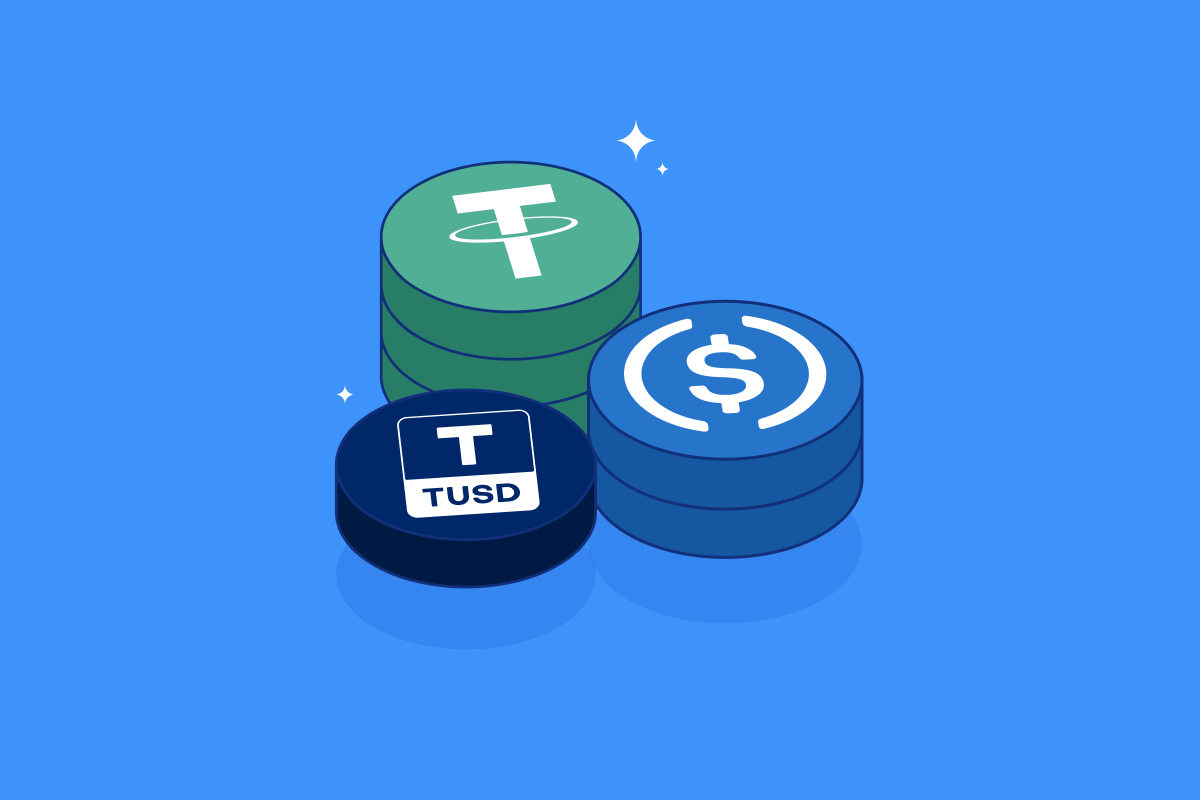
Image Source: TransFi
Les stablecoins sont un sujet qui revient fréquemment dans les discussions sur les technologies financières. Plus de 60 % des Africains ont moins de 30 ans, et cette jeunesse est le moteur de l’adoption rapide des technologies sur le continent. Ainsi, les technologies financières sont façonnées par la population jeune et les individus privilégiant le mobile à la recherche de solutions. Selon Chainalysis, les stablecoins représentent désormais environ 43 % de tout le volume des transactions crypto en Afrique subsaharienne. Faisons une pause… Presque la moitié. Les gros titres sont donc multiples, variés et parfois complexes. En voici quelques-uns :
L’utilisation des stablecoins en Afrique francophone est en croissance, portée principalement par les besoins de transferts d’argent, l’accès aux dollars et des règlements transfrontaliers plus rapides.
L’adoption est inégale , plus avancée là où existent des fintechs crypto-friendly, des rampes d’échange et des intégrations marchandes (l’influence des rails nigérians et kenyans stimule les flux régionaux), mais limitée là où les rampes fiat fiables et la clarté réglementaire manquent.
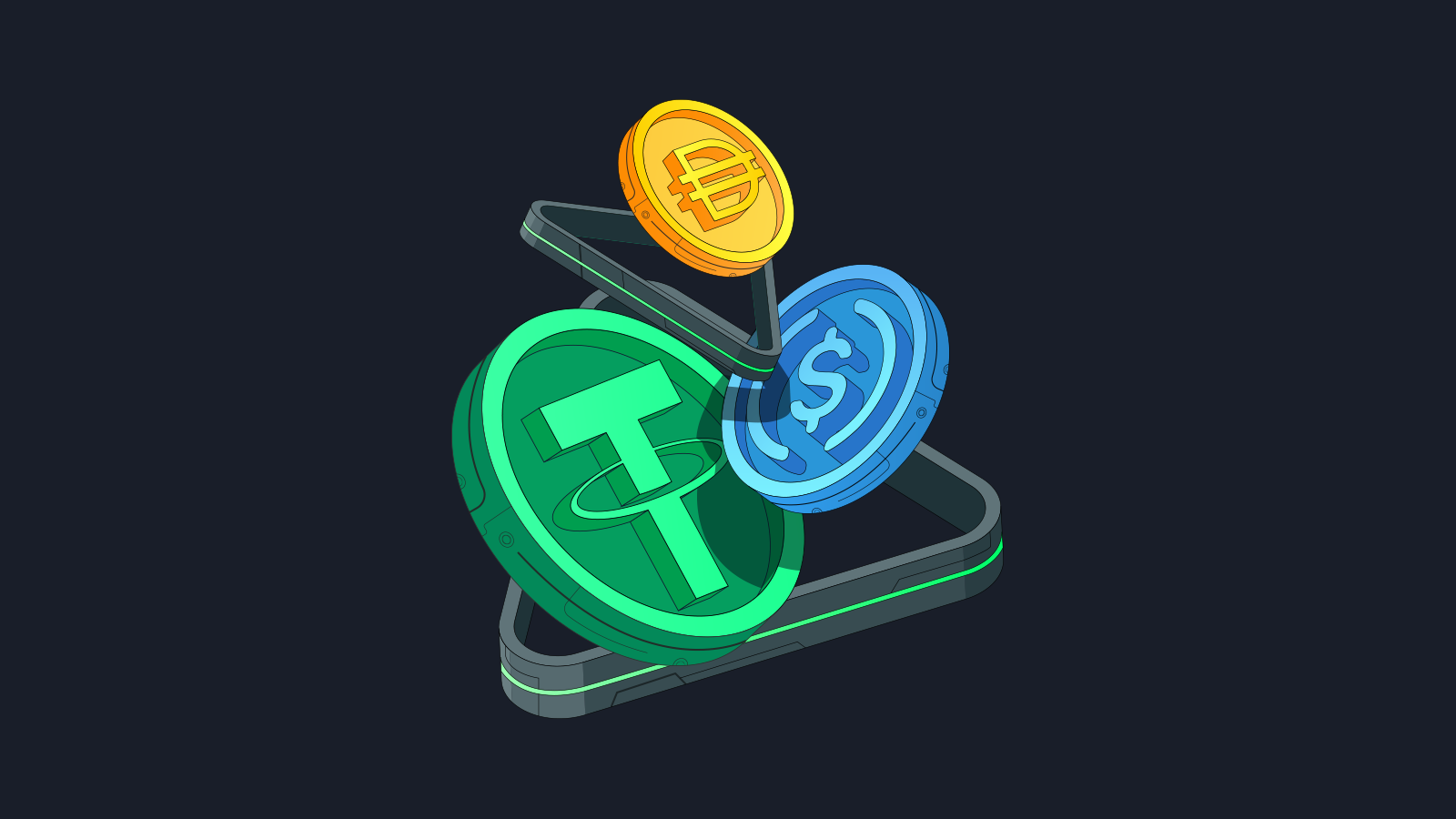
Les projets et portefeuilles locaux (par ex. Ejara) jouent un rôle crucial en proposant une expérience utilisateur fluide et un support linguistique local, mais la majorité de la liquidité circule encore via les stablecoins globaux (USDT, USDC) émis par des entités centralisées.
La tension réglementaire est réelle : les banques centrales expérimentent les MDBC/variantes de CFA numérique tout en avertissant des risques fiscaux et monétaires liés à la dollarisation via stablecoin. Cela influence la réglementation et la confiance des commerçants.
Il existe une réelle opportunité dans la création de rampes d’accès fiables, de pools de liquidité en monnaie locale, d’intégrations de paiements marchands et de couches de conformité. À partir de là, les stablecoins peuvent réellement stimuler le commerce, les salaires et les micro-transferts.
La pertinence des stablecoins en Afrique francophone
Image Source: Business Insider
L’Afrique francophone est confrontée à plusieurs points de douleur structurels qui rendent une alternative numérique au dollar attrayante :
Rareté du dollar et volatilité des changes. Les entreprises et particuliers qui ont besoin de dollars pour les importations, les salaires ou l’épargne font face à des conversions coûteuses et à des délais. Les stablecoins adossés au dollar sont une couverture pragmatique et un moyen d’échange.
Frictions transfrontalières à l’intérieur et à l’extérieur de l’Union économique et monétaire ouest-africaine (UEMOA) : même au sein de la zone CFA, les règlements transfrontaliers peuvent être lents et coûteux pour les PME et les travailleurs indépendants. Les stablecoins programmables permettent des règlements quasi instantanés avec des frais réduits.
Limites du mobile money. Le mobile money est mature dans certaines parties de l’Afrique francophone, mais souvent lié aux rails fiat locaux et soumis à des plafonds de retrait ou à des problèmes d’interopérabilité. Il a bien fonctionné pour le B2C mais moins pour le B2B. Les stablecoins peuvent être intégrés dans les flux marchands là où le mobile money montre ses limites.
À cause de ces contraintes structurelles, l’adoption explose. Pour les envois de fonds et les flux de la diaspora, les stablecoins sont plus rapides et moins chers que les rails traditionnels pour les petits transferts transfrontaliers. Cela séduit freelances et micro-entreprises cherchant à travailler avec des entités étrangères.
Côté intégrateurs FinTech et plateformes d’échange, des acteurs comme OVEX et Yellow Card fournissent liquidité et KYC ( Apprenez à connaître vos clients ), jouant un rôle essentiel d’infrastructure. Les bourses locales et intégrations marchandes réduisent les frictions. Les stablecoins programmables permettent l’automatisation des salaires, les paiements fournisseurs et l’épargne programmable pour les PME avec moins de frictions que les virements bancaires.
Les obstacles à l’adoption
Incertitude réglementaire et opposition des banques centrales. Les banques centrales s’inquiètent de la perte de seigneuriage, de l’érosion de l’assiette fiscale et du contrôle monétaire. Plusieurs banques centrales (par exemple, la BCEAO dans l’UEMOA) étudient activement les initiatives relatives au CFA numérique et aux monnaies numériques des banques centrales (CBDC). Les régulateurs se montrent prudents, voire trop prudents selon certains, à l’égard des stablecoins émis par le secteur privé. Cela fait partie de leur rôle de « parents surveillants » de l’ensemble du système. Malheureusement, outre le fait de ralentir les choses (ce qui n’est pas toujours une mauvaise chose), cela crée également des environnements politiques inégaux.
Liquidité on/off-ramp et risque de garde. Sans liquidité fiat fiable ni dépositaires conformes, les utilisateurs subissent glissement et risque de contrepartie. La majorité des volumes passent encore par les grands émetteurs (USDT/USDC), mais les pools locaux et dépositaires réglementés restent inégaux.
Friction KYC/AML vs inclusion. Une conformité KYC stricte augmente le coût d’intégration des utilisateurs à faible valeur. À l’inverse, une conformité laxiste effraie les régulateurs et les partenaires. Il est très difficile de trouver le juste équilibre. Les régulateurs qui ne sont pas encore tout à fait familiarisés avec les aspects techniques des stablecoins s’informent (espérons-le) tout en supervisant les utilisateurs qui, souvent, ne connaissent pas non plus ce nouvel outil.
Réponses du secteur public (MDBC & CFA numérique). Le déploiement de monnaies numériques gouvernementales crée à la fois concurrence et opportunités d’intégration. Mais cela envoie aussi le signal que les banques centrales pourraient restreindre les stablecoins privés. En Afrique de l’Ouest francophone, le CFA numérique est un sujet particulièrement crucial.
Confiance & sensibilisation. Beaucoup d’utilisateurs préfèrent encore le cash ou les marques de mobile money connues. Éduquer commerçants et utilisateurs à la conversion, la garde et la réconciliation des flux de stablecoins reste un défi opérationnel non trivial.
Feuille de route pratique pour les fondateurs en Afrique francophone
Stablecoins/Image Source: KuCoin
Si vous construisez des produits ou intégrations autour des stablecoins, priorisez :
Conformité réglementaire en premier. Investissez dans la conformité pour être partenaire des banques et gouvernements, pas leur cible. Les investisseurs examineront de près les autorisations, les relations avec les régulateurs et les actualités des banques centrales.
Rails fiat fiables et partenariats de liquidité. Échanges locaux, partenaires bancaires (là où c’est possible) et dépositaires réglementés sont incontournables.
UX orientée commerçants qui masque la complexité blockchain. Les utilisateurs n’ont pas besoin de “wallets”, mais de reçus, de paiements conciliés et de règlements prévisibles. Les choix de type Ejara sont essentiels.
Éducation & KYC adaptés aux petits utilisateurs. Utilisez des KYC progressifs, de l’onboarding hors ligne et des partenariats avec des agents locaux de confiance.
Anticiper la concurrence des MDBC. Concevez pour l’interopérabilité avec un éventuel CFA numérique/MDBC, ou développez des propositions de valeur (rapidité, confidentialité, programmabilité) qui complètent au lieu de concurrencer directement.
Conclusion
Les stablecoins en Afrique francophone ne sont pas une bulle spéculative ; ils constituent une solution ciblée aux problèmes réels liés aux paiements, aux opérations de change et aux transferts de fonds. Leur adoption sera toutefois progressive et inégale. Les gagnants seront les fondateurs qui pourront (1) dialoguer de manière constructive avec les régulateurs (avant tout), (2) garantir la liquidité fiduciaire et une conservation conforme, (3) créer une expérience utilisateur simple qui masque la complexité de la blockchain, et (4) s’associer avec des commerçants et des opérateurs de télécommunications pour assurer la liquidité fiduciaire et la distribution.
Mark your calendars! Moonshot by TechCabal is back in Lagos on October 15–16! Join Africa’s top founders, creatives & tech leaders for 2 days of keynotes, mixers & future-forward ideas. Early bird tickets now 20% off—don’t snooze! Get your tickets.
Nigerian Telecommunications Limited (NITEL) was once the country’s flagship telecom operator, born out of the promise of modern connectivity. But its story quickly became a case study in waste, mismanagement, and failed ambition. Today, its successor, ntel, is struggling for relevance as the Asset Management Corporation of Nigeria (AMCON) tries one last gamble to restructure it for potential investors.
A troubled birth
NITEL was established in 1985 through the merger of two government entities: the telecommunications arm of the Post & Telegraph (P&T) and Nigerian External Communications (NET). According to Chief Ezekiel Fatoye, former Executive Director, Zonal Administration at NITEL and Multi-Links, the merger was flawed from the start.
“NET had about 1,500 staff while P&T had 31,000,” he told TechCabal in an interview. “When they merged them, the new company was told to reduce staff to 17,000 or fewer. That meant sacking more than half of the people.”
In 1985, the Nigerian government appointed British Teleconsult, a subsidiary of British Telecom (BT), to bring in its expertise in commercialising and privatising national telecommunications agencies, but morale collapsed. “In the first year, it was a mess. People did not know where they were or understand the business,” Fatoye said.
At the same time, government targets for expansion were wildly ambitious. When the military dictator General Murtala Muhammed asked P&T in 1975 to raise subscribers from 42,000 to one million, the contracts awarded to international vendors set the stage for disaster.
Ericsson and another contractor secured telecom equipment supply deals with the Nigerian government. But when the equipment arrived, local contractors had not completed the buildings where it was to be installed.
“We had to keep the equipment in warehouses under air conditioning so it wouldn’t spoil,” Fatoye said. “ Temporary buildings in Ikoyi, Ikeja, and Apapa became permanent NITEL exchange.”
Worse still, the government spent $200 million on a balloon-based transmission system from an American contractor that never worked. “The equipment was abandoned, the generators were stolen — all wasted,” he added.
Monopoly years and GSM disruption
Despite these setbacks, NITEL operated as a monopoly through the late 1980s and 1990s, charging as little as 2 kobo per local call—far below cost recovery. The company survived through restructuring overseen by the Technical Committee on Privatisation and Commercialisation (TCPC), created in 1988, which ranked it among the few state companies struggling toward profitability. But infrastructure lagged far behind demand. The TCPC transformed into the Bureau of Public Enterprises (BPE) in 1993.
The vision for NITEL at the time was clear: expand domestic telephone lines, modernise international calls, and make services like fax and telex more widely accessible. As demand for digital services surged, the government tried to commercialise the company, listing part of it on the Nigerian Stock Exchange as NITEL PLC. Yet, despite these moves, reform never kept pace with demand.
GSM arrives, and NITEL stumbles
The arrival of the Global System for Mobile Communications (GSM) in 2001 was both an opportunity and a threat. The Obasanjo administration licensed MTN (0803), Econet (0802), Globacom (0805), and NITEL (0804) as mobile operators. However, while private firms poured between $400 to $500 million annually into network rollouts, NITEL struggled, according to two telecom executives.
Running a mobile network requires huge capital. Each tower can cost over $120,000 to build, with ongoing expenses for diesel, maintenance, and security. On average, a well-managed cell tower consumes about 1,000 litres of diesel per month, while poorly managed ones can require nearly 2,000 litres monthly. MTN and its peers understood this and invested aggressively. NITEL, still government-controlled, did not. Subscriber growth stagnated while private operators raced ahead.
“The telecom business is often misunderstood in terms of just how much capital it requires,” said one former infrastructure company executive familiar with the privatisation, who requested anonymity to speak freely. “MTN and Airtel were investing over $250 million every year to keep operations running, but after NITEL secured its licence, the government never provided anything close to that level of funding.”
To salvage the situation, in 1996, the government carved out a mobile arm, Nigerian Mobile Telecommunications Limited (M-Tel), and sought private managers. That decision opened a long, messy era of failed privatisations.
The privatisation circus
The first major privatisation attempt came in 2001, when Investors International London Limited (IILL) was awarded a 51% stake in NITEL. IILL paid the required 10% deposit but failed to raise the remaining $1.317 billion needed to complete the deal. The government cancelled the transaction, kept the deposit, and returned to the market in search of another buyer.
On April 28, 2003, the government instead handed management of NITEL to Pentascope, a little-known Dutch firm with minimal telecom experience. Nasir El-Rufai, then Director General of the Bureau of Public Enterprises (BPE), played a significant role in the selection and engagement of Pentascope as the management contractor for NITEL. Multiple credible sources, reports from government investigations, and former NITEL staff and industry experts confirm that El-Rufai was instrumental in imposing Pentascope on NITEL, despite concerns about the firm’s lack of telecom experience and capacity.
The results were catastrophic. Within two years, NITEL’s working lines dropped from over 550,000 to fewer than 300,000, revenues halved, and the company swung from a ₦15 billion ($131.6 million using ₦114/USD) profit to a ₦19 billion ($166.7 million using ₦114/USD) loss. Pentascope was paid millions while depleting NITEL’s assets and leaving it deeply indebted. The deal, approved under Vice President Atiku Abubakar’s privatisation council, remains one of the most controversial episodes in Nigeria’s economic history.
Subsequent rescue attempts also collapsed. In 2005, Egypt’s Orascom Telecom briefly won a bid for NITEL, but the government revoked it. A year later, Transcorp acquired the company for $500 million—later raised to $750 million—but the deal unravelled amid capital shortfalls and internal rifts.
Founded in 2004 as a national investment vehicle by six entrepreneurs, including Tony Elumelu and Fola Adeola, Transcorp appointed Funke Opeke, then based abroad, to lead NITEL after the acquisition. However, disagreements within the group soon caused a split. Adeola exited in 2007, taking Opeke with him to establish MainOne, while Elumelu emerged as the last remaining founder, eventually consolidating control and restructuring Transcorp.
“When you put six random people into a room, maybe they don’t share the same philosophy; that’s difficult,” said one telecom executive with knowledge of the matter. “They didn’t come together on their own. They came because they were more or less appointed or nominated by the President.”
The collapse of Transcorp’s NITEL acquisition was hastened by the exit of British Telecoms, which had served as NITEL’s technical partner. BT pulled out due to Transcorp’s lack of funds, poor corporate governance, and internal disputes over equipment vendor selection. Its departure left Emirates Telecommunications Corp. (Etisalat) as NITEL’s sole technical partner. The Abu Dhabi-based firm also held equity in NITEL and, by September 2007, became the largest stakeholder in Mubadala Development Company (MDC), which went on to establish Etisalat Nigeria.
Later attempts by the New Generation Consortium ($2.5 billion) and Omen International also collapsed. Each failure deepened NITEL’s decline while private operators solidified their dominance.
SAT-3: A hidden lifeline
Amid the chaos, NITEL still held one golden asset: SAT-3, the first submarine cable linking Africa to Europe. Built in the late 1990s by a consortium of about 20 countries and companies, the cable stretched from Portugal to Africa and beyond. For several years, SAT-3 gave NITEL a monopoly over international bandwidth, generating lucrative revenues.
Ironically, this advantage may have hindered NITEL. Flush with SAT-3 cash, the company neglected its GSM network and retail services. Competitors like MainOne, co-founded in 2010 by Opeke (a former NITEL executive), later broke that monopoly, but by then, NITEL had lost the race.
Final sale: NATCOM and ntel
By 2015, after at least five failed privatisation attempts, NITEL was sold to (NatCom Development & Investment Limited) NATCOM Consortium through a “guided liquidation.” NATCOM, led by businessman Olatunde Ayeni, paid $252 million and rebranded the company as ntel.
At first, optimism was high. On January 8, 2024, ntel appointed Adrian Wood, former CEO of MTN Nigeria, to lead the business and rolled out Nigeria’s first 4G/LTE-only network, offering blazing-fast data speeds. Many early users swore by its modems, which outperformed rivals.
But again, challenges loomed. Voice services were patchy, coverage was limited, and the company lacked the capital to scale. Building towers, fueling generators, and maintaining infrastructure proved overwhelming. By the early 2020s, ntel was saddled with debt to banks, vendors, and infrastructure partners like IHS. To pay off some of its obligations, the company sold off some of its more than 2,000 tower assets, leaving it with over 600 towers.
AMCON steps in
In May 2023, ntel’s financial troubles reached a breaking point. The Asset Management Corporation of Nigeria (AMCON), the government agency that takes over distressed assets, stepped in. With several banks heavily exposed and trade creditors unpaid, AMCON negotiated an equity position to shield the company from collapse.
Rather than liquidate immediately, AMCON opted to restructure. It also allowed Ayeni, now the minority shareholder, to attract new investors into the company, leading to Wood’s appointment as CEO with the mandate to raise $500 million in funds. The promise of new investment did not materialise, and Woods was let go in 2025. In May 2025, Soji Maurice-Diya was appointed the new CEO of ntel with a mandate to either attract new investors or divest the company.
Under the new management, 105 employees have been let go since July 2025, with the expectation of replacing them with younger talent to reimagine the business, according to one person with knowledge of the matter. The goal is to shift away from the old NITEL culture of bureaucracy and toward innovative plays like network optimisation and niche services.
Lessons from a painful history
Looking back, Fatoye sees NITEL’s fall as inevitable given its flawed foundation. “First, there was no transmission,” he said. “ Secondly, the early equipment could not be housed. Thirdly, there were no cables to connect the premises. From the beginning, it was confusion.”
The rise, fall, and rebirth of NITEL highlight recurring themes in Nigeria’s political economy. First, the capital intensity of telecoms was consistently underestimated by policymakers and investors alike. While MTN and Globacom invested over $200 million annually in expansion, NITEL’s budgets primarily went towards staff salaries.
Second, privatisation was undermined by politics and insider dealings. From Pentascope leaving NITEL with more debt from banks to Transcorp’s acquisition falling apart over a lack of funds, the result was a collapse that cost Nigeria hundreds of billions in lost value.
Finally, the NITEL story shows how technology can both save and sink a company. SAT-3 gave NITEL a temporary lifeline, but also lulled it into complacency. ntel’s early LTE network had technical brilliance but lacked the scale to compete.
Today, ntel’s survival hinges on whether it can reinvent itself in a world dominated by data, not voice. Its new management believes value can be created through partnerships, optimisation services, and targeted connectivity, even without building the largest network. Whether that vision succeeds remains uncertain. In early September, AMCON told TechCabal that its current priorities are not to divest or sell ntel but to reposition it as a business.
Mark your calendars! Moonshot by TechCabal is back in Lagos on October 15–16! Meet and learn from Africa’s top founders, creatives & tech leaders for 2 days of keynotes, mixers & future-forward ideas. Get your tickets now: moonshot.techcabal.com
Mastercard Foundation, one of the world’s largest philanthropies, has named Sewit Adherom as its next President and CEO. She will assume the role on January 1, 2026, succeeding Reeta Roy, who has led the organisation for nearly two decades.
Her appointment will continue Mastercard Foundation’s Africa-first agenda and signal a change towards more tech-powered solutions to jobs, skills, and opportunity. Adherom is a seasoned technology leader with extensive experience in developed and emerging markets. She co-founded Gro Intelligence, a data platform on agriculture, climate, and economic trends, and earlier served as Vice President at Helios Investment Partners, an Africa-focused private equity fund.
“Sewit is a highly talented global executive with a deep understanding of the African continent. Her career spans the development and private sectors, with expertise in agrifood systems and technology – areas closely aligned with the Foundation’s work,” said Zein Abdalla, Chair of the Mastercard Foundation Board of Directors.
Founded in 2006, the Mastercard Foundation holds over $53 billion in assets, and its Young Africa Works strategy aims to enable 30 million young Africans to secure dignified work by 2030. Under Roy, the foundation deepened its “Africa-first” focus, making it a central player in education, entrepreneurship, and financial inclusion across the continent.
What the appointment means for Africa
Ahderom’s leadership is expected to push the Foundation further into tech-driven solutions for Africa’s pressing challenges. Her appointment means continuity for millions of African youth who rely on the Foundation’s programs for skills, tools, and access to opportunities. It also signals a likely shift towards greater use of technology and innovation in shaping these programs.
The Foundation has committed over $10 billion to programs in Africa and indigenous communities in Canada, with a strong focus on supporting young people and entrepreneurs. Its flagship initiatives include the Mastercard Foundation Scholars Program, which has enabled more than 40,000 young people, mostly Africans, to complete their education and transition into careers.
Through its Young Africa Works strategy, the Foundation has also helped more than 13 million young Africans secure dignified and fulfilling work opportunities. During the COVID-19 pandemic, it launched a $1.5 billion partnership with the Africa Centres for Disease Control and Prevention to expand vaccine access across the continent
“Sewit’s career as an investor and an entrepreneur provides invaluable lessons in agility, resilience, and the realities of scaling complex systems. Her first-hand experience is an asset that will enable us to support the journeys of entrepreneurs,” added Abdalla.
Ahderom, who has spent over two years on the Foundation’s Board, said she is “excited to listen and learn from young people, our staff, and our partners, and to strengthen the collaborations that will continue to shape meaningful change across Africa and within Indigenous communities in Canada.”
Mark your calendars! Moonshot by TechCabal is back in Lagos on October 15–16! Meet and learn from Africa’s top founders, creatives & tech leaders for 2 days of keynotes, mixers & future-forward ideas. Get your tickets now: moonshot.techcabal.com
Electronic Arts (EA), congrats on your $55 billion acquisition. 🎮 Big news for you, no doubt. But gamers everywhere (us) have just one request: whoever takes the reins, don’t mess with FIFA’s Ultimate Team grind. Some things are sacred.
Nigeria’s government wants to crack down on remote workers’ incomes
Image source: Tenor
Fun’s over for Nigeria-based remote workers. Starting January 2026, Nigerians working for foreign companies—whether as developers, marketers, or in other roles—will be required to register with the tax authorities and file local tax returns.
And if these workers fail to register with the Nigeria Revenue Service (NRS)? The penalties pack a punch. The government will bite back with fines of up to ₦1 million ($672), three years in prison, or both. The revenue service plans to track real-time transaction data for payments to ensure compliance.
Why does this matter? Nigeria’s remote workers have mostly stayed outside the tax net. Now, a freelancer earning $2,000 a month pays about 23% in taxes, cutting into income they did not plan to lose.
Zoom out: Nigeria joins Kenya, South Africa, and Ghana in cracking down on remote workers earning foreign income. The government is now demanding a detailed accounting of every dollar earned overseas. This is part of Nigeria’s push to increase its tax-to-GDP ratio to 18% by 2027, and remote workers earning foreign currency are one of its main targets. The real question is whether these taxes will actually improve life for Nigerian workers in the long run.
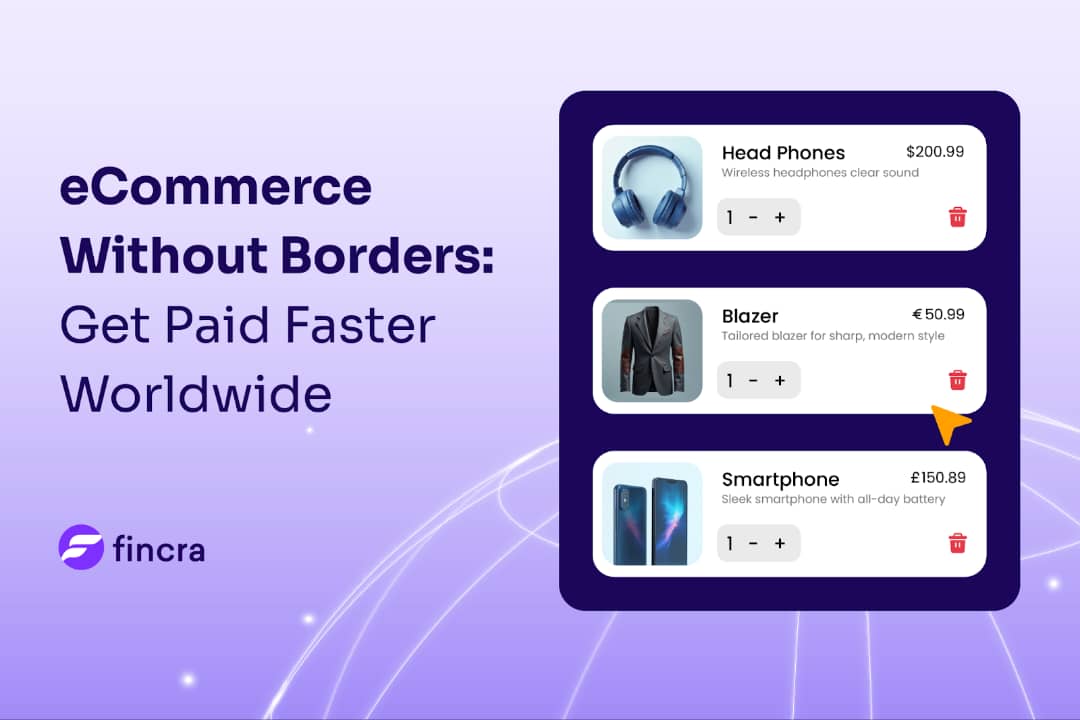
eCommerce Without Borders: Get Paid Faster Worldwide
Whether you sell in Lagos or Nairobi, customers want local ways to pay. Let shoppers check out in their local currency, using cards, bank transfers, or mobile money. Set up seamless payments for your global online store with Fincra today.
Mobile Money
Kenya wants to cut fees on mobile money transactions
Image source: Tenor
The Central Bank of Kenya (CBK) has decided that the cost of sending money on mobile money platforms is too high, and it wants to slash these fees. The average cost was $0.18 in 2024. As part of its 2025–2028 National Financial Inclusion Strategy, the CBK wants to drive the fees down to $0.078 by 2028.
Why are they doing this? Mobile money growth is stalling. While mobile money is already massive in Kenya—with operators processing $67.3 billion in 2024—growth has flatlined. The regulator blames the high costs of transfer fees for low uptake of other services beyond basic transfers and the exclusion of low-income users from the digital economy. It argues that high fees are choking innovation and limiting the next phase of financial inclusion.
This has happened before. In 2020, Kenya’s mobile money operators, including Safaricom’s M-PESA, waived transaction costs on all transfers under $7.73 (KES 1,000) to encourage e-payments adoption. But two years later, it returned the fees.
What does this reduction mean? Mobile money is the cash cow of telecom firms, with M-PESA contributing $1.2 billion in revenue for Safaricom in 2024. Cutting transaction fees could reduce that revenue. On the flip side, users get cheaper access to digital finance.
Zoom out: Cheap money transfers could make digital finance more accessible. But will this price slash actually pull low-income earners into the fold or simply chip away at the telecom operators’ golden goose?
Paga is in USA
Big news! Paga Group is now live in the United States, with digital banking services designed for Africa’s diaspora! Eligible users can send, pay, and bank in US Dollars & Naira, safe, regulated, and borderless. Learn more.
Telecoms
Telkom Kenya falls to fourth place after losing 40% of its customers
Image Source: TechCabal
4 out of every 10 users left Telkom Kenya in one year. This significant crash now places the telecom company in fourth place among competitors like Safaricom and Airtel. Equitel, Equity Bank’s mobile operator running on Airtel’s infrastructure, now claims the third spot with 1.5 million subscribers, while Safaricom and Airtel maintain their dominance in the top two.
What happened? The collapse began in 2023 when American Tower Corporation (ATC) disconnected nearly 900 of Telkom’s masts over $55 million in unpaid lease fees, triggering a coverage crisis. Network quality declined, and customers flocked to competitors with more reliable service.
Why does this matter? Poor service drives customers away, shrinking revenue, making it harder to fix the network and pay debts. Falling to fourth place means Telkom is unlikely to raise capital or attract strategic investors for 4G/5G upgrades, leaving the telco with deteriorating infrastructure and no real, clear path to get its numbers and customers back.
Zoom out: Telkom still owns valuable assets, 4,000km of fiber and data centers, but recovery could be unlikely. Its situation mirrors Nigeria’s T2 (formerly 9mobile, formerly Etisalat), which defaulted on $1.2 billion in loans in 2017, fell from third to fourth place, and still hasn’t recovered its market position. Both cases show how quickly debt problems can trigger irreversible subscriber decline. The question is: how will Telkom bounce back?
Connect Paystack to the world’s best tools!
With the Paystack Integrations Directory, connect to 60+ powerful apps to streamline your business. Learn more here →
Fintech
Egypt breaks remittance record
Central Bank of Egypt/Image Source: Business Today Egypt
Egypt hit a remittance record. Money coming in from diaspora more than doubled in the last decade. The remittance figures reached $36.5 billion in fiscal year 2024/2025 compared to $17.1 billion in 2015/2016. July alone saw $3.8 billion in remittances, the highest monthly inflow recorded.
What could have pushed this growth? The Central Bank of Egypt (CBE)’s steady hand can take a part of the credit. The bank’s prudent monetary policy, which involved balancing interest rates and money markets over the years, kept FX stable and strengthened confidence in citizens in diaspora that their money wouldn’t vanish in exchange rate chaos.
Another factor is the rise of digital remittance payment rails. Fintechs and remittance startups have made it easier for cross-border payments to happen. More seamless transfer options mean more dollars flowing through formal payment channels.
What does this mean? This rise in remittance payments places Egypt on the radar for remittance startups. Players like LemFi are already eyeing this market to redirect some of those remittance flows on its rails. The market is too big to ignore, and it is still growing. Egypt should expect more fintechs on its borders, and local startups should brace up for competition because these newcomers are relentless. They are coming with technology and capital, and they won’t stop until they take a sizable share of the market.
Do more with vban
Built for African freelancers and digital nomads, Vban gives you everything in one app – multi-currency accounts, competitive FX, virtual cards, and instant swaps. No payment limits. No FX rip-off. Just Vban – Download Now!
COOL STUFF! 😎
While most of us were busy unwinding on X or TikTok last weekend, this creator took time to build a smart stick that could make a difference. Using sensors and AI, the device detects obstacles in real-time and alerts blind users before they walk into danger. It’s the kind of practical assistive tech that could improve life for more than 26 million Africans living with visual impairment.
In a world obsessed with the next big AI software, it’s refreshing to see someone use technology to build something small, meaningful, and physical that directly improves accessibility.
Shout-out to Ugo.
CRYPTO TRACKER
The World Wide Web3
Source:
Coin Name
Current Value
Day
Month
Bitcoin
$114,577
+ 2.05%
+ 4.93%
Ether
$4,192
+ 1.72%
– 6.92%
XRP
$2.88
+ 0.76%
+ 1.25%
Solana
$210.58
+ 0.17%
+ 3.03%
* Data as of 06.00 AM WAT, September 30, 2025.
🚨 Flash Sale: 25% Off Moonshot Tickets 🚨
For a limited time only, you can save your seat at Africa’s biggest tech gathering with an exclusive 25% discount. On October 15 & 16, the Eko Convention Centre in Lagos will host founders, investors, policymakers, creatives, and operators shaping Africa’s innovation economy. Moonshot 2025 will feature deal rooms, investor lounges, immersive exhibitions, and the TC Startup Battlefield. Moonshot 2025 is designed for real connections and lasting impact. This offer ends soon.
🎟️ Secure 25% off your Moonshot ticket now. Get tickets.
Events
Entertainment Week Africa (EWA)—formerly Entertainment Week Lagos—returns to Lagos on November 18–23, 2025. Now a pan-African platform for the $58.4 billion creative economy, EWA has drawn 53,000+ attendees across film, music, fashion, and tech. This year’s edition introduces a dedicated film and music content market where artists, labels, directors, and publishers can pitch, licence, and sell directly to buyers and investors, supported by hands-on clinics to prep them for meetings. It will also feature a 50-company job fair, an expanded deal room accelerator with a ₦25 million seed fund, and more film premieres under the theme “Close the Gap.” Learn more here.
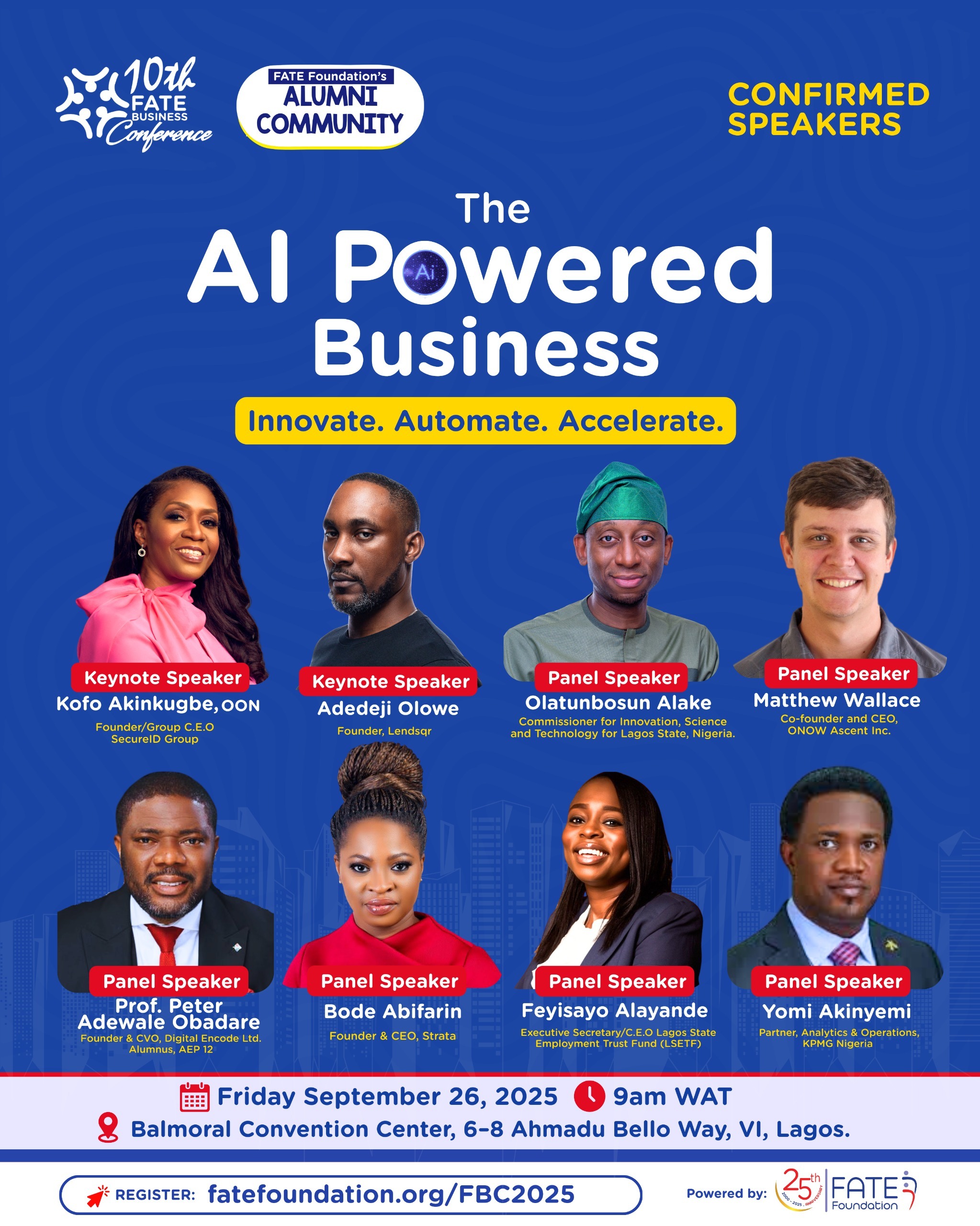
The 10th FATE Business Conference takes place on September 26 in Lagos under the theme “AI-Powered Business: Innovate. Automate. Accelerate.” The conference will feature keynotes from Kofo Akinkugbe (SecureID) and Adedeji Olowe (Lendsqr), with panel discussions led by policymakers and business leaders including Olatunbosun Alake (Lagos State Government), Prof. Peter Adewale Obadare (Digital Encode), and Bode Abifarin (Strata). Expect practical insights on how AI is changing industries and powering business growth. Register here.
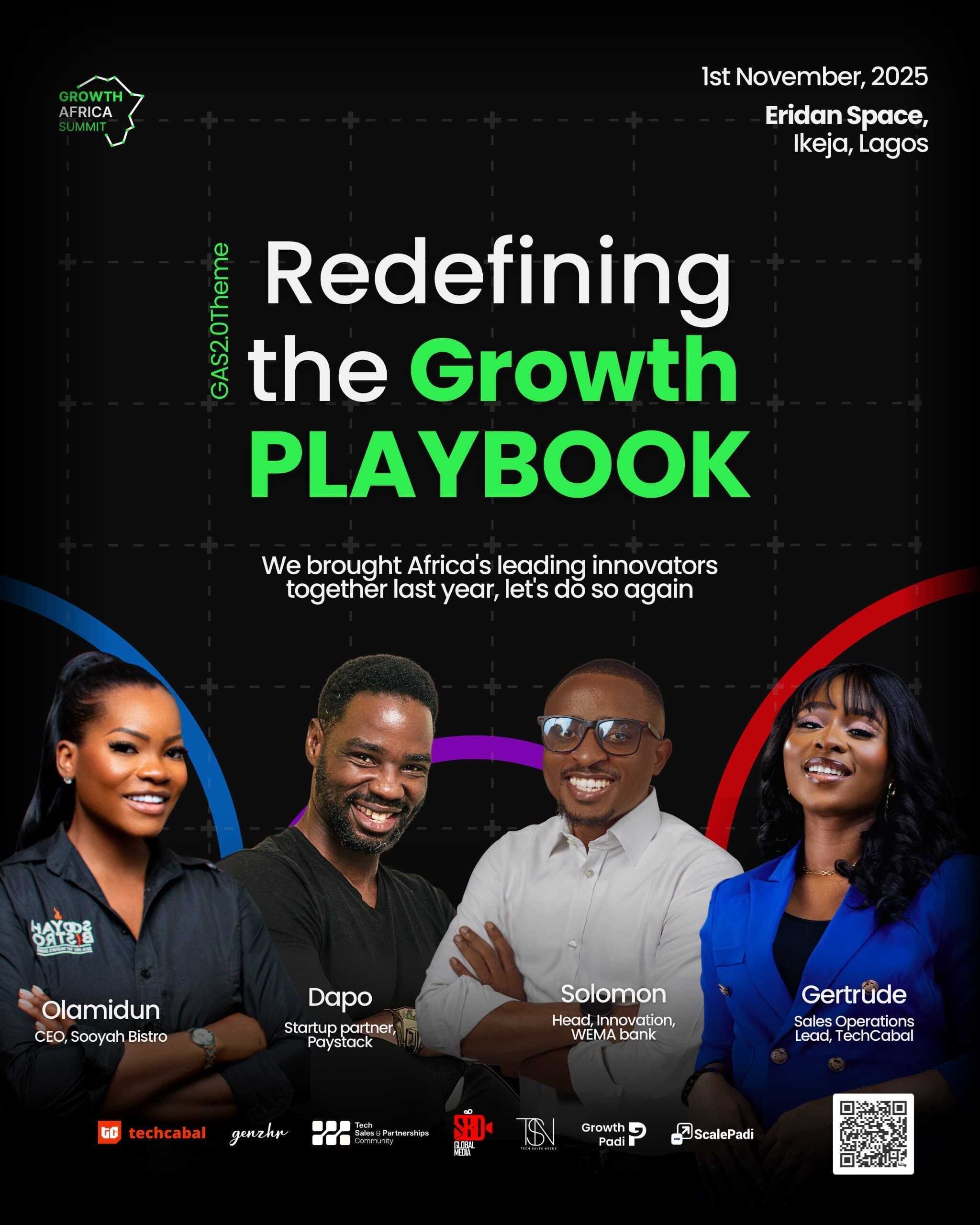
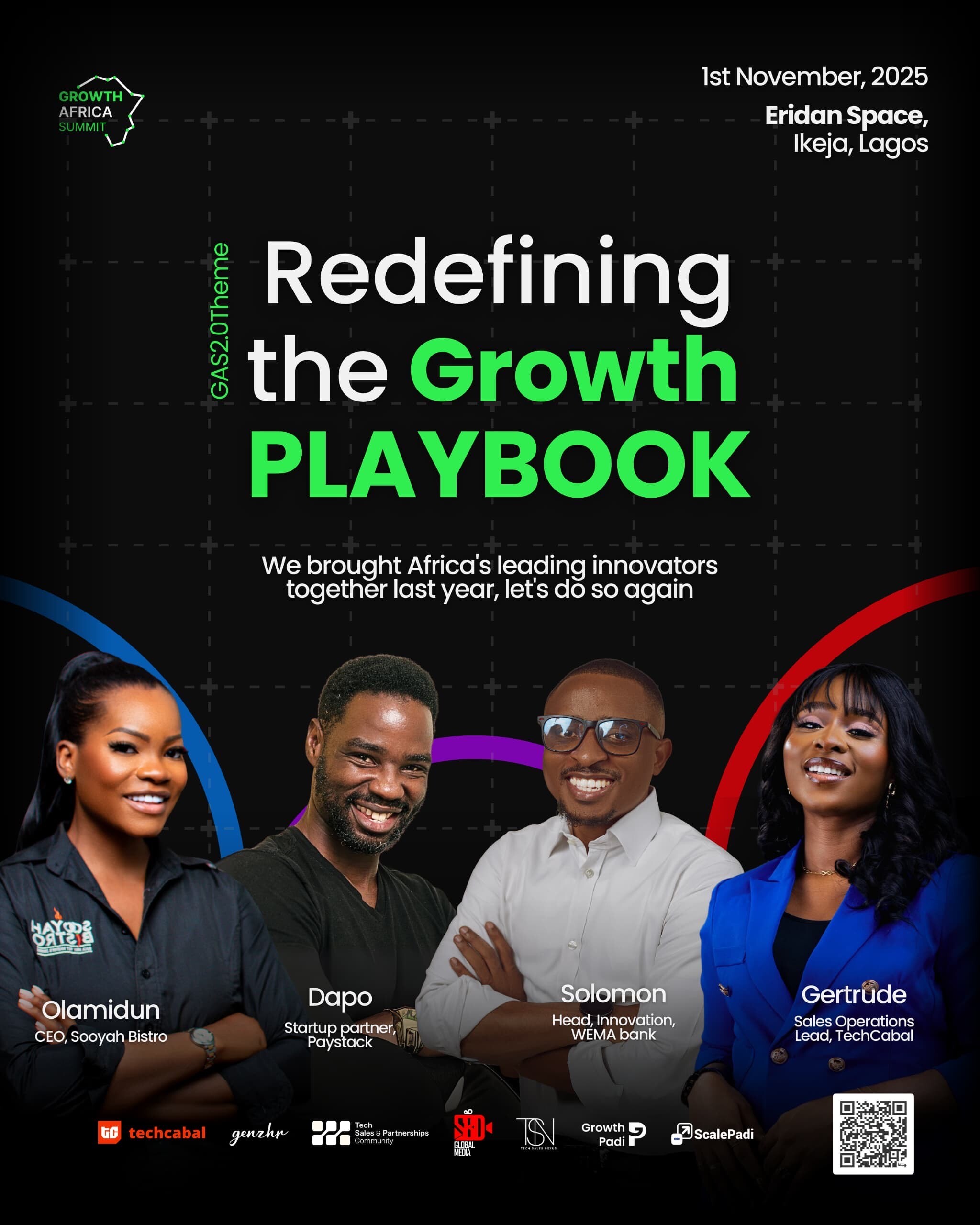
Bigger, bolder, and more intentional. Following the resounding success of the inaugural summit in 2024, Growth Padi is thrilled to announce Growth Africa Summit 2025 (GAS 2.0) with the trailblazing theme: “Redefining the Growth Playbook.” Set against the backdrop of a fast-evolving entrepreneurial landscape, this year’s summit will challenge outdated strategies and usher in a new wave of radical, resilient, and relevant growth models tailored for African businesses. Register to attend by November 1.
TECA Heat Action Wave (THAW) has launched in Nigeria to support startups tackling extreme heat. Backed by BFA Global, FSD Africa, ClimateWorks Foundation, and FCDO Nigeria, the programme offers early-stage ventures up to $50K in non-dilutive funding, venture-building support, and access to global networks. It is open to startups with prototypes or pilots in areas like early warning systems, fintech and insurance for climate shocks, and enabling tech for health, agriculture, logistics, and worker safety.Apply by September 30.
P:S If you’re often missing TC Daily in your inbox, check your Promotions folder and move any edition of TC Daily from “Promotions” to your “Main” or “Primary” folder and TC Daily will always come to you.
Venture capital (VC) funding in Africa is still young, with most firms yet to reach the 10-year mark when portfolio performance and returns to investors—limited partners—can be judged. In such an early industry, few universal truths exist.
Yet across five editions of this column, clear lessons have emerged. Capital in Africa only compounds when it comes with three things: operational muscle, deep local fluency, and a deliberate plan for liquidity. Without them, even the best-intentioned investments struggle to translate into lasting value.
This week, my recap of the past five episodes pulls lessons from interviews with the corporate venture arm of one Egypt’s largest companies (GB Ventures), a venture studio exporting Anglophone Africa business models into Francophone West Africa (Mstudio), a global early-stage fintech specialist doubling down on inclusion (Accion Ventures), a decade-old pan-African seed fund reflecting on exits and local capital (Ventures Platform), and a research-heavy firm combining equity, venture building and debt (Consonance).
Here are the truths to be drawn from those conversations:
Get The Best African Tech Newsletters In Your Inbox
Truth 1: Capital plus operating muscle beats capital alone
Every investor profiled has built an operating stack around their cheques. GB Ventures integrates startups directly into its sprawling mobility and finance group. It also expects board seats in exchange for investment, and the startup will run three-month pilots inside business units. The firm helps its portfolio companies with distribution, revenue, and credibility that the startup could never buy on its own.
Mstudio goes even further, investing €500,000 ($588,000) worth of services and another €250,000 ($294,000) in cash while its 14-person internal team helps the startup execute against a 100-task venture-building playbook and constantly updates its learnings in an internal knowledge base.
Accion Ventures fields ex-operators to work on the ground on pricing, credit policy, segmentation, and go-to-market. Ventures Platform explicitly hires former operators so that early founders get hands-on help with strategy, sales, partnerships, and culture, while Consonance has institutionalised post-investment help and complements equity with debt so companies can finance working capital without dilution.
These firms’ different approaches all show that execution risk is so high that capital alone is rarely enough. Without helping build startups, most early African VCs risk their investment drowning in poor execution. While money is necessary, the accompanying support is decisive.
Truth 2: Copy-paste does not always work, and localisation decides winners
Mstudio’s most valuable lesson is a failed startup. Tuzo, cloned from Nigeria’s Bumpa, shipped the right features to the right users, yet the monetisation logic collapsed. Subscription billing depended on card rails and automated debits that simply aren’t culturally or technically feasible yet in Francophone West Africa, where mobile money dominates. The startup did not struggle with users but with revenue. That experience now anchors Mstudio’s process, which requires paid traction during the three-month Entrepreneur-in-Residence phase or kills the idea early.
GB Ventures also uses a similar approach, as it focuses all its investments in its home country. The firm’s parent company chose only Egypt to build a corporate venture capital playbook inside a familiar legal and commercial context, then use small pilot investments in new countries to learn before scaling the corporation’s own operations.
Ventures Platform evaluates Francophone West Africa with a first-principles rubric: currency stability, regional harmonisation (the “lake and ocean” idea), and whether the ecosystem can actually deliver venture returns. Accion staffs locally in each key geography to keep its global pattern-matching grounded.
Get The Best African Tech Newsletters In Your Inbox
Truth 3: Design the exit before the entry
Liquidity is not an afterthought for any of the firms. Ventures Platform says secondaries are core to returning capital, and they’ve already used them—alongside strategic acquisitions like Paystack and CrowdForce—to return four of six investment cohorts. Accion thinks about exits immediately it invests, and its recent exits—Apollo Agriculture, Lula, and Pula—came via secondaries and acquisitions rather than public listings.
Put the two approaches together and you get a practical African liquidity playbook: design multiple exit paths; expect secondaries to do heavy lifting; and match the instrument to the business so returns show up before the mythical IPO window opens.
Truth 4: Corporate venture is shifting from “nice-to-have” to a survival strategy
Nada Shaheen’s argument is stark: large African corporates that ignore startups will die. GB Ventures is her proof of concept. The fund invests where it can create operating leverage for the parent—logistics, fintech, mobility—then integrates portfolio companies as vendors, partners, or even brand representatives. A failed in-house e-commerce build for spare parts turned into an investment in a portfolio company that now runs GB Corp’s online channel, with group financing lines enabling scale.
Looking across the other episodes and companies show up not just as acquirers of last resort but as customers, distribution, and, increasingly, as capital. Ventures Platform expects more local acquisitions as valuations normalise. Consonance wants a policy that nudges companies to invest in startups.
Truth 5: Geography is a portfolio tool, not a trophy case
GB Ventures starts in Egypt to build muscle memory and board alignment, then uses small investments elsewhere to test its assumptions. Mstudio exists precisely because Francophone West Africa is systematically underserved, yet also harmonised enough to scale across borders once you crack one market.
Ventures Platform formalises the intuition: many Francophone markets are “lakes” individually, but the language, currency (CFA), and regulation make a regional “ocean”; meanwhile, the relative currency stability provides a counter-cycle to a volatile naira. Accion keeps a wide global spread—Africa, Latin America, South and Southeast Asia, and the US—because it tempers single-market shocks and lets insights travel where they’re useful.
Mark your calendars! Moonshot by TechCabal is back in Lagos on October 15–16! Meet and learn from Africa’s top founders, creatives & tech leaders for 2 days of keynotes, mixers & future-forward ideas. Get your tickets now: moonshot.techcabal.com
We are excited to announce the National Information Technology Development Agency (NITDA) as a Strategic Partner for the Policy Track at this year’s edition of our flagship event, Moonshot by TechCabal, themed “Building Momentum,” taking place on October 15–16, 2025, at the Eko Convention Centre in Lagos.
As Nigeria’s foremost institution for digital transformation, NITDA drives the country’s digital economy agenda through bold policies, progressive regulation, and ecosystem collaboration. From advancing national digital literacy to crafting regulatory clarity for frontier technologies like blockchain, AI, and digital assets, the Agency is laying the groundwork for inclusive growth, investor confidence, and global competitiveness.
Through this partnership, NITDA will spotlight how policy can serve as the engine of momentum for Africa’s digital future. Its sessions at Moonshot will explore how forward-thinking regulation can unlock opportunities, drive inclusion, and strengthen Nigeria’s innovation ecosystem. The Agency’s participation will feature a visionary keynote on “Policy as an Engine of Momentum,” where NITDA’s leadership will outline Nigeria’s latest digital policy agenda, including national digital literacy, a regulatory roadmap for AI and blockchain, and implementation of the Nigeria Startup Act.
NITDA will also host a high-level policy session, “The Nigeria Startup Act in Action,” bringing together policymakers, ecosystem leaders, and founders to showcase the Act’s early wins and its role in embedding startups directly into the policymaking process. This discussion will highlight how the Act is unlocking new channels for investment, providing regulatory clarity, and creating opportunities for deeper collaboration between government and innovators. In addition, NITDA will host a pavilion presentation showcasing its programs, partnerships, and innovation-driven initiatives that continue to shape Nigeria’s digital economy.
TechCabal and NITDA are working to position Nigeria’s digital policy agenda as a driver of opportunity, investment, and sustainable innovation. The partnership will also showcase the Nigeria Startup Act as a model for policy–ecosystem collaboration, reinforce trust and dialogue between government, startups, and investors, and inspire confidence in the role of policy as a catalyst for inclusive digital growth.
Moonshot 2025 will bring together Africa’s brightest minds, innovators, investors, and policymakers for two days of bold ideas, high-level policy dialogues, strategic networking, and actionable insights that will shape the future of Africa’s tech ecosystem. Secure your tickets now and be part of the conversation.
Cortex Hub, the South African accelerator turning 15 next year, is launching its most ambitious program yet: a continent-wide hackathon inviting 40 African cities to build homegrown AI agents—systems capable of acting autonomously with minimal human input.
The initiative is designed to counter scepticism over Africa’s ability to build such technology amid high costs, skills gaps, regulatory hurdles, and risks of bias or unreliable systems. Winners will receive a $10,000 non-equity grant, but founder and patron Andile Ngcaba says the real prize is ensuring AI reflects Africa’s values, languages, and traditions rather than foreign defaults.
Founded in 2015 as a nonprofit space for young Africans to experiment in robotics, engineering, and storytelling, Cortex Hub has grown into one of the continent’s longest-running accelerators. Over the years, more than 80 graduates have passed through its labs, hackathons, and green rooms at a time.
Why AI agents?
Artificial intelligence is vast, covering everything from GPUs and data centers to large language models (LLMs). Yet, Ngcaba believes the true future of how people will experience AI lies not in massive infrastructure, but in agents—the software “assistants” that fetch, process, and deliver information in real time.
“Agents are everything in AI,” he told TechCabal in an interview. “They will be how most people interact with AI, whether at work, at home, or when dealing with the government.”
Unlike LLMs trained on historical data, agents specialise in retrieving live information. For instance, if someone in Lagos wants to know the real-time weather in Kano, a prompt to ChatGPT or Claude won’t work unless an agent fetches that data from a weather service. That agent relies on what’s called a Model Context Protocol (MCP) to connect with servers, gather information, and deliver it back to the user.
This invisible dance between LLMs, agents, and protocols will define the next phase of digital life. Ngcaba predicts that in just a few years, more than 10 billion AI agents will be roaming the internet on behalf of users—booking travel, processing payments, or even renewing passports.
The agentic economy
Cortex Hub describes this vision as the ‘agentic economy,’ a future where AI agents interact not only with humans but also with each other. Picture a citizen’s AI agent engaging with a government agent to renew a passport, or a business agent negotiating directly with a supplier’s agent in real time.
Building such AI systems within city governments is no small task. The barriers are steep: most municipalities lack the specialized talent, advanced infrastructure, and steady funding required to develop and sustain robust AI agents. On top of that, challenges around data privacy, cybersecurity, and outdated IT systems raise the risk of breaches, system failures, and declining service quality.
Cortex Hub rolled out a three-phase hackathon series that will run from late 2024 through 2026. The first phase, scheduled between October and November 2024, focuses on building model context protocols (MCPs), the backbone for how AI agents fetch and process real-time information.
The second phase, planned for February to May 2025, will move participants into developing agent communication protocols (ACPs). These protocols are essential for enabling agents to communicate directly with one another, creating the foundation for a more interconnected agentic ecosystem.
Finally, the third phase, set for August to October 2026, will guide participants in building their own “super agents.” This stage will allow innovators to create fully functional AI agents tailored to their local contexts and needs, marking a major step toward Africa’s broader agentic economy. Winning startups will receive a $10,000 non-equity prize.
Localisation and cultural context
One of Ngcaba’s biggest concerns is that AI today is largely trained outside the continent. “If AI does not understand my culture or my language, I can’t apply it,” he argues.
For him, African AI must be grounded in the continent’s languages, traditions, and environments. That means building MCPs and agents that can interpret Igbo, Yoruba, Swahili, or Wolof—and respond with an understanding of the local setting. “We must build those platforms ourselves,” he insists, warning against relying solely on global AI systems that overlook African realities.
This push is also why Cortex Hub wants 40 African cities to start experimenting with building their own MCPs. From Lagos to Dakar, Cairo to Maputo, each city can anchor its own agentic ecosystem, ensuring AI tools reflect local needs.
At the heart of this strategy is AI sovereignty for Africa, the continent’s ability to develop, control, and govern its own artificial intelligence systems, data, and infrastructure rather than depending on foreign technologies and platforms. Ngcaba introduces the idea of “sovereignty as a service.” In practice, it means governments partnering with local IT firms to build domestic data centers equipped with GPUs. Instead of storing sensitive state data abroad, this infrastructure would sit within African countries, powering AI systems that citizens can trust.
With this model, governments could offer services through AI-driven platforms. Instead of browsing static websites, citizens would engage interactive agents capable of answering questions, processing applications, and delivering services in real time.
Private sector partnerships would play a crucial role. Banks and businesses could finance infrastructure, while governments contribute data and regulatory support. The result: national AI systems rooted in African soil, not dependent on foreign platforms.
Training the next generation
Cortex Hub’s mission is not only technological but also educational. Its hackathons are paired with bootcamps to teach young developers how to build MCPs and agents using open-source tools. Many of these resources, like GitHub repositories for MCP, are already freely available, but African developers need guidance on applying them in local contexts.
“Context is everything,” Ngcaba said. By grounding AI in Africa’s languages and cultures, the continent can avoid being a passive consumer of foreign technologies and instead become a producer of agentic systems tailored to its realities.
“Africa must build agents that understand who we are, where we come from, and how we live,” he says. “That is how we ensure AI works for us, not the other way around.”
Mark your calendars! Moonshot by TechCabal is back in Lagos on October 15–16! Meet and learn from Africa’s top founders, creatives & tech leaders for 2 days of keynotes, mixers & future-forward ideas. Get your tickets now: moonshot.techcabal.com
For Ayodeji Alaran, the future of innovation in Africa is making science and research raw material for startups. “We need to start evolving beyond technology to a knowledge and intellectual-driven enterprise,” he says.
In other words, fintechs and logistics startups may solve immediate problems, but Alaran believes that the real market-leading innovation that Africa needs will only come when academic research and deep science translate into products.
This conviction began growing from his early career, where, from the very first day, he was thrown into responsibilities far above his age and title. After completing his degree in Pharmacy from the University of Lagos, he joined GlaxoSmithKline (GSK) as an intern. Alaran found himself stepping into big shoes. “I was responsible for West and Central Africa, Angola, Nigeria, Ghana, and Gambia as an intern just from university,” he says. Alaran recalls “writing some of GSK’s policies for Ghana and Nigeria whilst an intern.” By the end of that single internship, he had gained experiences that planted the seed of entrepreneurship.
But Alaran wanted more. Drawn by the challenge of sales, he moved to Pfizer. For two years in eastern Nigeria, he learned the discipline of selling medicine to specialists using data and clinical evidence. These conversations, mixing science with persuasion, would become a defining skill in his later career.
Get The Best African Tech Newsletters In Your Inbox
From there, his career stretched across continents. He returned to GSK as a marketing manager for Africa and Asia. Then came Business School in London, and soon after, he was headhunted by IQVIA, a leading global healthcare data company, as the business director for Europe, the Middle East, and Africa. This is where Alaran began to notice the gap, that in global health data conversations, Africa was almost always missing.
“It was a daily torture because as a leader within the Europe, Middle East, and Africa team, there was never a time when Africa was a conversation,” he says. “ A lot of the projects were in Europe. When we’re talking about innovation, about patient recruitment for trials, or we’re talking about studies, we never came up.”
He recalled when a clinical trial that was to happen in Nigeria was cancelled because of the inability to recruit patients. “We couldn’t find them. We didn’t have what it took to find them. If you’re talking about inclusion, who do you hold accountable? It can’t be these guys because they’re not the ones that will come and build your infrastructure or gather the data that they need.”
This experience left him restless; despite earning six figures in the UK, he felt he was undersizing his capacity. He resigned in 2022 and returned to Lagos. Some of his colleagues felt he was letting down the Black community, as he was often the only black person in a room of 50 or 60 executives shaping healthcare data strategies. But Alaran was more focused on solving the problem than remaining a figure of representation in the room.
Enters PBR Life Sciences
Back in Lagos, Alaran began the grind of turning his idea into reality by founding PBR Life Sciences, a healthcare data analytics company that provides companies with data and insights to make informed decisions within the countries they operate. “In 2016, I would go to the library somewhere in Ilupeju to sit and clean data row by row in Excel. I had to do about a million rows alone. For about 3 months, that was all I was doing.”
After raising an angel round in 2021, Alaran hired his first team to begin gathering health data, starting with medications in circulation across Nigeria. They had to manually clean pharmaceutical data after quickly realising how messy and local that data could be. The datasets included everything from drugs, quantity sold, and prices across hundreds of pharmacies in Nigeria alone. There was no consistency in the way the drugs were named. For example, while one doctor might record ‘PCM’, another would write ‘paracetamol.’ Alaran explained that the scattered nature of the data made it almost impossible to use for research.
At the time, there was no artificial intelligence model capable of cleaning the data. The work had to be done manually.
The team tried experimenting with Excel functions to make the process faster, but what they really needed was an engine that could learn and adapt to the data. Eventually, they built their own AI algorithm by training the system to recognise and standardise drug entries across the board. Now they can clean up data in 30 minutes instead of 10 months. The AI model’s database covers over 10,000 pharmaceutical brands, over 70 million drug sales, and 23,000 diseases.
With this foundation, PBR moved to building products. The company has platforms that show drug consumption patterns in pharmacies across countries. It provides information about the most diagnosed diseases, what is used to treat them, the cost of care, and disease prevalence by state. Its latest product, the Health Data Lab, allows researchers and pharmaceutical companies to query African health data reliably.
The need for PBR’s work was evident in its recent white paper on improving sickle cell disease care in Nigeria, which revealed that only a fraction of sickle cell patients were on the only effective drug, Hydroxyurea. In another case, Alaran recalls when a pharma company in Lagos lost $700,000 on expired drugs because they didn’t have reliable consumption data.
Alaran wants to eliminate these blind spots with PBR’s products. Today, its datasets are used by companies like Sanofi, Pfizer, Roche, Fidson, Emzor, and organisations like the World Bank. Since its launch in 2015, PBR has raised $1 million from investors, including Launch Africa, Octerra Capital, and Microtraction.
Alaran believes that the solution to Africa’s health data problem is making data available and building the right infrastructure and technology. “Less than 1% of medicines used in Africa have never been tested on African patients, and little data is collected on how Africans respond to them,” he adds. “ This means future medicines may not work well for Africans.”
Editor’s note: A previous version of this article incorrectly spelled the name of one of the investors. It has now been updated.
Mark your calendars! Moonshot by TechCabal is back in Lagos on October 15–16! Meet and learn from Africa’s top founders, creatives & tech leaders for 2 days of keynotes, mixers & future-forward ideas. Get your tickets now: moonshot.techcabal.com
Telkom Kenya has lost its position as the country’s third-largest mobile operator, slipping behind Finserve’s Equitel after multiple disconnections, service outages, and sustained subscriber churn.
New data from the Communications Authority of Kenya (CA) shows Telkom’s active mobile subscriptions fell to 868,788 by June 2025, down almost 40% from about 1.4 million a year earlier. Finserve’s Equitel now claims third place with 1.5 million subscriptions, while Safaricom remains the market leader with 49.9 million users, and Airtel follows with 23.7 million.
The drop underscores the high cost of network failures in a market where scale drives revenue. It also shows how fast a carrier can lose relevance when debt and poor service converge.
Telkom Kenya’s network deterioration started when American Tower Corporation (ATC) disconnected nearly 900 of Telkom’s masts in 2023 over KES 7.1 billion ($55 million) in unpaid lease fees. The switch-off triggered a coverage collapse, and Telkom admitted that it severely degraded its service in several parts of the country. Customers quickly migrated to rivals, with Safaricom and Airtel absorbing most of the traffic.
The Communications Authority of Kenya’s quality of service (QoS) report for the 2023/24 financial year gave the operator a score of 55% in end-to-end drive tests, far below the mandatory 80% threshold. Safaricom scored 86% and Airtel hit 80%, meeting regulatory standards. High call failure rates and patchy data availability left Telkom’s user base more vulnerable to defection once the network crisis hit.
Telkom Kenya lacks a safety net, with its mobile money platform, T-Kash, holding a virtually 0% market share, leaving it without the payments ecosystem that keeps rivals’ customers tied to their networks. Safaricom’s M-PESA and Airtel Money lead the mobile money market with over 99% market share.
Falling to fourth place puts Telkom in a difficult position because it now risks losing the scale needed to raise capital or attract the kind of strategic investor that could fund a 4G and 5G rebuild. The government’s buy-back of the operator, once floated as a path to stability, has stalled.
Telkom Kenya still owns substantial infrastructure and strategic assets, including fibre backbones, subsea cables, landing stations, and data centres, which give it potential scale and bargaining power. It owns over 4,000 kilometres of its terrestrial fibre cabling, and it runs and manages multiple undersea cables (TEAMS, LION2, EASSy, DARE-1, PEACE) through stakes and landing operations.
Mark your calendars! Moonshot by TechCabal is back in Lagos on October 15–16! Meet and learn from Africa’s top founders, creatives & tech leaders for 2 days of keynotes, mixers & future-forward ideas. Get your tickets now: moonshot.techcabal.com
This is Follow the Money, our weekly series that unpacks the earnings, business, and scaling strategies of African fintechs and financial institutions. A new edition drops every Monday.
If you earn $2,000 a month coding for a U.S. startup while living in Lagos, you will now have to pay taxes. From January 2026, Nigeria’s new tax laws will require remote workers and freelancers to pay income tax, just like traditional employees.
Salaries will be taxed at a maximum rate of 25%. At this rate, Nigeria’s personal income tax rate is lower than South Africa (45%), Kenya (35%), Egypt (27.5%), and Algeria (35%).
Nigeria signed the laws in June 2025 to remove bottlenecks around its tax process amid renewed revenue efforts. The country aims to increase its tax-to-GDP ratio to 18% by 2027 from less than 10%. The tax laws broaden the scope of taxable income to bring more people into the tax net.
Chapter Two, Taxation of Income of Persons, spells it out: “The income, gains or profits of an individual who is a resident of Nigeria are deemed to accrue in Nigeria and are chargeable to tax in Nigeria wherever they arise, and whether or not the income, profits or gains have been brought into or received in Nigeria.”
The law specifies that income, gain, or profit from employment is considered to be “derived from Nigeria” if the employee is a resident of Nigeria or the duties are performed wholly or partly in Nigeria, “and the remuneration accruing to the employee while in Nigeria is not duly liable to tax in the employee’s country of tax residence.”
The law also states that a Nigerian’s salary is taxable when they work abroad in a country that exempts their salary from tax under an agreement or diplomatic arrangement to which Nigeria is a party.
Nigeria has double tax treaty (DTT) agreements with Belgium, Canada, China, the Czech Republic, France, the Netherlands, Pakistan, the Philippines, Romania, Singapore, Slovakia, South Africa, Spain, Sweden, and the United Kingdom.
This means that if you are a Nigerian resident and you earn income from a country that has a DTT with Nigeria, the tax you pay abroad can be credited against the tax you owe in Nigeria, according to PwC.
The law offers relief if income has already been taxed in the company’s home country.
What you will pay
WhatsApp groups of remote workers have found life since the law was signed, with many concerned about how the law will impact their income. “The WhatsApp group for the Nigerians in my company is usually quiet, but it started buzzing with tax-related questions this week,” Tope Oladosu, a quality analyst at a US-based payroll company, told TechCabal. “People want to know how much tax they will be paying from next year.”
Under the new act, annual taxable income is charged at these rates:
A remote worker earning $2,000 monthly (₦2.98 million monthly and ₦35.72 million annually) from a foreign job will pay roughly about 23% (₦684,599 monthly) as tax from 2026. However, taxable income is only calculated after deductions.
These deductions include contributions to the National Housing Fund, National Health Insurance Scheme, Pension Reform Act, annual premiums for any annuity or life insurance, and a rent relief of 20% (capped at ₦500,000 or $336).
According to Adewunmi Adewole, an accountant, taxes on income will be progressive from 2026, meaning lower income brackets will pay less than higher income brackets.. “People will be taxed progressively according to the tax rate using their annual income, after adjustments have been made. So their first ₦800,000 will still be exempted from tax.
She explained that Nigerian clients can deduct withholding taxes on behalf of freelancers. “But since foreign clients/employers can’t, the freelancer will have to declare/self-assess their tax by themselves at the end of the year,” she added.
Enforcement and penalties
Failing to register with Nigeria’s tax authority— the Nigeria Revenue Service, which replaces the Federal Inland Revenue Service by 2026—will result in a fine of ₦50,000 ($33.59) in the first month, then ₦25,000 ($16.79) for each additional month. Failing to file returns will incur a fine of ₦100,000 ($67.19) in the first month, followed by ₦50,000 ($33.59) for every subsequent month.
Tax authorities will investigate the information provided, and false declarations can lead to fines of up to ₦1 million or three years in prison, or both.
Under the new law, freelancers and Nigerians working for foreign companies will no longer fly under the radar. Starting in 2026, the tax authority expects you to register, file returns, and pay your taxes or face stiff penalties.
Note: exchange rate used: ₦ 1488.26/$
Mark your calendars! Moonshot by TechCabal is back in Lagos on October 15–16! Meet and learn from Africa’s top founders, creatives & tech leaders for 2 days of keynotes, mixers & future-forward ideas. Get your tickets now: moonshot.techcabal.com
The Central Bank of Kenya (CBK) plans to slash the cost of sending money via M-Pesa and Airtel Money, arguing that high fees are choking innovation and limiting the next phase of financial inclusion in one of the world’s most advanced mobile money markets.
The regulator plans to cap P2P transfer charges as part of its 2025–2028 National Financial Inclusion Strategy, which targets reducing the average transaction cost from KES 23 ($0.18) in 2024 to KES 10 ($0.078) by 2028. CBK says cutting fees will bring millions of low-income users into the digital economy and spur uptake of new services beyond basic money transfers.
“Recent data shows signs of plateauing growth in mobile money access and usage,” the CBK said. “Most users still rely primarily on basic services like person-person transfers, with limited uptake of advanced offerings such as digital credit, insurance, or savings.”
The slowdown comes despite Kenya’s mobile money system handling record volumes. In 2024, mobile money providers processed an estimated KES 8.7 trillion ($67.3 billion), up from KES 7.9 trillion ($61.1 billion) the previous year. On average, Kenyans moved KES 21 billion ($162.5 million) daily via mobile money in 2024, underscoring its economic centrality.
But the CBK has warned that adoption has begun to level off. Mobile money use has risen from 27% of adults in 2007 to 82.3% in 2024. CBK officials believe growth in new users is now harder to achieve because of the high fees.
“This is attributed to issues such as limited interoperability, high transaction costs, low financial literacy, and product designs that do not reflect the realities of the underserved groups,” CBK said.
Safaricom currently charges between KES 7 ($0.054) and KES 108 ($0.84) for transfers, depending on the amount. Airtel Money offers free transfers within its network but charges KES 6 ($0.047) to KES 105 ($0.82) for inter-network transactions.
CBK argues that it is unsustainable if mobile money is to remain a tool of financial inclusion. The regulator says that pricing structures must be “proportional to low-value and other ‘public good’ related payments,” striking a balance between operators’ commercial targets and the goal of financial access.
Mobile money has become a significant revenue earner for Kenyan telcos as SMS and voice earnings decline. In 2024, M-PESA reported KES 161.1 billion ($1.2 billion) in revenues, about 44% of the company’s service earnings.
The outcome of CBK’s push will hinge on political will. Parliament, which must legislate the proposals, must decide whether to side with consumers or telcos who risk diminished returns.
Mark your calendars! Moonshot by TechCabal is back in Lagos on October 15–16! Meet and learn from Africa’s top founders, creatives & tech leaders for 2 days of keynotes, mixers & future-forward ideas. Get your tickets now: moonshot.techcabal.com
One of the most enduring images of rural agricultural Kenya is tea, dairy, or coffee farmers waiting patiently in line outside a cooperative office. In their pockets, a passbook, clinging to the promise that at the end of the month, the cooperative officials will pay them fairly, lend them when they need to plant again, and help them send children to school.
This has been the quiet financial backbone of Kenya’s agricultural economy for decades. While Nairobi obsesses about venture capital, angel investors, and dollar-denominated debt, the cooperative model — born in coffee, milk, and tea fields — has consistently kept cash flowing when banks retreated.
As Kenyan startups face funding challenges, founders can borrow lessons from farmers and the many professional Savings and Credit Cooperative Organisations (Saccos).
Next Wave continues after this ad.
🚨 Flash Sale: 25% Off Moonshot Tickets 🚨
For a limited time only, you can save your seat at Africa’s biggest tech gathering with an exclusive 25% discount. On October 15 & 16, the Eko Convention Centre in Lagos will host founders, investors, policymakers, creatives, and operators shaping Africa’s innovation economy. Moonshot 2025 will feature deal rooms, investor lounges, immersive exhibitions, and the TC Startup Battlefield.
Moonshot 2025 is designed for real connections and lasting impact. This offer ends soon.
🎟️ Secure 25% off your Moonshot ticket now
Kenya’s startup ecosystem is used to headlines about foreign dollars. For much of the past decade, venture capital has flowed into fintechs and e-commerce platforms, like water in our rivers during the rains.
But the tide has receded. Global risk capital is tightening, valuations have collapsed, and founders are finding themselves at the mercy of foreign investors who now dictate harsher terms.
Banks, meanwhile, are no refuge. Lenders have discovered the comfort of government securities. Why risk lending to an early-stage business when Treasury bills pay double-digit returns with no collateral headaches?
This is not the first time banks have abandoned entrepreneurs or ordinary people seen as risky borrowers. In the 1980s and 1990s, coffee farmers in Nyeri, Kiambu, and Murang’a turned to their cooperatives when commercial banks tightened lending amid structural adjustment. Those societies built milling factories, bought trucks, and even invested in schools.
In Kenya, the cooperative model has thrived where formal finance has feared to tread.
The Sacco model
The Kenyan approach to cooperatives, and Saccos is simple: members pool their savings and lend to each other. It is built on trust and social discipline. Members who default risk exclusion from the very network that sustains them.
That is why default rates in the sector have historically been lower than those of banks, despite serving poorer and riskier clients.
Next Wave continues after this ad.
Bigger, bolder, and more intentional. Following the resounding success of the inaugural summit in 2024, Growth Padi is thrilled to announce Growth Africa Summit 2025 (GAS 2.0) with the trailblazing theme:
“Redefining the Growth Playbook.”
Set against the backdrop of a fast-evolving entrepreneurial landscape, this year’s summit will challenge outdated strategies and usher in a new wave of radical, resilient, and relevant growth models tailored for African businesses.
Today, the sector controls over KES 1.5 trillion ($11.5 billion) in assets. It finances homes, school fees, farm equipment, boda-boda purchases, and even hospital bills. For millions of Kenyans, it is a bank, not just an alternative.
Consider Stima Sacco. What began in the 1970s as a small cooperative for electricity workers now serves more than 170,000 members nationwide and controls assets north of KES 55 billion ($424.7 billion). Its loan book has expanded far beyond employee salary advances — today, SMEs tap Stima Sacco for business loans, mortgages, and asset financing at rates banks struggle to match. The lesson is that once a Sacco builds trust and scale, it naturally becomes a credible financier for entrepreneurs.
What startups can learn
The parallels between farmer cooperatives and startups are closer than they appear. Both operate in environments where capital is scarce and traditional lenders demand collateral they do not have. Both thrive on community, networks, and shared risk.
Take Githunguri Dairy. Farmers pooled tiny daily milk contributions and, over time, built Fresha milk — now a household brand. Or consider Murang’a tea cooperatives, which collectively run processing factories and negotiate international sales.
Success came from the pooling of local capital, disciplined governance, and reinvestment.
Picture a group of 50 Kenyan startups forming a cooperative. Instead of waiting for the next elusive $5 million Series A, they each commit a percentage of their revenues into a common pool. That pool becomes a revolving credit line. One startup uses it to bridge payroll while waiting for customer payments; another borrows to test a new product. Over time, the pool grows, and successful members reinvest dividends. It may not match the scale of foreign VC, but it creates resilience, local ownership, and trust.
Unaitas Sacco, originally a farmers’ cooperative in Murang’a, is a case study in how Saccos can scale into SME finance. From humble beginnings in the 1990s, it now operates countrywide with over 300,000 members and an asset base of over KES 20 billion ($154.4 million).
Its lending portfolio includes traders, agri-SMEs, and small manufacturers — groups often ignored by commercial banks. A “Founders’ Sacco” could walk the same path by starting small, building trust, then expanding into a credible alternative to funding or bank credit.
Of course, startups cannot simply cut-and-paste the Sacco model. Tech companies face different risks, longer gestation periods, and volatile returns. But this is where policy can make a difference.
Imagine a regulatory framework that allows startup-focused Saccos to operate with flexibility while ensuring proper governance. Policymakers could encourage cooperatives that pool equity-like contributions, not just deposits. Tax incentives could be offered for members who reinvest dividends into local ventures.
And there’s precedent. Kenya already has specialised Saccos—teachers, lawyers, journalists, public transport operators, and boda-boda riders. Why not a national or regional startup Saccos? It would not replace venture capital but could anchor the ecosystem with domestic capital, reducing overreliance on foreign flows.
Next Wave continues after this ad.
FATE Foundation will host the 10th FATE Business Conference, themed “The AI Powered Business,” on Friday, September 26, 2025, at Balmoral Convention Center, Lagos. Speakers include Kofo Akinkugbe, Adedeji Olowe, and Lagos officials. The event features keynotes, panels, and a ₦1 million AI pitch competition.
The opportunity is there. As banks retreated, Saccos grew their loan books by $702,7 million in 2024. The sector’s asset base has consistently grown in double digits, even through economic turbulence. Meanwhile, only a fraction of Kenyan startups raise venture capital, and even fewer secure bank loans. The mismatch that Kenya’s most successful indigenous financing engine has barely touched the startup economy is glaring.
Kenya Police Sacco tells an interesting story. The cooperative has repeatedly ranked among Kenya’s largest lenders with an asset base above KES 50 billion ($386.4 million) and membership that cuts across law enforcement, teachers, and civil servants. In 2024, it issued billions in member loans — from school fees financing to SME working capital. This is institutional credit creation outside the banking sector, overseen by SASRA, and deeply trusted by its members. If public servants can leverage a Sacco to run businesses on the side, why shouldn’t startup founders do the same?
Cooperative finance has supported industries globally, from agriculture in India to housing in Germany. Kenya already has the cultural infrastructure — chamas, merry-go-rounds, and Saccos— in place. What’s missing is imagination and supportive policy.
The future of startup funding in Kenya may not lie entirely in VC funding. It may be reimagined in Sacco offices, which have supported millions of farmers and salaried workers to access capital—the same offices where ordinary Kenyans pooled pennies and built businesses.
The challenge is whether Nairobi’s policymakers and founders have the courage to rethink what innovation finance looks like, and to see the Sacco not as a thing of the past, but as a blueprint to power growth.
Next Wave ends after this ad.
Entertainment Week Africa (EWA), formerly Entertainment Week Lagos, returns to Lagos on November 18–23, 2025. The pan-African platform for the $58.4 billion creative economy has hosted 53,000+ attendees across film, music, fashion, and tech. This year brings a film and music content market for direct deals, hands-on clinics, a 50-company job fair, a ₦25 million seed fund in the deal room accelerator, and more film premieres
Thank you for reading this far. Feel free to email adonijah[@]bigcabal.com with your thoughts about this edition of NextWave. Or just click reply to share your thoughts and feedback.
We’d love to hear from you
Psst! Down here!
Thanks for reading today’s Next Wave. Please share. Or subscribe if someone shared it to you here for free to get fresh perspectives on the progress of digital innovation in Africa every Sunday.
As always feel free to email a reply or response to this essay. I enjoy reading those emails a lot.
Q4 is around the corner, and with it comes the final sprint for targets, fundraises, and big moves. Remember, Africa minted two unicorns in the final quarter of 2024. Can we see similar moves this year?
Africa’s tech and business scene isn’t slowing down, and neither are we. That’s why you should be at Moonshot by TechCabal. Take advantage of our 25% Independence Day discount to be part of important conversations about Africa’s tech ecosystem. Be there!
Unity Bank and Providus Bank merger deal clears as AMCON exits
Image source: Google
Unity Bank has finally found a way forward. On September 27, the Nigerian tier-2 bank confirmed that an existing shareholder has snapped up the Asset Management Corporation of Nigeria’s (AMCON) 34% majority stake, clearing the way for the year-long anticipated merger with Providus Bank.
ICYMI: AMCON originally took control of Unity during a bailout, but its exit now hands the bank back to shareholders at a critical moment.
State of play: The deal creates a 230-branch network with around ₦5.3 trillion ($3.5 billion) in asset size, positioning the combined bank to compete in Nigeria’s bank recapitalisation race. In March 2024, the Central Bank of Nigeria (CBN) ordered banks to raise fresh capital before March 2026. National commercial banks like Unity and Providus must hit at least ₦200 billion ($134 million).
Zoom out: Only 14 banks have met the CBN’s new capital thresholds, and mergers are fast becoming the survival play. The Unity–Providus deal, coming right after Union Bank’s absorption into Titan Trust, signals the start of a merger wave. Nigeria is likely to have fewer banks, but stronger ones, better positioned to support the government’s $1 trillion economy target by 2030.
eCommerce Without Borders: Get Paid Faster Worldwide
Whether you sell in Lagos or Nairobi, customers want local ways to pay. Let shoppers check out in their local currency, using cards, bank transfers, or mobile money. Set up seamless payments for your global online store with Fincra today.
mobility
LagRide launches minibus services
Image source: LagRide
LagRide, the Lagos State government-backed ride-hailing service, is set to roll out a new minibus category, LagRide Omni. The service, which seats six passengers with room for luggage, is designed for families, colleagues, a group of friends, or anyone tired of making fragmented trips across the city to get to their destination.
This new update comes hot on the heels of Lagride’s latest addition to its app. Like the ride categories on competitors like Bolt, Uber, and inDrive, LagRide passengers can now pick from three ride categories. The first is the EV category, which comes after the ride-hailing app’s recent addition of 100 electric vehicles (EVs) to its fleet. There is also the Pro category that provides new cars and trained captains for riders. Then the Legacy category, with affordable everyday riders for users. The Omni will join as the fourth option.
How competitors stack up. This new bus category is similar to Uber’s XL category available in other parts of the continent, including South Africa. However, this category is not available for Lagos riders, meaning LagRide is trying to be more than a clone of its competitors by introducing new services that serve the locals.
LagRide is betting on its structure. Its recent injection of 10,000 new drivers and addition of 5,000 vehicles to its fleet show that LagRide is building the foundation to become Lagos’ most complete mobility ecosystem.
Paga is in USA
Big news! Paga Group is now live in the United States, with digital banking services designed for Africa’s diaspora! Eligible users can send, pay, and bank in US Dollars & Naira, safe, regulated, and borderless. Learn more
Satellite
Nigeria and Kenya eye new satellite collaboration
Image Source: TechCabal
Satellites don’t usually make headlines in Africa until they fail or get launched abroad. But last week in Abuja, two African agencies sat across the table, asking what they could build for themselves.
The Nigerian Communications Satellite (NIGCOMSAT) Ltd and the Kenyan Space Agency (KSA) have opened talks on a potential partnership in satellite services. Kenya plans to source satellite services from Nigeria rather than non-African providers, to see how Nigeria’s satellite capabilities could support its growing space ambitions.
The timing could not be better. These talks come at a time when Nigeria’s satellite, NigComSat-1R, nears the end of its lifespan. Launched in 2011 to operate for over 15 years, the replacement for the ageing infrastructure has been pushed three years later than initially planned. Although satellites don’t just stop working when they reach the end of their lifespan, reliability declines as fuel reserves dwindle, solar panels and electronics degrade, and backup systems are exhausted.
Still, Nigeria has space ambitions. In August, the country signed a memorandum of understanding (MoU) with Brazil to deepen cooperation in space technology through climate monitoring, national security, and space vehicle development. In May, the nation announced plans to launch four new satellites to boost surveillance and tackle rising insecurity. Nigeria has been signing deals and taking up projects, signalling its appetite for a bigger role in space.
This Nigeria-Kenya deal could birth something different. This deal could mean that Kenyan businesses and households could access cheaper satellite broadband without solely relying on European or Asian providers. Both countries can improve satellite resilience and give their citizens a stronger stake in the digital future. Both countries want to establish sovereignty in a sector that has seen the continent being left out too often.
Connect Paystack to the world’s best tools!
With the Paystack Integrations Directory, connect to 60+ powerful apps to streamline your business. Learn more here →
Streaming
Kenya’s pay-TV industry sees a 77% subscriber drop in 2025
Image Source: Tenor
Kenya’s pay-TV industry just got a reality check. According to the country’s Communications Authority, active pay-TV subscriptions plunged by 77% in one year. DStv and GOtv lost most of their customers as the regulator shifted from counting signups to only active, paying subscribers.
The methodology change exposed how inflated previous subscriber numbers were, but it also shows an important behavioural change: Kenyans are ditching satellite dishes for smartphones and streaming apps.
Between the lines: For millions of households, mobile streaming through platforms like TikTok, Netflix, and Showmax has become the default screen, highlighting the vulnerability of the pay-TV model as smartphones and mobile data get cheaper.
Zoom out: The timing could raise an issue for Canal+, the French media company that just finalised a $2 billion acquisition of MultiChoice, South Africa’s pay-TV giant, to expand its footprint in Anglophone African markets like Kenya. It now inherits a business model under siege, with its core markets eroding faster than expected. To stay competitive, MultiChoice plans to double down on live sports content to keep customers paying for its services. It has also been pushing out mobile games to maintain customer loyalty and its core market in South Africa. Whether these efforts will translate into real, loyal, and active subscribers remains the question.
Do more with vban
Built for African freelancers and digital nomads, Vban gives you everything in one app – multi-currency accounts, competitive FX, virtual cards, and instant swaps. No payment limits. No FX rip-off. Just Vban – Download Now!
SPECIAL NUMBER
23%
This is how much monthly tax the Nigerian government expects to collect from a remote worker based in Nigeria with a $2,000 (₦3 million)monthlysalary from 2026. This translates to approximately $460 each month (₦684,000).
With the new tax laws taking effect in January 2026, Nigeria is extending income tax to cover remote workers earning from foreign employers, ensuring their earnings are taxed just like those from local companies.
Learn more about the Nigerian government and its many money-making schemes in this week’s Follow The Money column. Every Monday, TechCabal unpacks the most important earnings, business models, and growth strategies shaping the future of Africa’s tech ecosystem.
CRYPTO TRACKER
The World Wide Web3
Source:
Coin Name
Current Value
Day
Month
Bitcoin
$111,953
+ 2.10%
+ 3.33%
Ether
$4,132
+ 2.71%
– 5.28%
XRP
$2.85
+ 1.26%
+ 1.85%
Solana
$209
+ 2.76%
+ 3.35%
* Data as of 00.00 AM WAT, September 29, 2025.
🚨 Flash Sale: 25% Off Moonshot Tickets 🚨
For a limited time only, you can save your seat at Africa’s biggest tech gathering with an exclusive 25% discount. On October 15 & 16, the Eko Convention Centre in Lagos will host founders, investors, policymakers, creatives, and operators shaping Africa’s innovation economy. Moonshot 2025 will feature deal rooms, investor lounges, immersive exhibitions, and the TC Startup Battlefield. Moonshot 2025 is designed for real connections and lasting impact. This offer ends soon.
🎟️ Secure 25% off your Moonshot ticket now. Get tickets.
Events
Entertainment Week Africa (EWA)—formerly Entertainment Week Lagos—returns to Lagos on November 18–23, 2025. Now a pan-African platform for the $58.4 billion creative economy, EWA has drawn 53,000+ attendees across film, music, fashion, and tech. This year’s edition introduces a dedicated film and music content market where artists, labels, directors, and publishers can pitch, licence, and sell directly to buyers and investors, supported by hands-on clinics to prep them for meetings. It will also feature a 50-company job fair, an expanded deal room accelerator with a ₦25 million seed fund, and more film premieres under the theme “Close the Gap.” Learn more here.
The 10th FATE Business Conference takes place on September 26 in Lagos under the theme “AI-Powered Business: Innovate. Automate. Accelerate.” The conference will feature keynotes from Kofo Akinkugbe (SecureID) and Adedeji Olowe (Lendsqr), with panel discussions led by policymakers and business leaders including Olatunbosun Alake (Lagos State Government), Prof. Peter Adewale Obadare (Digital Encode), and Bode Abifarin (Strata). Expect practical insights on how AI is changing industries and powering business growth. Register here.
Bigger, bolder, and more intentional. Following the resounding success of the inaugural summit in 2024, Growth Padi is thrilled to announce Growth Africa Summit 2025 (GAS 2.0) with the trailblazing theme: “Redefining the Growth Playbook.” Set against the backdrop of a fast-evolving entrepreneurial landscape, this year’s summit will challenge outdated strategies and usher in a new wave of radical, resilient, and relevant growth models tailored for African businesses. Register to attend by November 1.
P:S If you’re often missing TC Daily in your inbox, check your Promotions folder and move any edition of TC Daily from “Promotions” to your “Main” or “Primary” folder and TC Daily will always come to you.
Leke Ariyo told me that he had always known he wanted to build a global career.
While working international roles from Lagos, he saved every paycheck, setting aside what he needed to pay for a relocation. His eyes were fixed on graduate study abroad, a chance to sharpen his skills and open a new chapter of work.
“When you are working in Nigeria for a foreign company, there is not that much you really want to spend that can match how much you are earning. I just kept setting it aside, and when the time came, I was ready,” he said.
By 2022, three years later, the path opened. He received a fully funded master’s scholarship to study machine learning and deep learning at Strathclyde University in Glasgow, Scotland. It covered tuition and living expenses. More than that, it became the bridge that moved him from Nigeria into the global circuit of site reliability engineering.
Get The Best African Tech Newsletters In Your Inbox
Switching to site reliability and moving to the UK
Ariyo had spent his early years switching between software and leadership roles in Nigeria. He worked at FoodCourt and later co-founded Briks and EscrooVest, sharpening his technical instinct while also stepping into the hard lessons of building startups. In the UK, he leaned fully into reliability engineering.
A site reliability engineer (SRE) designs and maintains the backbone of technology products. They build the infrastructure that keeps systems alive, automate the work that slows down engineers, and watch the signals that show whether a product is healthy or in distress.
“[SRE means] building systems that let companies run smoothly and faster,” he told me. “There is that speed where we are always trying to improve timing, and at the same time, we use automation to reduce manual toil. Security matters, availability matters, and our job is to make sure the system stays up and works for people no matter where they are.”
The work is a healthy blend of software engineering and operations, and can be global. An SRE can work in distributed teams; they do not need to be in the same office as the servers they manage. With the right setup, someone in Lagos or Accra can monitor and fix production systems used by millions of people in other parts of the world.
Though the demand for SREs has declined since the highs of 2023, when it was one of the most important tech roles, it remains a critical operation for many companies. SREs have been overshadowed by the demand for more AI expertise and tech infrastructure roles. Yet firms in Europe and the US keep hiring, from startups handling thousands of transactions to Big Tech companies that process billions.
Ariyo’s own move into the UK job market—after his master’s at Strathclyde—came almost by chance. Near the end of his programme in Glasgow, he attended a networking event where teams from different companies had set up stalls. He shared his CV, held conversations, and walked away without expecting much. Weeks later, a manager who had spoken with him at the event called back.
Leke Ariyo during his graduation from the University of Strathclyde, Glasgow/Image Source: Leke Ariyo
That conversation led to interviews, which in turn led to a job in the UK. Today, he works at a global financial institution and holds a membership at the British Computer Society (BCS).
“Opportunities are massive,” said Ariyo. “You can be in Lagos and still contribute to millions of users if you have the right skills. Reliability is a global need, and once people see that you can distinguish yourself, they will value you no matter where you are.”
Why reliability matters
The work of an SRE is both routine and unpredictable. Some days are about setting up automation, trimming cloud costs, and tuning systems for efficiency. Other days begin with a production incident that threatens customers and revenue. An engineer in that position must stay calm when pressure rises.
“You need that calmness,” Ariyo said. “If there is downtime and it is affecting a lot of people, the natural instinct is to panic. You have to train yourself to stay calm, think clearly, and find a good way to handle the problem. It is why automation is important, but when automation cannot save you, you are the one who must.”
That clarity is one reason firms chase experienced reliability engineers. Ariyo has been approached by global technology companies, including Amazon, with offers that included relocation. In one case, the recruiter assumed he was still based in Nigeria and offered to move him abroad. The demand for talent is real, and companies handle visas when the skills fit or the ideal situation deems it.
Leke Ariyo in Paris, France/Image Source: Leke Ariyo
Ariyo stresses that anyone looking to enter the field should build a plan and hone the right skills. The foundations include Linux, networking, and a chosen cloud platform. From there, engineers must practice by deploying real systems, containerising them, and setting up monitoring.
He jokingly advises on our call that newcomers must break things on purpose; simulate outages and practise fixing them in a controlled environment. Twisted as it sounds, Ariyo says that is the only way to practice for more critical operation failures—because they will happen in high-stakes scenarios.
“The foundation is important, but you also need the right mindset,” he said. “As an SRE, you should be thinking about whether your system can work for two million people, not just one hundred. That is what separates a reliability engineer from a regular engineer.”
Self-paced learning can take up to a year to become a mildly skilled SRE, especially if you have a strong engineering background. Ariyo advises taking on entry-level roles such as cloud support engineer or junior DevOps positions, pointing to platforms like Wellfound as places to find those opportunities.
Get The Best African Tech Newsletters In Your Inbox
Convictions from failure and the case for reliability
Years before his move to the UK, Ariyo had already taken the risk of building in Nigeria. He co-founded EscrooVest, an escrow platform designed to protect buyers and sellers from online scams. The product grew quickly, reaching about 20,000 registered users in four years. Yet the team faced regulatory challenges that eventually forced the startup to shut down.
Leke at a Chamonix alpine, France/Image Source: Leke Ariyo
The experience left scars but also formed his convictions about building. While regulatory issues drove EscrooVest to the ground, Ariyo developed a separate view about strategy. He believes early-stage startups should treat reliability as a core investment, not something added after product launch.
“For [early-stage] startups, 5–15% of the spend should go to observability, but keep it as lean as possible,” said Ariyo. “You can use open source tools like Prometheus and Grafana before jumping into expensive solutions. What matters is clarity on your most critical parts, not drowning in noise.”
He has seen too many startups rush to ship features and leave monitoring for later. In his view, that approach costs more in the long run. His advice is to keep observability simple, focus only on the signals that matter most, and tie everything to real business metrics and user flows. If a product handles payments, then payment success and failure rates should be the heartbeat. If users must log in, then login flows must be tracked relentlessly.
Living and working in the UK has not weakened his desire to build. If anything, it has made him more cautious and deliberate. His next projects, he says, will avoid products locked into a single geography. He wants to build for global use, with a design that anticipates risks from the beginning.
Leke Ariyo at a UK tech conference/Image Source: Leke Ariyo
Through mentorships and professional networks, he now guides other engineers entering the SRE field. He says he often learns from them in return. What matters to him most is spreading the conviction that reliability deserves a seat at the table from day one.
The discipline has given him mobility, deep technical experience, and a philosophy of building that he carries into every conversation about the future. In his words, it is the difference between a product that survives at scale and one that collapses under its own weight.
Mark your calendars! Moonshot by TechCabal is back in Lagos on October 15–16! Meet and learn from Africa’s top founders, creatives & tech leaders for 2 days of keynotes, mixers & future-forward ideas. Get your tickets now: moonshot.techcabal.com
For most people in Sub-Saharan Africa, electricity is unstable at best, nonexistent at worst. This leads to a variety of problems: low productivity, heat waves, and a substandard quality of life. On a more structural level, unstable electricity means that businesses have to rely on extra sources of electricity, which increases operational costs, and hospitals have to factor in power outages when storing sensitive medication; the implications are far-reaching.
For Ayoola Dominic, Koolboks started because he just didn’t fathom people not having constant cooling due to power inefficiencies. So he quit a 20-year career across different industries to launch a company that makes solar-powered freezers affordable to everyone.
Koolboks has sold 10,000 units across Africa and raised $11 million in total funding. For Dominic, they’re just getting started.
Day 1: My bedroom was our warehouse
The mission was clear from the start. “Koolboks was born out of wanting to revolutionise the way people experience cooling. We wanted to democratise cooling,” Dominic recalls.
But a noble mission doesn’t pay the bills on day one. The early team was a small trio: Dominic, his co-founder, and their first investor. The reality was gritty. “Day one was, as usual, extremely tough. I had to sleep on the floor for a couple of months because I had to leave my initial company,” Ayoola says.
With no cash, personal savings were poured into the first orders. His living space became the company’s headquarters. “My room was actually the warehouse, you know. I sold my couch. I had to sell a few things just to get enough.” He was the supply chain manager, the warehouse manager, the finance manager, and the salesman, all at once.
Their first product was modest. “The first Koolboks was a fridge. It had an LED bulb. Had a USB port… It was just like an upgraded cooler.” The batteries were small, lasting only a few hours, and the cooling was inefficient. “Once you open it like three times, you are not even sure if it’s a cupboard or a fridge, right?” But people bought it. This was just the start.
The Koolboks team had identified that small businesses – mostly frozen foods businesses were a primary audience. This led them to the Ijora fish market in Lagos, where they found their first true customer, a woman named Mama Ibadan. They installed a freezer in her shop as a demo.
“After like two, three weeks, Mama Ibadan refused to let go of the freezer. That was how we got our first customer.” She remains a loyal user and advocate to this day.
Get The Best African Tech Newsletters In Your Inbox
Day 500: The pivot that saved everything
The real lessons came when the freezers met the market, and the results were explosive—literally. “We got into trouble a number of times,” Dominic admits. The team discovered that their lab-tested technology couldn’t withstand the realities of a Nigerian fish market.
“A typical fish trader opens a freezer hundreds of times a day. The typical shop is very small and has a pan roof and the temperature in that shop on a normal day is about 40° C, no fan,” he explains. “The compressor heats up… before you know it, after two to three days, the compressor explodes. So we didn’t know that. It was tested in a different environment in France.”
This was the crucial pivot point. Survival of the company meant going back to the drawing board. “We had to change our compressors to accommodate the environment. We had to change the type of batteries we’re using.”
They switched from lead-acid batteries with a one-year lifespan to long-lasting lithium batteries because a customer on a two-year payment plan would stop paying after one year when the battery died.
Day 1000: From Freezers to a Future Platform
Today, Koolboks has sold over 10,000 units across 23 countries. But the journey of adaptation didn’t stop. The biggest obstacle to scaling became the supply chain. “If we go at this pace only 10,000 freezers in four years, and we are claiming that we want to make refrigeration affordable and accessible… we’re far from it.”
This realisation sparked their next evolution: KoolPay. Instead of just manufacturing their own units, they created technology to convert any freezer into a solar-powered, pay-as-you-go appliance. This allows them to pursue their mission on a much broader scale.
But the most significant transformation is in how Ayoola sees the company’s identity. “A lot of people think we’re actually a freezer company. Yes, that was how we started, but in realistic terms, we’re actually a data company.”
The IoT technology in their freezers provides insights into temperature, location, and usage. This data is the foundation for a much larger vision. “We are asking ourselves a very big question. Why are we not able to connect a fish farmer in a rural area with a frozen food seller in the city? Why? Because we have the data to do so.”
The goal for the next chapter is a platform. “We want to be able to connect the average fish seller to tons of opportunities from micro finance banks because initially she didn’t have data, now she has data.”
Reflecting on the customers who shaped this journey, Ayoola says simply, “I see strength. I see resilience. I see hard work… I just respect them when I see them.”
The company that started with a prototype in a bedroom is now building a future where a freezer is not just an appliance, but a gateway to financial inclusion and economic connection for thousands.
Mark your calendars! Moonshot by TechCabal is back in Lagos on October 15–16! Meet and learn from Africa’s top founders, creatives & tech leaders for 2 days of keynotes, mixers & future-forward ideas. Get your tickets now: moonshot.techcabal.com
Spread across Lagos, Nigeria’s tech and culture capital, are restaurants featuring menus that take your taste buds across the globe, from Eric Kayser’s Parisian dishes and pastries to Afefeyeye’s signature African meals. TechCabal is keen to welcome you on October 15 & 16 to our annual and well-anticipated Moonshot conference in the bustling city of Lagos. In no particular order, here are some restaurants to visit for a hearty meal, or a hearty convo, while attending Moonshot—when you’re not ordering on the myriad of food delivery businesses.
Brisk
TL:DR
Island | Falomo Square Mall, Ikoyi Menu Spend: An average of ₦20,000 – ₦25,000 per person Opening Times: 10 am to 11 pm, daily. Reservations are advised.
In the centre of Ikoyi stands Brisk, 15 minutes away from the Moonshot venue at Eko Convention Centre, Lagos. Catch a Brisk breakfast before your first Moonshot session at the breakfast-early-lunch service, which runs from 9-2 p.m. They offer a variety of pancakes, protein toasts, and English breakfasts. Or take a break from the conference around noon, with new acquaintances and old friends, for Brisk’s à la carte menu featuring tacos, homecoming stews, pasta, and prime protein cuts such as grilled lamb served with a side of rice, fries, or mashed potatoes.
If you savour an Italian culinary experience, Brisk offers one every Tuesday night—one where you can create your own meal. Their Belle Italiana menu guides you to build your own pasta or pizza. The tailor-made meals do not end there. Their Dolce Bar offers a build-your-own-dessert experience with Italian cannoli, as something sweet to end the night. On Saturdays, from 12-5 pm, they feature an afternoon of wine and exquisite bites.
Image Source: BriskLagos on Instagram
Eden African Fusion
TL:DR
Island | 1089, Adeola Odeku Street, Corner of Agoro Odiyan VI Menu Spend: Main meals begin from as low as ₦18,375 up to ₦45,000 Opening Times: Monday – Sunday from 8 am – 10 pm
If you are Nigerian, Eden’s menu will remind you of Saturday morning breakfasts and ceremonial dishes that often gather family around. For non-Nigerians, this is your chance to savour the Nigerian childhood family breakfast experience. Should you extend your stay after attending Moonshot, stop by Eden during the weekend for a classic Saturday morning breakfast of either sweet potatoes or yams with ugwu (pumpkin leaves) sauce and fried fish, or Akara and moi moi. The menu also travels down south to offer the famous Ibibio & Efik porridge, Ekpang Nkukwo, accompanied by your protein of choice.
Image Source: Eden Restaurant Lagos on Instagram
Afefeyeye Restaurant and Bar
TL:DR
Mainland | 41 Ogundana Street, Off Allen, Ikeja Menu Spend: Starters begin at ₦4,000 and go up to anywhere from ₦25,000 to ₦65,000 for platters Opening Times: Tuesdays – Sundays from 10 am-11 pm
Owned by filmmaker Kunle Afolayan, Afefeyeye features a restaurant, terrace, and lounge in the heart of Ikeja on the Lagos mainland. While several kilometers from the Moonshot event, a visit will offer you a chance to see more of the bustling city. The menu ranges from local meals such as a signature Babami native rice and Asaro Elemi Meje (yam porridge), to international selections like a creamy chicken tagliatelle pasta.
Image Source: Afefeyeye on Instagram
Locale
TL:DR
Island | 2 Saka Jojo Street, Victoria Island Menu Spend: Bar bites start from ₦3,000, and main meals range from ₦6,000 to ₦26,000. Opening Times: Tuesdays – Sundays, from 12 noon onwards. Closed on Mondays.
Locale Lagos crawls with monochrome Aztec prints that pull the eye, and nature is incorporated into its design. Softening the geometric black lines is a consistent theme of raffia, woven into the chairs, lampshades, table pieces, and mirror frames. The restaurant’s menu incorporates flavours from across the globe, including familiar suya platters, Korean Kimchi fried rice, Italy’s Spicy pork rigatoni, and Indian spiced Chicken tikkas.
Image Source: Locale on Instagram
Eric Kayser
TL:DR
Island | 9 Osborne Road, Ikoyi, Alliance Française Menu Spend: ₦8,000 to ₦15,000 for pastry and ice cream choices. Main dishes begin from ₦17,500, up to ₦35,000 Opening Times: Mon-Sun from 7:00 AM
At Eric Kayser, it’s a bit of Paris in Lagos. Croissants and baguettes, chocolate drizzled crêpes and hot coffee, it’s a place for the sweet tooth. Renowned for its pastries, the restaurant lets the sunlight in with floor-to-ceiling windows, contributing to its warm ambience. Their coffee selections, frappos, hot lattes, expressinis, and filter coffee are great for lovers of the bean. It’s a Parisian café right in the heart of Lagos.
Image Source: Eric Kayser on Instagram Image Source: Eric Kayser on Instagram
Nest
TL:DR
Island | 12 Sir Samuel Manuwa Street, Victoria Island Menu Spend: An average of ₦20,000 upwards for main meal. Opening Times: Daily, 8 am – 12 am. Reservations are advised.
Image Source: Nest Lagos on Instagram
Breakfast, lunch, dinner with African and continental dishes, a meal at Nest Restaurant brings you right into the heart of Lagos. Nest offers an indoor dining room, which allows for an intimate dining experience, and an outdoor seating area. Whether it’s for lunch with a business partner or a catch-up dinner with friends in the city, the restaurant’s nature themes, African prints, and stone textures easily allow for an authentic African experience.
Mark your calendars! Moonshot by TechCabal is back in Lagos on October 15–16! Meet and learn from Africa’s top founders, creatives & tech leaders for 2 days of keynotes, mixers & future-forward ideas. Get your tickets now: moonshot.techcabal.com
In 2020, as Nigeria entered the COVID-19 lockdown, Anderson Oriahi faced one of the most vulnerable moments of his life. He was a first-time father, and his newborn daughter had developed a health scare. With hospitals inaccessible and family unable to travel for support, Oriahi and his wife were left isolated and scrambling for solutions.
“We were scared we would lose her,” Oriahi recalls. “I was searching Google, trying anything I could find that might help.”
After restrictions eased, the couple took their daughter to a local hospital where they began her care from scratch with no documented health record available.
As Oriahi sat in the waiting room, he began to question why healthcare felt so disconnected. Other sectors (banking, logistics, food delivery) had gone digital, but much of healthcare service was still rooted in paper records and fragmented systems.
“I kept asking myself, why can’t I pull up health records the same way I can pull up my financial records?” he says. “That was my lightbulb moment. Healthcare providers are offline. There’s no digital infrastructure to connect them.”
In response, he built Heala. The healthtech startup is building a digital ecosystem to connect hospitals, insurers, pharmacies, and labs seamlessly.
From academia to entrepreneurship
Oriahi’s path to healthtech wasn’t conventional. A trained computer engineer and former lecturer at the University of Ilorin, he began his career teaching telecommunication sciences. In 2013, an edtech platform he created was nominated for The Future Awards Africa. The product was later acquired by a publishing company after which Oriahi launched his own software development firm, ZBM, which he ran until 2020.
The pandemic and his daughter’s health crisis pushed him to focus entirely on healthcare. He partnered with co-founders Ifeoluwa Aribatise, who brought health insurance expertise from Reliance Health, and Ezegozie Eze, a business development veteran and former general manager at Universal Music Group Nigeria.
Heala was incorporated in 2022, piloted with select insurance providers in 2023, and officially launched in 2024. Since then, the platform has processed close to 300,000 transactions spanning consultations, lab tests, and medication orders.
L-R: Ezegozie Eze, Ifeoluwa Aribatise, and Anderson Oriahi, Co-founders, Heala Image Source: Heala
Building the infrastructure
Heala’s goal is to digitise healthcare by connecting every point where care happens. Oriahi said the company has aggregated more than 2,500 providers (including hospitals, pharmacies, labs, and independent doctors).
Oriahi compares Heala to Interswitch, which allows banks to connect seamlessly for transfers. In the same way, Heala enables healthcare providers to share patient data and coordinate care in real time.
At the heart of its operations are two key products designed to solve structural problems in Nigeria’s healthcare system.
The first is its virtual clinic platform, which is at the heart of this system, acting like a hidden engine that powers care delivery. Instead of asking hospitals or Health Maintenance Organisations (HMOs) to adopt entirely new systems, Heala integrates directly into the tools they already use.
“We wanted to meet providers at their level of digital adoption,” Oriahi explains. “Whether they use spreadsheets, WhatsApp, or a mobile app, our system connects with what they already have.”
Through this platform, a patient can book a telemedicine consultation via their HMO’s app while Heala handles everything behind the scenes. Doctors can prescribe medication with orders routed automatically to partner pharmacies. Lab test requests go directly to connected laboratories and results are uploaded digitally. The system even links patients with doctors both in Nigeria and those living abroad who consult.
When an in-person evaluation is necessary, Heala’s referral network seamlessly connects patients to hospitals.
“Our goal was to create an end-to-end journey so that, whether it’s a digital consultation or a physical visit, the experience is seamless for the patient,” Oriahi says.
While the virtual clinic focuses on patient care, Heala’s insurance management system addresses the operational headaches faced by insurers. Oriahi explained that many still process claims manually, leading to delays and costly errors.
One of the biggest hurdles is data standardisation. For example, one pharmacy might record a drug as “paracetamol,” another as “PCM,” and a third might misspell it entirely. Heala’s AI-powered system automatically standardizes this data with 90–95% accuracy, reducing claim approval times from months to just minutes.
How it works for patients
For insured users, Heala operates behind the scenes. A customer using their HMO’s app might click a telemedicine feature, get matched with a doctor, receive prescriptions, and even arrange medication delivery (all without realizing that Heala is powering the process behind the scenes).
For uninsured users, Heala offers a direct-to-consumer app called My Heala. Through partnerships with HMOs, it provides affordable, digital-first insurance plans. These plans lower costs by emphasizing virtual consultations and preventive care while limiting expensive physical hospital visits.
“We like to think of ourselves as insurance for the uninsured,” Oriahi says. “We’re not an insurance company, but we make coverage accessible to people who’ve never had it before.”
Get The Best African Tech Newsletters In Your Inbox
Early success
Since its April 2024 launch, Heala has grown quickly. Around 20 insurers are now integrated into its network. The company powers about 25% of Nigeria’s insurance market and reports that 58% of users return monthly or bi-monthly, according to Oriahi, a sign of what he said it is shifting behaviour from curative to preventive care.
The company’s revenue model is straightforward. It earns commissions from providers for successful referrals.
“All through this process that I’m mentioning, Heala is earning a commission fee,” Oriahi explains. “We earn a referral fee on the value of the test, the medication, or the consultation at the secondary care facility or the specialist or doctor you need to speak to.”
Barriers to building a digital infrastructure
Oriahi admits that building digital rails for healthcare is nothing like building them for finance or logistics. The problems run deeper and move slower.
One of the biggest hurdles is integration. “Every provider is at a different stage of digital adoption,” he explains. “Some are on spreadsheets, some built their own systems, others rely on tools that don’t even allow integrations. We’ve had to sit with each one, understand what they use, and then figure out how to connect it. It’s slow and complex work.”
Talent is another challenge. Many of Heala’s staff started out as interns or entry-level hires and grew into bigger roles, but Oriahi says some eventually leave the country for opportunities abroad. That gap often slows things down despite the company’s active internship pipeline.
Then there’s regulation. “Healthcare is highly regulated, even if enforcement isn’t always strong. We can’t afford to wake up one day to a new law that disrupts our model,” Oriahi says. Heala has begun engaging state and local governments, hoping to shape data standards and compliance rules before scaling outside Nigeria.
For Oriahi, these hurdles don’t weaken the mission, they define it. “We’re building from scratch in a sector where no Interswitch or Paystack exists for us to lean on. Every system we need, we’ve had to create ourselves,” he says. “It’s harder, but if we get it right, the impact will be huge.”
Scaling beyond Nigeria
Heala is preparing to pilot its services in Ghana and Kenya in 2026, with full commercial launches expected in 2027.
“Ghana is our closest neighbor, and many of the insurers we work with here also operate there,” Oriahi says while explaining the company’s choice of Ghana. And for Kenya, he explained that “Kenya is a digital-forward market with strong healthtech innovation and a rapidly growing, upwardly mobile population.”
The pilots will initially be offered as complimentary services, giving the company room to adapt its platform to local market conditions and regulations before scaling fully.
So far, Heala has been backed by Constant Ventures, and personal contributions from the founders, family, and friends. The company is running lean, with margins of about 40%, but Oriahi says scaling requires new capital.
“We’re still in pre-seed, actively talking to investors who can bring more than money. We need mentorship and deep domain expertise, people who understand the nuances of healthtech,” he said. “Our proper seed round will be in 2027. Anyone who comes in now will be helping us prove that what we’ve built can scale.”
Mark your calendars! Moonshot by TechCabal is back in Lagos on October 15–16! Meet and learn from Africa’s top founders, creatives & tech leaders for 2 days of keynotes, mixers & future-forward ideas. Get your tickets now: moonshot.techcabal.com
Startups On Our Radar spotlights African startups solving African challenges with innovation. In our previous edition, we featured 7 game-changing startups pioneering logistics, artificial intelligence, law, and crypto. Expect the next dispatch on October 3, 2025.
This week, we explore seven African startups in the artificial intelligence, mobility, fintech and blockchain sectors and why they should be on your watchlist. Let’s dive into it:
1. Dingpay wants to replace cash and cards with one super wallet (Fintech, Nigeria)
Dingpay wants to do for Nigerians what Apple Pay has not, by building a digital wallet that works with local cards, banks, and event tickets, no matter the device. Dingpay is a digital wallet that enables easy access, management and contactless payment at the point of sale, bringing all essential payments into one place. Launched in January 2025, out of the founders wanting to replicate the ease of payments they experienced in the United Kingdom (UK), the startup wants to provide a more reliable way to make various payments both online and offline without users juggling multiple apps.
Users can store event tickets or flight tickets on the app and make payments for them. The startup has pivoted to a QR-based system, where merchants can scan QR codes from a user’s app to charge them for a transaction. Since its launch, it has signed up 4,000 users and processed ₦8 million ($5,336) in transactions.
Why we’re watching: Nigeria’s fintech sector is crowded, with some reports claiming that over 430 fintechs operate in the country. Dingpay is carving a niche for itself with its offline payments feature. While some payment providers already allow customers to be offline when making payments, Dingpay’s offline feature focuses on merchants, who do not need internet access to charge their customers for a purchase. All they need to do is scan a QR code on the customer’s device, and they get their payment.
2. Supplya gives retailers goods on credit (e-commerce, Nigeria)
Supplya is a business-to-business (B2B) platform that helps small retailers in Nigeria source consumer goods directly from manufacturers or otherwise. Through Supplya’s platform, retailers can order inventory and access short-term zero-interest credits. Their creditworthiness is determined by their transaction history (previous purchasing volume and frequency ) and a physical verification of their stores.
Supplya sources goods in bulk from its manufacturing partners, including Flour Mills of Nigeria PLC (FMN), Coca-Cola, Rite foods, and CWAY, and delivers orders through the free delivery its manufacturing partners provide or pickup by consumers from nearby fulfilment stores. They typically give users up to seven days to repay their loans. There is currently no penalty for defaulting on the loan; however, the platform intends to integrate an interest rate of 1% for each month a user defaults on their loan.
Why we’re watching: A 2024 Stears report reveals that Nigeria’s 40 million Micro, Small, and Medium Enterprises (MSMEs) face a financing gap estimated at $236 billion. For many who rely on informal lenders with steep rates, Supplya flips this model by offering interest-free inventory financing while still earning revenue from product margins and in-app advertisements from partners. The company has onboarded over 2,000 retailers and processed over $350,000 in revenue. Competitors like OmniRetail are digitising informal trade, but Supplya’s focus on interest-free financing makes it stand out.
Get The Best African Tech Newsletters In Your Inbox
3. SwarmZero will not rest until small businesses have their own army of AI agents (AI, Canada)
Founded in 2023 by Tomisin Jenrola, whose experience spans NASDAQ and PayPal, the startup is building AI agents for small and medium businesses. While big companies can usually afford to integrate AI into their daily operations, some small businesses lack the resources to build large-scale AI solutions that can improve business and employee productivity. SwarmZero makes AI accessible by letting anyone create specialised agents for specialised tasks without needing to code.
SwarmZero also doubles as a marketplace where users can publish agents based on their expertise and monetise them or hire existing skilled agents created by other users. Meaning a marketer can use his expertise to create an AI agent that can perform his duties, and someone who needs such skills can hire the marketer’s agent. The platform also plans to integrate Buzz, an AI virtual assistant, to help people complete tasks faster. Pricing starts with a free plan, while a $20 a month tier unlocks more features on the platform.
Why we’re watching: AI adoption feels locked behind paywalls and technical jargon. SwarmZero’s model democratises access to AI and creates new income streams. Competitors like Zapier focus on the automation of tasks, while giants like OpenAI tie users to a single model. SwarmZero’s edge is the flexibility that comes with its multi-model access, the ability for AI agents to collaborate with other agents in swarms, and the AI agent marketplace.
4. Kiasi wants to make it easier to invest in the creative economy (Creator economy, Uganda)
Kiasi is building a crowdfunding and investment platform for Africa’s creative economy. Kiasi’s goal is to make it easier for storytellers, filmmakers, and other creatives on the continent to raise funds directly from fans and investors. To use this platform, creators list their projects and upload supporting documents. They go through due diligence checks to confirm if the project is registered. Once approved, individuals or institutional investors can invest at different levels.
Unlike typical crowdfunding platforms, Kiasi offers both donations and equity contributions, meaning backers may receive a share of future revenue in the project. The platform takes a 5% commission on every dollar raised and embeds a revenue-tracking system to ensure transparency between creators and their investors. Although the startup is still in its pre-MVP stage, multi-currency support is part of Kiasi’s roadmap to make cross-border contributions possible.
Why we’re watching: Africa’s creative sector is booming, and institutions are constantly finding ways to support that economy. African Export-Import Bank (Afreximbank) recently committed $1 billion to film financing, and other Development Finance Institutions (DFIs) like the International Finance Corporation (IFC) are circling the space. Kiasi wants to be the bridge that connects these financing institutions with smaller creators by being a fundraising hub for African creatives. While global platforms like Kickstarter exist, they are generic and culturally distant for African creators.
5. Inkriv is betting that text written by AI can actually sound like you (AI, Nigeria)
Inkriv is an AI-powered writing platform designed for writers. Writers often complain that AI-generated text often feels flat or inconsistent. Inkriv is changing that by training its system to capture a user’s authentic writing style, their word pacing, sentence spacing, and rhythm. When users upload samples of their past work, Inkriv learns from these samples and then generates drafts that align with their personal tone. As the writer makes edits on the generated draft, these corrections are fed into the system to improve personalisation over time.
Beyond generating drafts, Inkriv offers three core tools: A thinking canvas for brainstorming ideas, where the user can note down rough ideas and prompt the AI agent to generate a structure from those rough ideas. It also has interactive artefacts that let writers embed mini apps, calculators or interactive graphics inside their articles. Finally, Inkriv has audio layers for attaching a voice recording to sections of an article for additional context. The platform also integrates fact-checking to reduce hallucinations and provides weekly story ideas based on the editor’s past writing style and usage of the thinking canvas.
Get The Best African Tech Newsletters In Your Inbox
Writers can either copy generated drafts from Inkriv and publish on Content Management System (CMS) platforms like Medium or WordPress, or they can decide to publish on Inkriv and share the link with other users. Although Inkriv says it’s not a CMS platform, it includes that feature to make it easier for creators to share their work.
Launched in June 2025, Inkriv leverages Gemini AI models, OpenAI models, and other open-source models in its infrastructure. Since its launch, it has had up to 1,000 users and generates revenue from its $15 monthly subscription model.
Why we’re watching: This startup is filling a gap left by general-purpose AI tools like ChatGPT or Gemini by bringing in personalisation in AI writing. Other AI writing tools like Claude offer some form of personalisation. However, Inkriv’s thinking canvas and interactive artefacts set it apart from its competitors.
6. Fekxir is building an AI-powered pathway for global talent mobility (Mobility, Nigeria/UK/US)
Fekxir helps skilled professionals unlock global opportunities through global talent visas and mobility programs. Fekxir’s founders launched the platform after observing an information and resource gap in the sector. Fekxir wants to make it easier for professionals, including tech experts and architects, to move across borders to do their best work through its models:
Fekxir Enterprise, which offers a hands-on service where experts guide applicants on what a value proposition is, conducts a gap analysis of their experience and compares it with the country’s standards and best practices, and reviews their documents or evidence before submission, and
Fekxir Software as a Service (SaaS), which is a self-service platform powered by proprietary AI. This AI leverages data from a user’s past experiences and the pathways available in this system to match them to the visa program they are eligible for.
Why we’re watching: Fekxir is leveraging technology in a sector dominated by visa agents. There is a surge in the number of Nigerians applying for the Global Talent Visa. By infusing technology to boost the success rate and optimise application processes, Fekxir could become the go-to platform for professionals chasing international careers. Fekxir has recently expanded to the US, targeting the EB1 and EB2 visas.
7. Hyperbridge wants to fix crypto’s biggest security problem (Blockchain, Nigeria)
Hyperbridge was launched in 2024 by a blockchain research lab, Polytope Labs. This product is a cross-chain bridge that allows blockchains like Ethereum and Polkadot to communicate securely without relying on intermediaries. It is also the world’s first verifiable bridge, meaning that it constantly verifies every transaction or asset cryptographically, ensuring assets move safely and seamlessly. It has processed over $30 million in transaction volume and integrated with over 12 chains, including Ethereum, Polygon, Optimism, Arbitrum, Base, BNB Chain, and Gnosis.
Hyperbridge is used to perform cross-chain transfers of tokens and data between connected networks, like moving an asset from Ethereum to Polygon. It acts as an interoperability co-processor that provides safety checks needed for cross-chain transfers. The product uses a decentralised network of relayers that ensures speed and security.
Why we’re watching: Traditional bridges like Celer, Nomad, and Multichain that use a group of individuals or companies (multisig communities) in their transactions have suffered high-profile exploits that have contributed to the billions of losses in crypto bridge hacks. Hyperbridge’s model of using verifiable proofs could close that security gap. It has raised over $5 million from its Initial Relayer Offering (IRO) and its seed round, led by Web3 Foundation and Scytale Digital.
That’s all for today. Expect our next dispatch on October 3rd. Know a startup we should feature next? Please nominate here.
Mark your calendars! Moonshot by TechCabal is back in Lagos on October 15–16! Meet and learn from Africa’s top founders, creatives & tech leaders for 2 days of keynotes, mixers & future-forward ideas. Get your tickets now: moonshot.techcabal.com
For nearly a year, the Central Bank of Kenya (CBK) has been cutting interest rates and demanding that commercial banks follow suit. But despite the repeated warnings, inspections, and threats of fines, the cost of borrowing for ordinary Kenyans has hardly moved.
Rate cuts that never reach borrowers
Since October 2024, CBK Governor Kamau Thugge has led a series of cuts, lowering the central bank rate from 13% last August to 9.5% today. The aim was to make loans cheaper, reinvigorate the economy by encouraging businesses to borrow and invest, and help households breathe a little easier.
While the CBK has cut interest rates since last October by three and a half percentage points, commercial banks have only lowered their lending rates by about two points, from an average of 17.2% to 15.2%. That is barely noticeable for most Kenyan small businesses and startups struggling with cash flow.
The governor’s frustration
The slow response by banks has irked the central bank, with Thugge expressing this in press conferences and sector events.
“All we are asking is for banks to be fair and to act in the same way that they were quick to raise lending rates when the policy rate was increasing,” Thugge said in December 2024.
In February 2025, CBK threatened daily fines of KES 100,000 per violation for lenders that refused to adjust their rates. In May, the regulator singled out banks, including Access Bank and ABC Bank, for raising their lending rates against the tide of cuts.
“We will soon start having discussions with the boards of institutions with complete inspections. Following that, decisions would be made as to what kind of penalties, if any, that will be brought on board,” Thugge told reporters in May.
The new rate, pegged to the Central Bank Rate (CBR) within a 0.75-point corridor, would act as a transparent rate. Banks then add a disclosed premium to reflect borrower risk, costs, and shareholder returns.
Get The Best African Tech Newsletters In Your Inbox
On September 18, Thugge, in his own words, said, “There should be no excuse by banks for whatever reason. This time, there won’t be an excuse. Once we lower the rate, banks should also lower their rates.”
It’s unclear whether the CBK has imposed fines on non-compliant banks since June. Thugge has urged banks to move quickly without stating the consequences commercial banks and their boards face if they fail to cut rates.
“If I were you, I would move as quickly as possible to implement this framework because Kenyans will choose to go to a bank with a transparent framework,” Thugge said on September 18.
Banks: It’s not that simple
Commercial banks, through the Kenya Bankers Association (KBA), argue it is not that simple. In September, KBA chief executive Raymond Molenje told Business Daily that the earlier loan pricing systems were poorly designed, and many lenders never properly set them up.
“Because of competition, most banks did not seek assistance. For the majority, the feedback was that interest rates were always going up, leading some to abandon their frameworks,” Molenje said.
In other words, the old pricing model was messy, so the banks ignored it. Meanwhile, the regulator has been left alternating between pleading, warning, and threatening, as lenders appear confident that it will hesitate to impose real penalties.
Lenders argue that the economy is still shaky, with businesses struggling and households stretched, and that rushing to slash rates would only swell their pile of bad loans.
Mark your calendars! Moonshot by TechCabal is back in Lagos on October 15–16! Meet and learn from Africa’s top founders, creatives & tech leaders for 2 days of keynotes, mixers & future-forward ideas. Get your tickets now: moonshot.techcabal.com
In September 2024, the Nigerian government formed a quiet yet ambitious partnership with Awarri, a Lagos-based frontier technology startup, to develop the country’s first open-source large language model (LLM). Called N-ATLAS, the model is being trained to understand the languages, dialects, and accents that millions of Nigerians use daily. If successful, it would mark the first time an African country has created AI that truly speaks like its people, instead of forcing its people to adjust to the machine.
One year later, on September 21, 2025, during the 80th United Nations General Assembly (UNGA80) in New York, Bosun Tijani, Nigeria’s Minister of Communications, Innovation, and Digital Economy, positioned N-ATLAS as more than just a technology project.
“It is a national commitment to unity, inclusion, and global contribution,” Tijani said. “By building this open resource, we are putting the voices of Nigerians—and by extension Africans—at the heart of the digital future. This initiative demonstrates our resolve to shape AI in a way that reflects our people and our aspirations.”
Awarri: From robotics to frontier AI
Awarri’s roots lie outside artificial intelligence. Its co-founder, Silas Adekunle, first drew global recognition with Mekamon, a consumer robot that became the first of its kind sold in Apple Stores. Today, Awarri brands itself as a “360 AI company,” spanning data services, model development, and robotics. Its mission, according to Vice President of Marketing and Communications, Itua Aizehi, is to “enable the development and adoption of frontier technology in Africa.”
“We believe Africans can solve African problems through technology,” Aizehi says. “That means building foundational tools, not just consuming what the West gives us.”
The company’s name comes from the Yoruba word awari, meaning “to seek and find.” For Aizehi, the word captures the spirit of curiosity and invention that drives their work: “We’re seeking the next solution Africa needs, and building it ourselves.”
Building a model that understands Nigerians
Large language models like OpenAI’s ChatGPT and Google’s Gemini are trained on vast datasets, mostly in English, Mandarin, and a handful of European languages. African languages are barely included. That is the gap Awarri, in partnership with the Nigerian government, is trying to close with N-ATLAS.
“Data is the heart of every model,” says Sunday Afariogun, Awarri’s lead engineer. “Just like training a child, a model learns from what you feed it. That’s why the first step for us was building a data collection platform, LangEasy.ai.”
Through LangEasy, and with support from the government’s 3 Million Technical Talent (3MTT) program, thousands of Nigerians recorded voice samples in Yoruba, Igbo, Hausa, Efik, Ibibio, and Nigerian Pidgin. These recordings were cleaned, transcribed, and annotated before being fed into N-ATLAS.
So far, the team has released models in Yoruba, Igbo, Hausa, accented Nigerian English, and most recently, Pidgin. That last one matters deeply. “Many Nigerians can speak their languages and Pidgin fluently, but cannot write them,” Afariogun explains. “That’s why we’re taking a voice-first approach. A farmer should be able to ask about maize planting in Hausa and get an answer—without English, and without needing to read.” According to Awarri, the models are already achieving over 80% accuracy across supported languages.
Still, some question why Nigeria should build its own LLM when advanced global options already exist. Awarri’s response is blunt: Western AI doesn’t reflect Nigerian realities.
“These technologies are fantastic, but they don’t prioritise us,” Afariogun says. “ChatGPT can attempt Yoruba, but not as a Nigerian would. It can process English, but struggles with our accent. And when African languages are left out of AI, we risk losing them entirely.”
For Aizehi, the stakes go even deeper. “This isn’t just about convenience—it’s about sovereignty,” he argues. “There are over 7,000 languages in the world, yet fewer than 30 are represented in AI. Africa has more than 2,000 languages, but less than 2% are digitised. If we don’t act, we risk losing culture, identity, and knowledge.”
The government’s role in N-ATLAS is significant, even if the funding details remain opaque. Through 3MTT, it mobilised thousands of contributors for data collection. Officials have also indicated interest in providing compute resources—the expensive, GPU-powered infrastructure needed to train models at scale.
For now, that remains the biggest bottleneck. “We’re nowhere near ChatGPT’s scale,” admitsAfariogun. “GPUs are extremely expensive, and Nigeria doesn’t yet have data centers capable of supporting large-scale AI training. That’s why we rely on Amazon and Google cloud services. Long term, government and local providers will need to step up.”
Yet, while global AI leaders tightly control and monetise access to their models, Awarri and the Nigerian government have taken a different route: open-sourcing N-ATLAS. The choice reflects a larger philosophy. “We don’t want to be the only player,” Aizehi added. Our goal is to build foundational tools that anyone, including developers, startups, and even governments, can build upon.”
What success could look like
For startups and researchers, the significance of N-ATLAS is clear. Joshua Firima, co-founder of KrosAI, says initiatives like this can transform how AI reaches everyday Nigerians. “Imagine farmers calling a number for crop advice in Tiv, or students accessing tutors in Yoruba-accented English,” he says. “That’s the benchmark: when AI stops feeling foreign and starts feeling like home.”
Bilesanmi Faruk, CTO of edtech startup Lena, agrees. “Open-source models like N-ATLAS are a game-changer for developers. Instead of paying for expensive APIs, we can adapt these models for classrooms in rural areas. But bottlenecks remain: compute, funding, and datasets.”
For researchers like NLP engineer Zainab Tairu, the value is also academic. “Indigenous models open up real research opportunities. But data is still the biggest barrier. Too often we have to start from scratch.”
‘Ensuring AI speaks like us’
Despite the excitement, the project faces hurdles. Compute costs remain a burden, local infrastructure is still maturing, and broadband penetration in Nigeria is just under 50%—meaning millions of potential users can’t yet access AI services.
Afariogun acknowledges this. “We’ve mapped out plans to reach users who don’t have smartphones or stable internet. But for now, the first adopters will be those who own smartphones, developers, and startups who can integrate these models into services. From there, it trickles down.”
In the long run, the true test of N-ATLAS will be whether Nigerians actually use it in their daily lives and whether it sparks a new wave of local innovation.
For Awarri, the mission is clear. “If we don’t build AI for ourselves, nobody will,” Aizehi says. “This isn’t just about technology. It’s about ensuring that when AI speaks, it speaks like us.”
Mark your calendars! Moonshot by TechCabal is back in Lagos on October 15–16! Meet and learn from Africa’s top founders, creatives & tech leaders for 2 days of keynotes, mixers & future-forward ideas. Get your tickets now: moonshot.techcabal.com
When Asset Chain, a Nigerian blockchain company, launched a money market product through its affiliate crypto investment app Xend Finance in May, it marked a shift in how stablecoins are used in Africa’s largest crypto economy. For years, digital tokens pegged to fiat currencies have been treated primarily as payment instruments. Now, Xend Finance is turning them into a channel for investment returns.
The company’s money market product is powered by the cNGN, the naira-backed stablecoin issued by WrappedCBDC. Users buy cNGN on Xend Finance’s app and commit it to licenced fund managers, who place the money in short-term instruments such as treasury bills and commercial paper. Returns are then credited back to users in cNGN.
“Our goal is to give everyday people access to the same regulated investment opportunities as large institutions,” said Xend Finance and Asset Chain CEO, Ugochukwu Aronu. “With as little as $5, anyone can start earning yields from Nigeria’s money markets.”
Get The Best African Tech Newsletters In Your Inbox
Yield through stablecoins
Xend Finance provides the platform for the cNGN-tied money market fund, with the stablecoin being accessible on its blockchain trading platform, Asset Chain. Retail investors can earn up to a 20.25% yield from investing in the cNGN money market fund. According to the company, about 8.8 million invested cNGN tokens were earning yield at annualised rates as of June, with the platform generating revenue from transaction fees.
Using the cNGN in a financial investment product shifts the digital asset’s role from payments to a speculative financial vehicle. Yet Aronu told TechCabal that it presents an opportunity to incentivise adoption of the local stablecoin.
While WrappedCBDC issues the cNGN stablecoin, it has said that it does not oversee this investment side of its product. The issuer maintains that its role remains limited to maintaining a fiat naira peg, safeguarding its reserves to prevent depegging and mint-burn risk, and complying with all digital asset regulatory provisions in the Nigeria’s Securities and Exchange Commission’s (SEC) Regulatory Incubation (RI) programme.
“It is important to distinguish between a stablecoin and an investment product,” the cNGN issuer told TechCabal. “The cNGN is a payment instrument, a digital representation of cash. A money market fund offered by a third party is a different thing. We comply fully with the regulations that apply to us as an issuer of a payment instrument. Platforms and asset managers are responsible for their own products.”
This separation of duties is the global standard for payment infrastructure providers, including major stablecoin issuers and traditional banks, according to the cNGN issuer, alluding to global crypto firms Coinbase and Kraken, which offer yields to users for holding the USDC stablecoin. The cNGN issuer claims every token is backed one-for-one by naira held in Nigerian commercial banks, with independent reserve attestations published on its website.
At the time of this report, cNGN’s last published attestation report was in July 2025, showing that it held about 51.6% of its reserve assets in bank deposits and the rest in treasury bills and money market fund custodied by asset managers.
Yet if the cNGN stablecoin is used at scale for investment purposes, regulators could decide that the issuers themselves need to take on new obligations.
Xend Finance relies on licenced money market managers to generate the yield. Nigeria’s local money market rates are among the highest in Africa, with naira funds paying double digits in recent months.
Alongside the naira product, Xend Finance also offers a dollar-based savings option in partnership with Rise, a Nigerian wealth-tech company which also operates in Kenya. This allows users to hold naira- or dollar-backed savings inside the same app.
Regulatory questions ahead
Nigeria’s SEC has taken notice. In a paper released this week, SEC director general Emomotimi Agama warned that when stablecoins are structured to deliver yield, they start to resemble securities.
“From a policy standpoint, stablecoins pose challenges in areas such as legal clarity, governance, AML and CTF compliance, cybersecurity, consumer protection, data privacy, and tax enforcement,” Agama wrote in a paper released Saturday. “Addressing these concerns requires coordinated regulatory responses and robust institutional frameworks.”
Agama argued that stablecoins have not yet demonstrated consistent price stability, raising questions about their reliability. He warned that when the purpose of holding them shifts from payments to financial returns, the risk profile changes. Payment use mainly affects users and infrastructure, while investment use introduces wider risks to lenders, borrowers, and protocol operators, heightening the chance of systemic contagion. When stablecoins are used in investment arrangements, Agama said the SEC must ensure they comply with securities laws.
Dollar-backed stablecoins, like the USDT, have already become vital in Nigeria as tools for retail payments, and corporate use in treasury and cross-border payments. By tying the cNGN—which is yet to receive the same adoption scale—to yields, Xend Finance has given it a broader financial role.
The question now becomes whether this is a pathway to financial inclusion or a source of regulatory tension. It will depend on how transparent the companies are about reserves and assets under management (AUM), and how Nigeria’s regulators classify stablecoins beyond simple payment instruments.
“Investor protection comes from our partners. These are SEC-approved, insured money market providers,” said Aronu. “Right now, we don’t see any regulatory risk. We stay within approved structures and work with licenced partners. That keeps us safe.”
Get The Best African Tech Newsletters In Your Inbox
Bigger tokenisation plans
The cNGN money market fund is only the starting point. Xend Finance’s broader ambition is to make Asset Chain a marketplace for tokenised assets, including real estate. Beyond equities, Aronu has said the blockchain will eventually host regulated investment products that can be broken down into smaller, more affordable units.
Assetbase, an alternative investment platform owned by Rise CEO Eke Urum and still in beta, plans to tokenise its real estate assets on Asset Chain. Urum said the goal is to “localise value” by putting Nigerian assets on a local blockchain infrastructure and opening them to a wide pool of investors.
The cNGN is expected to play a central role in this strategy. Since the stablecoin is already accessible on Asset Chain, where more than 134.5 million tokens have been minted, any expansion into tokenised equities or real estate would rely on the local stablecoin as the settlement layer.
The model could provide wider access to alternative investment options, greater transparency through on-chain records, and lower entry barriers—due to fractional ownership—for local and diaspora retail investors. Yet its success rests on the strength of the cNGN’s reserves and the credibility of its audits.
Mark your calendars! Moonshot by TechCabal is back in Lagos on October 15–16! Meet and learn from Africa’s top founders, creatives & tech leaders for 2 days of keynotes, mixers & future-forward ideas. Get your tickets now: moonshot.techcabal.com
In late 2022, Klump, an early-stage Nigerian buy-now-pay-later (BNPL) startup, got a surprise push from one of its investors. A contact connected to that backer suggested they talk to Kenya’s Lipa Later, which was quietly looking for partners.
On paper, the match seemed ideal. Lipa Later had just raised $12 million in a pre-Series A round—half equity, half debt—that made it one of East Africa’s rising BNPL names. It had operations in Kenya, Uganda, Rwanda, and had even tried out Nigeria briefly. Flush with fresh capital, it was already in talks with investors about raising a much bigger $25 million round to grow across the continent.
By comparison, Klump was starting. Founded in Lagos in 2021 by Celestine Omin and Olufunbi Falayi, it had secured funding of about $780,000 from Seedcamp, Magic Fund, and a few high-profile African founders from companies like Flutterwave, Jobberman, and Bamboo. It was still tiny, but the pedigree of its backers gave it weight.
An acquisition by Lipa Later promised a compelling story of an East African BNPL leader teaming up with a Nigerian upstart to cover two of Africa’s biggest fintech markets.
Klump agreed to listen, according to five people with knowledge of the talks who spoke to TechCabal—including two Klump insiders, a transaction advisor, an investor, and a former Lipa Later staffer—all of whom requested anonymity to speak freely.
The sources, who followed the talks from beginning to end, claimed Lipa Later’s interest in Klump was mainly to make itself look stronger after buying Sky.Garden so that it could raise more money. But the Kenyan startup held back when Klump pushed for documents like financials during due diligence. That lack of openness caused the talks to unravel, they said.
However, Lipa Later co-founder Eric Muli disputes this version of events. “Klump wasn’t ready for an acquisition at the time,” he told TechCabal in an emailed response. “They didn’t have a record of a portfolio and had poor financials.”
Nairobi meeting
Most of 2023 was spent on casual calls. A planned Dubai meeting fell through due to visa issues, so in November that year, Klump’s founders travelled to Nairobi. They spent three days working out of Lipa Later’s serviced apartment, combing through documents and growth plans. The notes from one of the meetings, seen by TechCabal, look like the plan was to build a continental BNPL giant, but they also reveal gaps that caused the deal to collapse.
According to the investor, the first issue was valuation. LipaLater, once valued at $48 million in 2022, was now ready to accept $30 million. Klump, which had been pegged at $8 million, was revised down to $5 million. Venture capitalists had cooled on BNPL, but the speed of those markdowns raised questions.
“Investors had cooled on BNPL, so the markdown itself was not shocking,” said the investor. “What was worrying was how easily they dropped their own number.”
The first Klump insider and the investor say the Nigerian startup saw it as a red flag. If Lipa Later was the leader it claimed to be, why slash its valuation so quickly? The former Lipa Later staffer confirmed that growth had slowed as the talks commenced and the Nigeria unit had already shut down.
“The numbers looked good in our public announcements,” the former staff member said. “But inside, it was harder to tell that story because even on the tech side, we were already compounding issues.”
Muli, however, said the real sticking point came from the Klump side. “They were unable to provide financial reports and couldn’t provide a proper account of the status of their portfolio,” he said, adding that no term sheet was ever signed.
But the people familiar with the talks tell a different story. According to the sources, Klump’s team was more forthcoming during the engagement, sharing details on their portfolio and market plans, while Lipa Later remained guarded. That gap in transparency, they said, stalled the process before any serious paperwork could be drawn up.
Klump co-founder and chief product officer Olufunbi Falayi (left) and CEO Celestine Omin. Image source: SeedCamp
Lofty ambitions
The Nairobi meetings mapped out a three-phase fundraising plan. First, raise $2 million to buy out unhappy investors and keep operations running in Kenya and Nigeria. Then, another $2 million in late 2024 to expand to the US and Canada, repay some debt, and give Klump’s founders some liquidity. Finally, a big $15–20 million Series A by 2025, pitched at a $100 million valuation.
“I believe what we said here is that a combined valuation for the initial $2 million raised would be at $35 million. We still need to figure out what the exact split would be between the entities,” Lipa Later co-founder Muli commented on the meeting notes on December 6, 2023.
“We should have a combined target valuation of nothing less than $35 million, but I believe if we are aggressive, we can push for a larger combined valuation.”
It looked ambitious, but in reality, shaky, the transaction advisor claimed. Founded in 2018 by Muli and Michael Maina, Lipa Later set out to make it easier for consumers in Kenya, later in Rwanda and Uganda, to buy goods on credit and pay in installments.
The ambition, not backed by financial disclosures from Lipa Later, deepened doubts, according to the transaction advisor. They said instead of a clear growth strategy, the proposals looked like financial engineering to conceal cracks that were already there but not disclosed. The phased fundraising plan, tied to lofty valuations, was more about buying time than building scale for the two BNPLs.
Muli rejected this view. “This was in 2023 and way before the administration,” he said. “The financial position of the business in 2023 and in March 2025 cannot be compared. Klump was not ready for an acquisition, and we raised over $10 million since the time we were having those conversations.”
Due diligence
Although the startup formally entered administration in March 2025, the cracks had appeared much earlier in 2024, when it repeatedly failed to pay suppliers and staff salaries—including a $13,516 consultancy fee owed to Africa Foresight Group (AFG), which ultimately filed for its insolvency after the dispute ended up in court.
According to the advisor, three separate investors who later reviewed the plan agreed that the numbers didn’t add up.
“The first $2 million was not growth, it was patchwork,” said the advisor. “It felt like the deal was covering up old money problems, which have since come to light.”
The product roadmap also caused tension. Lipa Later’s BNPL, SkyGarden marketplace, and PayCloud SME services would remain in Kenya. In Nigeria, Klump’s BNPL brand would survive, but its marketplace, Klump Commerce, would be scrapped in favour of SkyGarden. Even Lasinda, Klump’s wishlist banking tool, was pushed to the far end of the roadmap.
“It was clear whose stack was going to be front and centre,” said the second Klump insider. “It did not seem like a merger of equals when we interrogated it further. It was Lipa Later absorbing us.”
The bigger expansion story stretched even further—consolidate Nigeria and Kenya in 2024, launch in North America that same year, expand to Ghana, Uganda, and Tanzania in 2025, then into Francophone Africa, Southern Africa, North Africa, Latin America, and MENA in the years after.
Trust in short supply
But for Klump, the real problem was trust. According to the former Lipa Later staff and the second Klump insider, during one of the engagements in Nairobi, Klump opened its books completely, down to bank statements. Lipa Later kept promising to supply the full documents, but never did.
“That’s when the talks started crumbling,” said the Klump insider.
However, Muli framed the collapse differently: “Klump wasn’t ready for an acquisition at the time. They had decent tech, but lived in the US and couldn’t provide financial documents.”
The follow-up calls fizzled by the start of 2024, and Klump walked away.
By mid-2024, worries that caused the deal to collapse had been confirmed. The $25 million Series A never came through. Nigeria had long been shut down. In Kenya, transactions were thinning and BNPL was losing steam. By the end of the year, Lipa Later was sliding into administration, and creditors were filing for insolvency.
“This was due diligence doing its job,” said the investor. “I can tell you not every big offer is a good business. And in this market, you cannot afford to make the wrong bet, especially when starting out.”
Since March 2025, Lipa Later has been under administration, with Joy Vipinchandra Bhatt of Moore JVB Consulting in charge. It is still not clear what would happen next. Engage Capital has put $24.5 million on the table for its licences, loan book, and tech, while the company is also seeking a $5 million financing deal from UK-based Africa Global Capital.
The outcome of the administration process could decide whether the startup’s BNPL promise gets a second chance or fades out.
Mark your calendars! Moonshot by TechCabal is back in Lagos on October 15–16! Meet and learn from Africa’s top founders, creatives & tech leaders for 2 days of keynotes, mixers & future-forward ideas. Get your tickets now: moonshot.techcabal.com
The Nigerian Communications Satellite (NIGCOMSAT) Ltd and the Kenyan Space Agency (KSA) have opened discussions on deepening collaboration in space technology, signaling a push toward African-led solutions for connectivity.
During a courtesy visit to NIGCOMSAT’s ground control facility in Abuja on Thursday, KSA’s Director General, Brigadier (Rtd.) Hillary Kipkosgey met with NIGCOMSAT Managing Director, Jane Nkechi Egerton-Idehen, to explore how Nigeria’s satellite capabilities could support Kenya’s growing space ambitions.
Kenya indicated a willingness to source satellite services from Nigeria rather than non-African providers, provided that NIGCOMSAT’s footprint covers its territory. Currently, NIGCOMSAT’s C-band and L-band services extend to Kenya, while Ku-band for broadcasting and Ka-band for internet remain outside coverage. Those gaps, officials noted, will be addressed with the launch of Nigeria’s planned 2A and 2B satellites.
Egerton-Idehen described the engagement as a milestone in Africa’s quest to strengthen its presence in the global space economy. “Nigeria’s investment in the space sector was driven by visionary leadership that recognised the potential of space technology to grow our economy, build a robust ecosystem, and attract global investors,” she said. “This collaboration can help address critical issues such as national security, sustainability, and sovereignty.”
She further emphasised that Africa must take ownership of its space future: “From Morocco to Egypt, Kenya to South Africa, Nigeria, and now Angola—Africa must claim its seat at the table. Not because it was handed to us, but because we have earned it through decades of dedication and leadership in this sector.”
For his part, Brigadier Kipkosgey praised Nigeria’s progress and expressed Kenya’s interest in building a stronger working relationship with Nigerian institutions such as NIGCOMSAT, the Nigerian Space Research and Development Agency (NASRDA), and the Defence Space Agency (DSA). He lamented that African space agencies typically interact only once a year, arguing that deeper and more frequent dialogue is needed to advance continental ambitions.
“To achieve meaningful progress, we need closer engagement,” Kipkosgey said. “One-on-one discussions like this are essential to forging productive partnerships and driving Africa’s space agenda forward.”
As talks continue, both countries see the collaboration as a commercial opportunity and a strategic step toward ensuring Africa’s space sovereignty.
Mark your calendars! Moonshot by TechCabal is back in Lagos on October 15–16! Meet and learn from Africa’s top founders, creatives & tech leaders for 2 days of keynotes, mixers & future-forward ideas. Get your tickets now: moonshot.techcabal.com
Spotify has released new measures to safeguard the music industry from the misuse of generative AI. The global streaming giant, which has already removed more than 75 million spam tracks in the past year, says the policies will tackle vocal impersonation, spam uploads, and the lack of transparency around AI-generated music.
The Wednesday announcement comes at a time when Africa’s music economy is increasingly streamed on global streaming platforms. For artists, Spotify gives access to global audiences and is a vital source of revenue. Yet, this access is under pressure from a flood of AI-generated low-quality tracks and fraudulent uploads that exploit streaming algorithms and divert royalties away from authentic musicians. Spotify’s new rules are meant to curb those abuses while leaving room for artists to decide if and how they want to use AI creatively.
One of the central changes is a tougher stance on impersonation. AI deepfake technology has made it easier than ever to clone an artist’s voice, but Spotify’s updated policy states that vocal impersonation is only permitted with explicit authorisation from the artist.
This is particularly important for African creators, many of whom are gaining international recognition through streaming but face the risk of their voices being cloned without consent. In Nigeria, for instance, where Afrobeats, one of Africa’s biggest cultural exports, AI-generated knock-offs could not only confuse fans but also siphon off royalties that should be building the careers of real artistes.
Spotify is also addressing the problem of fraudulent uploads. Impersonators have been known to hijack artists’ profiles and upload music under their names. Spotify says it is testing prevention tactics with distributors to stop these attacks at the source and will improve its “content mismatch” system so that artists can report and resolve cases more quickly, even before official release dates.
Another major step is the introduction of AI disclosures in music credits. The company has joined industry partners to develop a new standard through DDEX, a standards-setting organisation focused on the exchange of data and information across the music industry, allowing artistes and producers to specify where AI was involved in a track..
As Spotify puts it, unauthorised AI use “undermines artistry and threatens the integrity of the work.” For Africa’s musicians, who are rapidly scaling from local stages to global arenas, that integrity could make the difference between being heard and being drowned out by machines.
Mark your calendars! Moonshot by TechCabal is back in Lagos on October 15–16! Meet and learn from Africa’s top founders, creatives & tech leaders for 2 days of keynotes, mixers & future-forward ideas. Get your tickets now: moonshot.techcabal.com
Solomon Kershima is a Digital Innovation Leader, Mandela Washington Fellow (2025), and Founder of Skyhub Nigeria, a grassroots digital hub that has trained over 10,000 youths, supported more than 1,500 businesses, and incubated 12 startups through programmes in software development, digital marketing, and entrepreneurship. With over seven years at the intersection of technology, education, and entrepreneurship, he is committed to building locally relevant digital solutions and empowering the next generation of African innovators.
Solomon also serves as Group Head of Startup Support, Innovative Solutions, and Digital Skills at the Benue Digital Infrastructure Company (BDIC), where he leads e-governance projects and statewide digital transformation initiatives. His work focuses on digital transformation, inclusive tech education (including indigenous language pathways), and ecosystem building to bridge stakeholders, policy, and innovation in underserved regions. He is passionate about reducing Africa’s dependence on imported solutions and fostering a future where technology and innovation are rooted in local context.
Explain your job to a 5-year-old.
I help people use computers and phones to learn new skills, start businesses, and solve problems. It’s like teaching someone how to use Lego blocks to build anything they can imagine.
What inspired you to start Skyhub Nigeria?
I wanted young people, especially in Benue and across Nigeria, to have the same access to digital skills and opportunities as those in bigger cities and abroad. Skyhub started as a dream to show that even from Makurdi or Jos, we can create world-class tech talent and startups.
How did your early experiences shape your approach to digital innovation and tech education?
In 2019, I was part of a team that trained over 2,000 young people across 20 northern states in just 3 months. That experience taught me the power of scale and community-driven learning. It shaped my belief that digital innovation is not just about tools, but about people, empowering them to create solutions that matter.
If you could fix one thing about Africa’s tech ecosystem with a magic wand, what would it be?
Access. Too many young Africans have the talent and ideas but lack devices, internet, or mentorship. If I had a wand, I would make laptops, internet, and digital education accessible to every willing youth on the continent.
What’s the biggest challenge when designing digital solutions for local contexts?
The biggest challenge is bridging the gap between global technology and local realities. Many solutions don’t fit because they ignore infrastructure gaps, culture, or affordability. Building for Africa means designing with empathy and simplicity.
Can you share a story of a startup or youth whose journey at Skyhub left a lasting impact on you?
One of our incubated startups began as a young person with just curiosity and no laptop. With training and mentorship at Skyhub, he built a digital service platform now used by hundreds. Watching that transformation reminded me why we started, to prove that talent exists everywhere, it just needs nurturing.
How do you balance your work in government digital transformation with running a grassroots innovation hub?
It’s about synergy. At BDIC, I work on systemic digital infrastructure for the state, while at Skyhub, I stay close to the grassroots, training youths and startups. Both roles complement each other, ensuring innovation is driven from both top-down and bottom-up.
Which tool, habit, or mindset keeps you most productive?
My biggest tool is ‘clarity’ every day, I write down my top 3 priorities. My habit is deep work in the mornings before distractions. And my mindset is simple: progress over perfection.
Outside of work, what keeps you grounded?
Family. They remind me that life is bigger than emails and projects. Spending time with them recharges me more than anything else.
What’s one thing you’re not an expert at but enjoy doing?
Music. I’m not a professional, but I enjoy listening to different sounds and sometimes playing around with beats. It helps me relax and sparks creativity.
Mark your calendars! Moonshot by TechCabal is back in Lagos on October 15–16! Meet and learn from Africa’s top founders, creatives & tech leaders for 2 days of keynotes, mixers & future-forward ideas. Get your tickets now: moonshot.techcabal.com
Before you sign off for the weekend, we’ve got an insider gist for you: 🚨 Moonshot flash sale is now active. Grab a 25% discount on all tickets to attend the most important tech event on October 15–16, and get access to founders, investors, regulators, and innovators at the forefront of Africa’s growing tech ecosystem. Offer valid for a limited time.
Speaking of the weekend, for the unlucky who live in Lagos, how have the floods been treating you? One thing I worry about during the yearly Lagos floods is how logistics providers cope. Do they brave the roads and charge extra, or do they just stay home? If you order food or have a delivery made to your house, tip your delivery person, especially if your street is waterlogged.
Solomon Kershima is a Digital Innovation Leader, Mandela Washington Fellow (2025), and Founder of Skyhub Nigeria, a grassroots digital hub that has trained over 10,000 youths, supported more than 1,500 businesses, and incubated 12 startups through programmes in software development, digital marketing, and entrepreneurship.
Solomon also serves as Group Head of Startup Support, Innovative Solutions, and Digital Skills at the Benue Digital Infrastructure Company (BDIC), where he leads e-governance projects and statewide digital transformation initiatives.
Explain your job to a 5-year-old.
I help people use computers and phones to learn new skills, start businesses, and solve problems. It’s like teaching someone how to use Lego blocks to build anything they can imagine.
What inspired you to start Skyhub Nigeria?
I wanted young people, especially in Benue and across Nigeria, to have the same access to digital skills and opportunities as those in bigger cities and abroad. Skyhub started as a dream to show that even from Makurdi or Jos, we can create world-class tech talent and startups.
How did your early experiences shape your approach to digital innovation and tech education?
In 2019, I was part of a team that trained over 2,000 young people across 20 northern states in just three months. That experience taught me the power of scale and community-driven learning. It shaped my belief that digital innovation is not just about tools, but about people, empowering them to create solutions that matter.
If you could fix one thing about Africa’s tech ecosystem with a magic wand, what would it be?
Access. Too many young Africans have the talent and ideas but lack devices, internet, or mentorship. If I had a wand, I would make laptops, internet, and digital education accessible to every willing youth on the continent.
What’s the biggest challenge when designing digital solutions for local contexts?
The biggest challenge is bridging the gap between global technology and local realities. Many solutions don’t fit because they ignore infrastructure gaps, culture, or affordability. Building for Africa means designing with empathy and simplicity.
Can you share a story of a startup or youth whose journey at Skyhub left a lasting impact on you?
One of our incubated startups began as a young person with just curiosity and no laptop. With training and mentorship at Skyhub, he built a digital service platform now used by hundreds. We started to prove that talent exists everywhere; it just needs nurturing.
How do you balance your work in government digital transformation with running a grassroots innovation hub?
It’s about synergy. At BDIC, I work on systemic digital infrastructure for the state, while at Skyhub, I stay close to the grassroots, training youths and startups. Both roles complement each other, ensuring innovation is driven from both top-down and bottom-up.
What’s one thing you’re not an expert at but enjoy doing?
Music. I’m not a professional, but I enjoy listening to different sounds and sometimes playing around with beats. It helps me relax and sparks creativity.
eCommerce Without Borders: Get Paid Faster Worldwide
Whether you sell in Lagos or Nairobi, customers want local ways to pay. Let shoppers check out in their local currency, using cards, bank transfers, or mobile money. Set up seamless payments for your global online store with Fincra today.
Geopolitics
Taiwan pulls its punches in South Africa chip boycott
Image Source: Make A Meme
We bet you didn’t see this coming: In a surprising turn of events, Taiwan has walked back on its boycott of chip exports to South Africa.
Two days ago, Taiwan shocked markets by slapping export regulations on chips headed to South Africa. The restriction stipulated that Taiwan requires pre-approval for the bulk of chips sold to the nation. Officials say the move was part of negotiations with South Africa over moving its embassy from the nation’s capital city.
Now, Taiwan’s Economic Ministry says it’s suspending that decision after talks with its Foreign Ministry. This shows the nation’s unease over using its prized tech sector as a tool in political feuds.
Here’s the catch: This curb might have hurt Taiwan’s pockets. Reports show that South Africa imports a total of about $30 million of chips a year from Taiwan. The chips on the suspension list made up $4 million of Taiwan’s shipments to South Africa in 2024. Although it’s a fraction of what Taiwan exports to other countries, the hint that Taiwan might use chips as leverage was enough to rattle nerves in China and beyond.
The reversal is a balancing act. For now, South Africa gets its chips and Taiwan keeps its leverage, showing the world that if push comes to shove, it won’t hesitate to flex its tech muscle.
Paga is in USA
Big news! Paga Group is now live in the United States, with digital banking services designed for Africa’s diaspora! Eligible users can send, pay, and bank in US Dollars & Naira, safe, regulated, and borderless. Learn more
Layoffs
Ilara Health to lay off undisclosed number of staff
Image source: Tenor
Look out! It’s raining job cuts in Kenya.
Ilara Health is the latest startup to swing the axe. The Kenya-based healthtech known for helping primary care clinics deliver better healthcare says it’s restructuring, and with that comes job cuts for an undisclosed number of employees. Those affected are now in the 30-day consultation window required by law.
So, what went wrong? Ilara blames market conditions and financing dynamics, which is code for money not coming when it was supposed to. That must sting because only nine months ago, the company got a $1 million loan from the US International Development Finance Corporation (DFC).
Nearly two weeks after this loan was approved, President Trump called for a pause in funding on nearly all US foreign assistance. This executive order was issued for the United States Agency for International Development (USAID), but it had effects on the DFC, the newest of the US foreign aid agencies.
Kenyan startups are good at giving the boot. Mobility startup, eBee, cut around 50 staff earlier in the year. In July, Mediamax also shed an undisclosed number of workers, its sixth round of job cuts in four years. That same month, Flutterwave slashed half of its team in Kenya and South Africa. Everyone is trimming. Kenya’s economy isn’t smiling at startups.
Ilara Health says it will now hold on to its core objectives and focus on services that bring the most money, proving that it can stay alive in a market that isn’t as patient as it used to be.
Turn your hustle into an online store with Paystack!
Anyone can sell online. With Paystack Storefront, you can create a sleek online store, share your link, and accept payments. No code needed. Get started here →
Regulation
Ghana wants digital lenders to pay $162,000 in licencing fees
Image Source: Zikoko Memes
The Bank of Ghana (BOG) has hit digital lenders with new rules requiring them to pay $162,000 in licencing fees, build physical offices, and cede 30% of their businesses to local ownership by November 1. The rule gives current operators two months to comply or shut down.
State of play: The BOG wants comprehensive business plans, risk management policies, anti-money laundering (AML) systems, and data protection mechanisms before anyone can lend a single cedi. It has also banned the industry’s notorious practices, meaning no more threatening borrowers, contacting their friends and family, or posting their names on social media for unpaid loans.
Why does this matter? The lightweight, algorithm-driven lending model that fintechs in the country like Izwe and PeaMoney relied on now faces issues. Now, these lenders must have local investors, physical offices, and $162,000 worth of capital reserves before they are permitted to operate in the space.
Between the lines: When big changes like this happen in the financial space, smaller, less significant players may be wiped out because they can’t meet the new requirements. Acquiring licences from the BOG could also offer some credibility that could help the digital lending space further develop by building partnerships with traditional banks.
Zoom out: African regulators are tired of the unchecked predatory lending practices and are now catching up to the digital lending space. Nigeria’s Federal Competition and Consumer Protection Commission (FCCPC), the country’s consumer protection watchdog, issued similar regulations in July with fines up to ₦100 million ($67,000) and five-year director bans for digital lenders with unfair interest rates and privacy violations.
Why do Nigerian graduates fail to find jobs? Find out in Nexford’s article
Millions graduate yearly in Nigeria, yet jobs remain scarce. Many lack the right skills, while those who have them struggle with poor pay or move abroad. What’s the real issue? Read more on Nexford.
CRYPTO TRACKER
The World Wide Web3
Source:
Coin Name
Current Value
Day
Month
Bitcoin
$109,450
– 2.11%
– 1.83%
Ether
$3,955
– 1.40%
– 14.44%
XRP
$2.76
– 2.79%
– 8.21%
Solana
$196.19
– 3.99%
– 3.60%
* Data as of 06.10 AM WAT, September 26, 2025.
🚨 Flash Sale: 25% Off Moonshot Tickets 🚨
For a limited time only, you can save your seat at Africa’s biggest tech gathering with an exclusive 25% discount. On October 15 & 16, the Eko Convention Centre in Lagos will host founders, investors, policymakers, creatives, and operators shaping Africa’s innovation economy. Moonshot 2025 will feature deal rooms, investor lounges, immersive exhibitions, and the TC Startup Battlefield. Moonshot 2025 is designed for real connections and lasting impact. This offer ends soon.
🎟️ Secure 25% off your Moonshot ticket now. Get tickets.
Events
Entertainment Week Africa (EWA)—formerly Entertainment Week Lagos—returns to Lagos on November 18–23, 2025. Now a pan-African platform for the $58.4 billion creative economy, EWA has drawn 53,000+ attendees across film, music, fashion, and tech. This year’s edition introduces a dedicated film and music content market where artists, labels, directors, and publishers can pitch, licence, and sell directly to buyers and investors, supported by hands-on clinics to prep them for meetings. It will also feature a 50-company job fair, an expanded deal room accelerator with a ₦25 million seed fund, and more film premieres under the theme “Close the Gap.” Learn more here.
The 10th FATE Business Conference takes place on September 26 in Lagos under the theme “AI-Powered Business: Innovate. Automate. Accelerate.” The conference will feature keynotes from Kofo Akinkugbe (SecureID) and Adedeji Olowe (Lendsqr), with panel discussions led by policymakers and business leaders including Olatunbosun Alake (Lagos State Government), Prof. Peter Adewale Obadare (Digital Encode), and Bode Abifarin (Strata). Expect practical insights on how AI is changing industries and powering business growth. Register here.
Bigger, bolder, and more intentional. Following the resounding success of the inaugural summit in 2024, Growth Padi is thrilled to announce Growth Africa Summit 2025 (GAS 2.0) with the trailblazing theme: “Redefining the Growth Playbook.” Set against the backdrop of a fast-evolving entrepreneurial landscape, this year’s summit will challenge outdated strategies and usher in a new wave of radical, resilient, and relevant growth models tailored for African businesses. Register to attend by November 1.
P:S If you’re often missing TC Daily in your inbox, check your Promotions folder and move any edition of TC Daily from “Promotions” to your “Main” or “Primary” folder and TC Daily will always come to you.
Samsung’s 2025 Galaxy phones place less emphasis on major hardware upgrades and more on intelligent software driven by Galaxy AI. From the flagship Galaxy S25 series to the new S25 Edge and the budget-friendly Fan Edition (FE) and A-series, Samsung aims to provide a smoother and more personalised smartphone experience.
The most significant upgrade is the deeper integration of Galaxy AI with One UI 8, making features like Circle to Search, Now Brief, and Cross App Action part of your daily use. Most premium models run on the Snapdragon 8 Elite for Galaxy, while others utilise Samsung’s latest Exynos chips.
Another major shift is Samsung’s promise of seven years of Android OS and security updates for the S25 series and select mid-range devices. If you buy a Galaxy S25 today, your phone will still get updates into the early 2030s, giving you more value and peace of mind.
While hardware upgrades may seem modest, the new designs, added AI features, and extended support window make the 2025 lineup a strong choice. As you’ll see in this report, user and community reviews show excitement and concerns, proving that specs alone don’t always tell the whole story.
The 2025 Samsung Galaxy lineup and core specs
Samsung’s 2025 Galaxy phones cover almost every price range, giving you more choices than ever.
Here’s the full lineup:
Galaxy S25, S25+, and S25 Ultra – launched in January and released in February
Galaxy S25 Edge – launched in May as a slimmer, style-focused model
Galaxy S25 FE – launched in September, bringing flagship features at a friendlier price
Galaxy Z Fold 7 – Samsung’s productivity-focused foldable
Galaxy Z Flip 7 – the compact foldable with a larger FlexWindow
Galaxy A16, A36, and A56 5G – budget-friendly options with fast charging and IP67 rating
Instead of pushing one “best” phone, Samsung now offers different models tailored to various needs. The Ultra targets power users, the Plus serves mainstream flagship buyers, the Edge appeals to those who want a sleek design, and the FE gives price-conscious users solid value. Even without SD card slots in most premium models, Samsung encourages you to choose higher storage options or rely on cloud backups.
Samsung’s strategy makes the 2025 Galaxy lineup flexible. No matter your budget or priority, performance, portability, or affordability, there’s a Samsung Galaxy phone built for you.
Specifications comparison table
Samsung Galaxy S25 series:
Image source: Mike O’Brien on Youtube
1. Galaxy S25 and S25+
The Galaxy S25 and S25+ are the dependable flagships in 2025. Both run on the Snapdragon 8 Elite for Galaxy chip, giving you faster performance and smoother multitasking thanks to the new 12GB base RAM.
The cameras remain similar to those in the S24 series, featuring a 50MP wide-angle lens, a 12MP ultrawide lens, and a 10MP telephoto lens. However, Samsung has introduced new AI photo tools under the ProVisual Engine, offering sharper pictures and enhanced editing capabilities. The displays stay at 6.2 inches (S25) and 6.7 inches (S25+), with the Plus model gaining a new ProScaler feature for brighter, more vibrant colours.
2. Galaxy S25 Ultra
The Galaxy S25 Ultra remains Samsung’s top phone but has some significant design changes. Instead of sharp corners, the Ultra now has rounded edges, making it easier to hold and more pocket-friendly. The 6.9-inch QHD+ display with a 120Hz refresh rate is slightly larger than before, and durability is enhanced with a titanium frame and Gorilla Glass Armour 2.
Performance is its biggest strength. The Snapdragon 8 Elite for Galaxy delivers more power for Samsung’s Galaxy AI features, like improved Circle to Search, Now Brief for daily summaries, and Cross App Action for multitasking with voice commands. Battery life also improves with the same 5,000mAh capacity.
The Ultra’s 200MP primary camera remains, but the ultrawide lens jumps from 12MP to 50MP, improving low-light shots. It also keeps the 50MP 5x telephoto and 10MP 3x zoom lenses. The S Pen still comes built-in but loses its Bluetooth gestures, which has divided long-time Note fans.
Samsung’s shift to rounded corners has drawn mixed reactions. Many users welcome the comfort, while others feel the brand lost a bit of its unique “Ultra identity.”
Galaxy S25 Edge and S25 FE:
Image source: Theprtech Mike O’Brien on Youtube
1. Galaxy S25 Edge
The Galaxy S25 Edge is Samsung’s thinnest phone yet, at just 5.8mm and only 163g. It’s built for users who want a stylish and lightweight device while still getting Galaxy AI and One UI 8.
But the slim design comes with trade-offs. The 3,900mAh battery struggles to last a full day, and you may need to charge it midday. It also lacks a dedicated telephoto camera and does not support the S Pen.
2. Galaxy S25 FE
The Galaxy S25 FE is the better choice if you’re looking for substantial value. It features a 6.7-inch Dynamic AMOLED 2X display with a smooth 120Hz refresh rate, IP68 water and dust resistance, and a sturdy Armour Aluminum frame with Gorilla Glass Victus+.
It runs on the Exynos 2400 chipset, handles casual gaming well, and supports 45W fast charging, which powers up to 65% in 30 minutes. With seven years of software and security updates, the S25 FE gives you long-term reliability at a mid-range price.
If you prioritise design and thinness, the Edge might be better for you. However, if you’re looking for a balanced phone with improved battery life and long-term value, the S25 FE is the more intelligent choice.
Samsung Galaxy Z Fold 7 and Z Flip 7:
Image source: GSMArena Official on YouTube
1. Galaxy Z Fold 7
The Galaxy Z Fold 7 is slimmer, lighter, and more user-friendly than the Fold 6. Samsung widened the cover screen and expanded the inner display, so it feels closer to a regular phone when closed and a tablet when open.
It runs on the Snapdragon 8 Elite for Galaxy chip in many markets, delivering smooth performance. The significant camera upgrade features a 200MP primary sensor, the first of its kind on a Fold, and an ultrawide lens that now offers autofocus. These changes make the Fold 7 better for both productivity and photography.
2. Galaxy Z Flip 7
The Galaxy Z Flip 7 receives a significant upgrade with its 4.1-inch FlexWindow, now capable of supporting 120Hz refresh rates. You can reply to messages, check apps, and handle notifications without opening it. The main display improves with a wider 21:9 ratio and a less visible crease.
Still, the Flip 7 has limits. It utilizes the Exynos 2500, which can overheat during gaming or charging. Charging is capped at 25W, taking more than an hour to fill. And while the cover screen is larger, it still feels restricted without third-party plugins.
If you want productivity and big-screen multitasking, the Galaxy Z Fold 7 is better. However, if you value portability and style, the Z Flip 7 delivers, even if its battery and cover screen software fall short of its rivals.
What people are saying about the 2025 Samsung Galaxy phones
To cut through the hype, we spoke to everyday Galaxy owners and phone sellers about Samsung’s 2025 lineup.
Performance
“I came from a Galaxy A52, and the jump to the S25+ is night and day,” said Michael, a university student in Lagos. “Apps open instantly, games run smoothly, and the battery keeps up with my lecture notes. It finally feels like I’m using a true flagship.”
Design
Desmond sees both sides of the issue as a phone seller in Computer Village, Ikeja. “The S25 Edge is the one people always want to touch first because it’s so slim and light. But once I tell them the battery is smaller, some start leaning back toward the S25+ or Ultra. It’s stylish, yes, but not for heavy users.”
Software and AI
“I didn’t think I’d care about Galaxy AI, but now I use Circle to Search and Generative Edit almost every day,” said Fatima, a digital marketer in Lagos. “What I like most is knowing my phone will get seven years of updates. That makes me feel I won’t need a new phone anytime soon.”
Camera
Not everyone is impressed with the photography. Chukka, a wedding photographer, said: “On paper, the S25 Ultra should be unbeatable, but sometimes shots come out blurry or too processed. My old S23 Ultra still gives me cleaner results at night.”
Battery and charging
For some, endurance is a dealbreaker. “The Edge is beautiful, but I had to start carrying a power bank again,” said Ngozi, an upcoming fashion stylist. “By afternoon, it’s already crying for a charger. For the price, that’s disappointing.”
Heating and software
Gamers and power users feel the heat, literally. Kenny, who streams mobile games, explained: “My Z Flip 7 gets really warm during long sessions, and charging takes too long for a 2025 phone. The display flicker issue hasn’t gone away either, which makes me think Samsung still needs to polish the software.”
Best picks for different needs
If you want the best balance of performance, features, and price, the Galaxy S25+ is your safest pick. It features a sharp 6.7-inch QHD+ screen, a Snapdragon 8 Elite processor, and a 4,900mAh battery. You also get Galaxy AI and seven years of software updates without the design trade-offs of the S25 Ultra or the weaker battery of the S25 Edge.
For cameras and productivity: Choose the Galaxy S25 Ultra. Its quad-camera setup and S Pen make it the most potent option for photos, video, and work.
For gamers, both the S25 Ultra and S25+ deliver smooth gameplay, thanks to advanced cooling systems and the Snapdragon 8 Elite chipset.
For battery life, the S25 Ultra and S25 FE last longer, thanks to their large batteries and efficient chipsets.
Go for the Z Flip 7 or S25 Edge for portability and style. The Flip folds into your pocket, while the Edge is ultra-thin and sleek.
For value: The S25 FE offers flagship-like performance at a lower price. If you’re on a tighter budget, the Galaxy A36 and A56 provide a potent mix of features and fast charging.
Infinity Health Africa, a Nigerian regulatory technology and market access company, has been selected for the inaugural Google for Startups Growth Academy: AI for GovTech program, a three-month accelerator that backs startups using AI to improve public services.
The startup was selected, alongside 24 others from Europe, the Middle East, Africa, and Turkey, for its proprietary platform, ONBOARD, an automated tool that streamlines product registration, licensing, and post-marketing surveillance. ONBOARD helps healthcare companies navigate regulatory hurdles in African markets and supports those seeking market entry. Another Nigerian startup, E-GovConnect, which leverages data for healthcare, also made the inaugural cohort.
“This Google recognition validates our mission to democratise market access through AI-powered technology that makes regulatory compliance accessible to both large and emerging players in the African healthcare sector,” said Irene Nwaukwa, Founder and CEO of Infinity Health Africa.
The selection comes two months after Infinity Health Africa partnered with IntraHub Africa, a pharmacovigilance service provider, to automate regulatory compliance and quality assurance in the continent’s fast-growing pharmaceutical sector.
The accelerator program will support Infinity Health Africa in advancing the AI capabilities of its regulatory technology platform. The company serves manufacturers and distributors of healthcare products and services, including pharmaceuticals, medical devices, nutraceuticals, diagnostics, and health tech startups.
Since its launch in April 2024, Infinity Health Africa has managed more than 200 product registrations, secured three manufacturing facility permits, and guided four companies into the Nigerian market. Its growth comes as Africa’s digital health market is projected to expand to hit $16.6 billion by 2030.
Nwaukwa noted that the selection comes at a pivotal time, as Infinity Health Africa prepares to raise a $1 million pre-seed round to expand into more African markets. She added that participation in Google’s accelerator will provide the startup with valuable exposure to investors, policymakers, and global AI experts.
Mark your calendars! Moonshot by TechCabal is back in Lagos on October 15–16! Meet and learn from Africa’s top founders, creatives & tech leaders for 2 days of keynotes, mixers & future-forward ideas. Get your tickets now: moonshot.techcabal.com
Ilara Health, a Kenya-based healthtech company that helps primary care clinics deliver better healthcare, is restructuring its operations and laying off an undisclosed number of its employees.
In a statement, the company said the restructuring is in response to “current market conditions and financing dynamics, including a reversal of funding commitments and delays in disbursements.” The affected employees have been notified and are already in the 30-day consultation process as stipulated in the Kenyan Employment Act of 2007.
The restructuring comes nine months after the startup received a $1 million loan from the International Development Finance Corporation (DFC) to improve its diagnostic platform. The company, which says it “has been working towards a clear path to profitability with market-fit products, leaner and more efficient operations,” will now focus on cash-generative business lines.
“This is a difficult moment for our team, especially in light of recent strides we have made in the business,” said Emilian Popa, founder and CEO of Ilara Health. Our colleagues are at the heart of Ilara, and we are committed to supporting them through this period.”
Kenya has seen waves of layoffs in recent times. In early 2025, mobility startup eBee Africa carried out a major restructuring that saw about 50 employees cut across all departments. July saw employee cuts from Mediamax Network Limited and Flutterwave, which cut 50% of its staff in Kenya and South Africa.
Founded in 2019 by Emilian Popa, Maximilian Mancini, and Sameer Afzal Farooqi, Ilara Health has partnered with over 3,000 primary healthcare clinics in 46 counties in Kenya. In February 2024, the startup closed a $4.2 million pre-Series A funding round to expand its operations in the country.
Ilara Health maintains that the restructuring will not affect service continuity. “We are resolutely focused on service delivery through the Ilara Health network, and our priority remains to underserved communities who need access to essential healthcare services in Kenya,” Popa added.
Mark your calendars! Moonshot by TechCabal is back in Lagos on October 15–16! Meet and learn from Africa’s top founders, creatives & tech leaders for 2 days of keynotes, mixers & future-forward ideas. Get your tickets now: moonshot.techcabal.com
Nigeria’s creator economy, currently valued at just $31.2 million, could grow into a multibillion-dollar sector by the end of the decade, according to a new report.
The Nigeria Creator Economy Report (NCER) 2025 was developed in collaboration with the Federal Ministry of Art, Culture, Tourism, and the Creative Economy (FMACTCE), the National Council for Arts and Culture (NCAC), TM Global, and Communiqué, a creator-led media and intelligence firm. It provides one of the most comprehensive looks yet at how creators, platforms, and policy are reshaping Africa’s biggest cultural hub.
The NCER highlights how Nigeria’s creative industries are reshaping the country’s economic and cultural landscape. In 2024 alone, the music industry paid artists ₦58 billion ($38.67 million) in royalties, while the fashion sector grew into a $4.7 billion industry.
Spotify distributed ₦58 billion ($38.67 million) to Nigerian artists through more than 30 billion global streams of Afrobeats, while YouTube AdSense paid local creators $10 million. Instagram remains the biggest income source for creators, accounting for 45% of reported earnings, while TikTok has widened access, with over 6.3 million Nigerian creators on the platform.
Yet income distribution remains highly uneven: 56% of creators earn under $100 per month, while only 3% make more than $5,000. Despite that gap, Nigerian creators are increasingly visible on the global stage, from Don Jazzy’s $200 million Mavin Records deal with Universal to Funke Akindele’s ₦4.7 billion ($3.13 million) box office hit and Mark Angel Comedy’s YouTube subscriber milestones
“The report captures the energy of a generation whose content defines culture, shapes perception, and creates wealth,” Obi Asika, Director-General, NCAC. “It provides policymakers, investors, and citizens with the tools to engage with this ecosystem not as a passing trend, but as a cornerstone of Nigeria’s economic future.”
Hanatu Musa Musawa, Minister of FMACTCE, highlighted the importance of data-driven policy, pointing to the D30 Data Platform launched last year as an open-source hub for cultural and creative insights. “Without data, progress cannot be measured, challenges cannot be mapped, and opportunities cannot be scaled.”
Looking ahead, the report outlines four key factors that will shape Nigeria’s creator economy over the next five years: capital and professionalisation, policy infrastructure, talent globalisation, and tech and AI integration. It predicts investor interest will deepen as creators adopt startup-style structures, diversify revenue streams, and seek transparency.
Policy initiatives like the Creative Economy Development Fund (CEDF) and the Creative Leap Acceleration Programme (CLAP) could unlock capital access, while Afrobeats, Nollywood, and Nigerian art are expected to continue setting global trends. At the same time, artificial intelligence will disrupt workflows, content creation, and intellectual property, with both opportunities and risks for stakeholders.
For creators, the report calls for scaling businesses, adopting AI tools, and forming alliances that cut costs while expanding reach. For policymakers, it recommends formalising the sector in national strategy, building creative infrastructure, and establishing rules for intellectual property and AI.
“Our research reveals a nation at the crossroads of cultural dominance and economic revival,” said David I. Adeleke, founder and CEO of Communiqué. “Nigeria’s creative talent has already captured the world’s attention.”
With the report valuing the creative sector at $31.2 million but projecting its potential in the billions, the message is clear: Nigeria’s creators stand at the frontier of Africa’s digital economy. The next five years will determine how effectively talent, policy, and capital align to unlock this potential.
*Exchange rate used is ₦1,500 to $1
Mark your calendars! Moonshot by TechCabal is back in Lagos on October 15–16! Meet and learn from Africa’s top founders, creatives & tech leaders for 2 days of keynotes, mixers & future-forward ideas. Get your tickets now: moonshot.techcabal.com
PayPal commits $100 million to boost Africa’s digital economy
Image Source: Zikoko Meme
PayPal announced a $100 million multi-year investment commitment across the Middle East and Africa, targeting startups, acquisitions, and infrastructure through its venture arm and direct investments.
The investment comes after the fintech giant opened its first regional hub in Dubai earlier this year to serve as the gateway for expanded operations in Africa. Its portfolio companies include Egyptian payments processor Paymob and Stitch, a South African fintech API provider.
Why does it matter? This is a significant validation for African fintech builders. When a $300+ billion company like PayPal commits $100 million specifically to a region, it signals that the Middle East and Africa are steadily becoming important markets for global payments infrastructure. Visa, another global payments giant, has also pledged $1 billion in Africa by 2027, is working on a data centre in South Africa, and has launched its Africa fintech accelerator to support more startups on the continent.
These moves aren’t purely out of kindness; tech giants are positioning themselves as core infrastructure players in Africa’s fast-growing digital economy. For investors and founders, the surge in international fintech interest is a welcome signal. For the regular person, the real question is whether these increasing interests will translate into better financial services. Time will tell.
eCommerce Without Borders: Get Paid Faster Worldwide
Whether you sell in Lagos or Nairobi, customers want local ways to pay. Let shoppers check out in their local currency, using cards, bank transfers, or mobile money. Set up seamless payments for your global online store with Fincra today.
Fintech
GTCO’s Habaripay grows profit twelvefold
Image Source: Make A Meme
Nigeria’s bank-owned fintech subsidiaries have been hunting for their breakout moment.
For Guaranty Trust Holding Company (GTCO)’s fintech arm, HabariPay, that moment came in H1 2025, where it grew its profit twelvefold to $2.70 million from $217,094 in H1 2022.
It’s almost the same way that Stanbic IBTC’s Zest grew its income fourteenfold to $587,128 in the first half of 2025. But Zest is still running at a loss (the fintech lost $261,525 in H1 2025), and Access Bank’s Hydrogen reported a profit of $190,268 in Q1 2025. This makes HabariPay Nigeria’s most profitable bank-backed fintech.
What’s the growth driver? The surge is powered by stronger merchant activity and transaction volumes. Habari earns revenue from net commissions on merchant transactions and sales margins on bill payments, such as airtime vending and bulk SMS. Add in GTCO’s switching licence that allows it to process transfers directly, and what you get is a business model that scales quickly and keeps more of the transaction economics in-house.
Still, Habari’s growth only accounts for 0.89% of its parent company’s H1 2025 profit, which stands at $301.88 million, and the gap is wider outside bank-backed fintechs.
Habari is still a lightweight beside fintech giants like OPay, Flutterwave, Paystack, PalmPay, and Moniepoint. Estimates peg PalmPay’s 2023 revenue at $63.9 million and Moniepoint’s at $264.5 million.
Zoom out: HabariPay has shown that bank-backed fintechs can compete and grow fast with the right products and licences. But can they keep pace with independent giants that already dominate Nigeria’s payments economy? Well, the race isn’t over.
Paga is in USA
Big news! Paga Group is now live in the United States, with digital banking services designed for Africa’s diaspora! Eligible users can send, pay, and bank in US Dollars & Naira, safe, regulated, and borderless. Learn more
Venture Capital
TLcom Partner, Ido Sum, departs after 14 years
Ido Sum/Image source: TLcom Capital
Ido Sum, one of five partners at TLcom Capital, is leaving after 14 years at the Africa-focused venture capital firm. Sum was instrumental in backing major African startups, including Andela, FairMoney, uLesson, Zone, and Autochek, representing TLcom on their boards and guiding their growth from early to growth stages.
Sum joined TLcom in 2011 and worked from their London office, helping build the company. Before TLcom, he was an entrepreneur who co-founded a broadband company in East Africa.
Why does this matter? TLcom Capital manages over $300 million. Sum’s exit represents a significant loss of institutional knowledge, given his deep relationships with portfolio founders and nearly 15 years of experience in Africa’s tech ecosystem.
Between the lines: When senior members leave established VC firms after this long, it could mean either new fund formation or major advisory roles. Even outside TLcom, Africa’s tech scene will likely keep feeling Sum’s influence.
Turn your hustle into an online store with Paystack!
Anyone can sell online. With Paystack Storefront, you can create a sleek online store, share your link, and accept payments. No code needed. Get started here →
Ecommerce
Bolt brings parcel delivery to Kenya
Image Source: Tenor
Bolt is stepping into the parcel delivery sector with its new service, Bolt Send.
This platform will be active in Nairobi, Mombasa, Kakamega, and other towns. The move comes almost a year after the ride-hailing giant took on Glovo with the launch of its grocery and food delivery service, Bolt Market, in what signals its intention to expand its presence in Kenya’s logistics sector.
Why are they doing this? Kenya’s e-commerce sector is growing rapidly thanks to increasing internet penetration and rising consumer demand for convenience in shopping. Bolt wants a piece of the pie. Kenya’s e-commerce market is projected to hit $1.35 billion in revenue in 2025 and a market volume of $2.25 billion by 2030. You would be attracted to that kind of growth, too. In Johannesburg, Bolt has launched its parcel delivery service, which gives the company some handy experience in navigating urban markets.
How Bolt Send works: Customers can request deliveries directly through the existing Bolt app, tapping into the company’s vetted driver network. Users can track their parcels in real-time.
Bolt is entering a market where some players, like Sendy, have already packed up after running at a loss due to decreased order volumes and fuel price hikes. The company is betting that its existing ride-hailing scale, the convenience it offers, and its integration within the ride-hailing app will attract individuals and businesses, giving it an edge where others stumbled.
Why do Nigerian graduates fail to find jobs? Find out in Nexford’s article
Millions graduate yearly in Nigeria, yet jobs remain scarce. Many lack the right skills, while those who have them struggle with poor pay or move abroad. What’s the real issue? Read more on Nexford.
There Should Be An App For That! 📱
It’s almost the last quarter, and my New Year’s goal of learning how to drive has not come to pass. But there’s a little problem: I don’t want to go to driving school.
Which brings me to my point; there’s an app to order food, there are multiple apps to learn code, why can’t there be an app for you to learn how to drive?
I would like the innovators to consider this: there should be an app for that.
–Zia
If you would like to hear more things there should be apps for, Appstack by TechCabal comes out every Sunday, watch out for that.
CRYPTO TRACKER
The World Wide Web3
Source:
Coin Name
Current Value
Day
Month
Bitcoin
$111,678
– 0.45%
+ 1.43%
Ether
$4,012
– 3.15%
– 9.97%
XRP
$2.83
– 0.04%
– 2.44%
Solana
$204.03
– 1.97%
+ 8.46%
* Data as of 06.00 AM WAT, September 25, 2025.
Events
Entertainment Week Africa (EWA)—formerly Entertainment Week Lagos—returns to Lagos on November 18–23, 2025. Now a pan-African platform for the $58.4 billion creative economy, EWA has drawn 53,000+ attendees across film, music, fashion, and tech. This year’s edition introduces a dedicated film and music content market where artists, labels, directors, and publishers can pitch, licence, and sell directly to buyers and investors, supported by hands-on clinics to prep them for meetings. It will also feature a 50-company job fair, an expanded deal room accelerator with a ₦25 million seed fund, and more film premieres under the theme “Close the Gap.” Learn more here.
The 10th FATE Business Conference takes place on September 26 in Lagos under the theme “AI-Powered Business: Innovate. Automate. Accelerate.” The conference will feature keynotes from Kofo Akinkugbe (SecureID) and Adedeji Olowe (Lendsqr), with panel discussions led by policymakers and business leaders including Olatunbosun Alake (Lagos State Government), Prof. Peter Adewale Obadare (Digital Encode), and Bode Abifarin (Strata). Expect practical insights on how AI is changing industries and powering business growth. Register here.
Bigger, bolder, and more intentional. Following the resounding success of the inaugural summit in 2024, Growth Padi is thrilled to announce Growth Africa Summit 2025 (GAS 2.0) with the trailblazing theme: “Redefining the Growth Playbook.” Set against the backdrop of a fast-evolving entrepreneurial landscape, this year’s summit will challenge outdated strategies and usher in a new wave of radical, resilient, and relevant growth models tailored for African businesses. Register to attend by November 1.
P:S If you’re often missing TC Daily in your inbox, check your Promotions folder and move any edition of TC Daily from “Promotions” to your “Main” or “Primary” folder and TC Daily will always come to you.
DStv subscriptions in Kenya dropped to 188,824 by June 2025, from 1.2 million in the previous year, according to the latest data from the Communications Authority of Kenya (CA). GOtv, also owned by MultiChoice, fell to 314,520 from 2.8 million over the same period.
These losses account for most of the 77% contraction in Kenya’s broadcasting market in the past year, a sign that households are leaving traditional pay-TV at a record pace.
Digital terrestrial TV, where GOtv operates, saw the steepest fall, with total subscriptions down 89% year-on-year. StarTimes, one of its rivals in Kenya, dropped to 492,330 from 1.7 million.
Direct-to-home satellite subscriptions also fell 67%, with DStv posting the largest decline. Wananchi Group’s Zuku cable business was the only major provider to grow, up 20% to more than 64,000 subscriptions.
MultiChoice has raised subscription fees five times in three years. DStv Premium, its flagship bouquet, costs about KES 11,700 ($91) per month today, up from KES 7,500 ($58) in 2022. At least five customers told TechCabal that they are unwilling to keep absorbing those increases, particularly when cheaper alternatives exist.
“Take away the bars, restaurants, a few offices, and the neighbourhood football shacks, and there’s no one left,” said Paminus Osike, a former DStv customer. “The moment they started selling dishes on the street, it was clear where things were headed.”
Netflix, which starts at KES 200 ($1.55) monthly for its mobile plan and KES 1,100 ($8.5) for its premium plan, does not offer live sports but has become a popular replacement for general entertainment.
Showmax, owned by MultiChoice, currently charges KES 520 ($4) per month for its entertainment plan. Until early 2024, Showmax Pro offered Premier League and other sports on TV screens, but MultiChoice shut it down and replaced it with a mobile-only sports streaming plan at KES 450 ($3.5) per month, which several former DStv customers say is less appealing for households used to watching football together on TV.
Piracy is another pressure point. Football matches and premium shows are widely available on illegal apps and websites. With MultiChoice’s current Premier League broadcasting rights expiring this year, some Kenyan viewers say they would welcome MultiChoice stepping back from renewing, arguing that the rights no longer deliver enough viewership to justify the price increases that follow each renewal.
Bars and hotels remain among the last heavy users of DStv, but even they are experimenting with cheaper or unauthorised solutions as margins tighten.
The shake-up comes as French broadcaster Groupe Canal+ finalised its takeover of MultiChoice, acquiring shares at R125 ($7.20) to secure 46% control, with more acceptances expected.
The deal gives Canal+ and MultiChoice a combined base of over 40 million subscribers across nearly 70 countries. Kenya’s steep decline, though, underscores the challenge of holding onto premium satellite customers in a market that is moving toward streaming, free-to-air TV, and illegal feeds.
Mark your calendars! Moonshot by TechCabal is back in Lagos on October 15–16! Meet and learn from Africa’s top founders, creatives & tech leaders for 2 days of keynotes, mixers & future-forward ideas. Get your tickets now: moonshot.techcabal.com
In crowded Lagos neighbourhoods, small shops stocked with soft drinks, instant noodles, and toiletries are where most Nigerians shop. But for consumer giants like Coca-Cola, Unilever, and Dangote, these informal shops remain hard to map, creating blind spots that waste marketing budgets, weaken supply chains, and deter investment.
Informal retailers account for between 40% and 90% of total food sales in Sub-Saharan Africa, yet companies seeking to access the continent’s growing consumer market often lack visibility into how many outlets exist, what they stock, or how fast goods move.
Lengo, a Lagos-based startup founded in 2022, wants to change that with artificial intelligence. The company is part of the Google for Startups Accelerator: AI First programme in Africa and is backed by investors including Ventures Platform, P1 Ventures, Launch Africa, and Acasia Ventures.
Its ambition is to provide global fast-moving consumer goods (FMCG) companies with the visibility and precision needed to make informed decisions in markets like Nigeria, where Lengo believes data can be scarce and unreliable. “There’s little visibility on what’s being sold, in which quantities, and to whom,” says Max Smith, CEO and co-founder of Lengo.
Reaching the informal market
Although now based in Lagos, Lengo started in Senegal after a global FMCG client had reached out to Smith to assist with updating its retailer database. “We found twice as many as they had,” he recalls. “That’s when we knew there was a big gap.”
Early on, Lengo relied on field agents to walk the streets, interviewing shopkeepers and counting outlets. The method was costly and, by the time results came in, already outdated. To scale faster, the company adopted tools like Google Street View and in-house AI models to digitally identify shops, detecting storefronts, mapping locations, and classifying shop types.
This year, Lengo expanded into Nigeria, where it estimates that close to a million informal shops drive the bulk of consumer goods sales.
“We can recognise stores across food and beverages, pharmacies, telcos, hair salons, from Nigeria to India, wherever Street View coverage exists,” says Smith.
After identifying areas with retailers, Lengo connects with shop owners through Instagram and Facebook ads, onboarding them via WhatsApp. Then they are verified using pictures of storefronts, which are then geotagged and verified by the Lengo team. Since Google Street View doesn’t cover every area, Lengo relies on referrals from shopkeepers to keep expanding its footprint. Using incentives such as airtime bundles, special discounts, and product promotions, shopkeepers are helping the team promote their popularity amongst retailers. “30% of our growth now comes from retailers referring their peers,” Smith notes.
Moving beyond what Street View already captures could benefit Google, which is eager to map under-documented markets and feed data into its services, as well as consumer goods companies intent on understanding how best to reach shoppers.
Lengo also strengthens its database by using existing intelligence from its FMCG partners, who already maintain their own fragmented lists of outlets. The start-up combines these datasets with its own mapping to create a more comprehensive view of the retail landscape.
Get The Best African Tech Newsletters In Your Inbox
Building trust with retailers and bigger brands
Larger companies still only reach a fraction of the approximately 40 million informal businesses in Nigeria. “You might think your brand is everywhere,” says Smith, “but when the data comes in, you realise you’re covering maybe just 20% of stores in a zone.”
Without visibility, FMCGs still struggle to forecast demand or plan distribution effectively. Lengo’s platform provides a shop-by-shop picture of product presence, market share, and competitive shifts, while also opening new channels for marketing, allowing a drinks company to push promotions straight to retailers on WhatsApp.
“People enjoy using simple tools that deliver clear value quickly,” says Smith. “We once tried launching a standalone app, but it created too much friction, especially with memory, storage, and onboarding. It was slow. WhatsApp, on the other hand, was already part of shopkeepers’ daily habits.”
In markets such as Nigeria, where low trust can be a barrier and reported data may not always reflect reality, Lengo has built in safeguards. Retailers are asked to submit photos of their storefronts and stock, which are time-stamped and geolocated to verify accuracy.
“Validating ground truth data at scale is the whole point,” says Smith. To encourage compliance, the company offers incentives such as airtime credits and promotions, while also conducting periodic visits to retailers using the platform to understand their experience.
Lengo charges FMCG companies for access to its real-time data on retailers and distribution. Some clients also pay for targeted marketing campaigns through Lengo’s growing retailer network on Whatsapp. The primary revenue stream comes from big brands willing to pay for sharper visibility into informal markets like Nigeria.
The company’s ambitions go beyond collecting data and mapping. It has also launched “an AI co-pilot for retail in emerging markets,” built on OpenAI technology but powered by the datasets from Lengo’s team. The tool allows FMCG managers to query the collected data on market share and understand distribution gaps in regular explanations, receiving instant strategic suggestions.
“At the end of the day, it’s like having a trusted AI assistant in your pocket,” he says.
The Lengo AI team presenting their retail data platform to FMCG stakeholders at a Lagos launch event on September 15. Image Source: Lengo
The competitive landscape
Lengo operates in a space where African start-ups are trying to gain more control over the informal retail space. OmniRetail’s Omnibiz platform in West Africa primarily focuses on digitising supply chains by facilitating ordering, delivery, and credit for informal retailers, rather than providing independent, market-wide intelligence. The distinction, says Smith, is that Lengo aims to provide a comprehensive view of the retail space, capturing real-time information on stock, pricing, and market share across categories. By contrast, platforms such as Omnibiz may only be able to generate insights on the goods they deliver, a narrower slice of the market.
Lengo also faces competition from within, as FMCG companies have their own internal databases of retailers. However, Lengo’s combination of AI-driven mapping, real-time insights, and competitive intelligence, especially through its new AI copilot, offers an edge. As Smith explains, FMCGs are no longer satisfied with knowing where their products sit on the shelves, but they also want clarity on where their competitors are gaining ground.
Chasing global scale
From its Lagos office, Lengo has already mapped more than 200,000 shops in Nigeria and is expanding rapidly in states like Ibadan and Kano. It has also begun pilots in India and Latin America. “Mapping informal retail across channels at a global scale is already happening at Lengo,” Smith says. “From Lagos, we’re mapping stores in India and Southeast Asia.”
Lengo plans to expand into pharmacies, hardware, and cosmetics, and eventually build consumer-facing tools so regular shoppers can search for nearby stores stocking essential goods.
The broader bet is that Africa’s fragmented retail sector is not an obstacle but an opportunity. “Stop guessing emerging markets, bring merchants online at scale. That’s our mission.”
Mark your calendars! Moonshot by TechCabal is back in Lagos on October 15–16! Meet and learn from Africa’s top founders, creatives & tech leaders for 2 days of keynotes, mixers & future-forward ideas. Get your tickets now: moonshot.techcabal.com
Lagos has become the centre of Nigeria’s rapidly growing gig economy, driven by food delivery apps like Chowdeck.
Riders chase bonuses, battling rain and manic traffic to keep up with demand.
Radio Workshop, with support from Luminate, produced an episode that explores the actual cost of convenience in Nigeria’s fast-growing delivery industry.
33-year-old Goodnews shares what it’s like to survive on two wheels – even though he’d rather be following his true passion: writing. Listen to the podcast here.
“Out for Delivery: Inside the lives of Lagos’ food delivery riders” is published in partnership with TechCabal.
It’s 3:00 p.m. on Monday, and Goodnews is weaving through Lagos traffic on his scooter. He’s on his way to pick up a mango smoothie. It’s his sixth order of the day from the food delivery app, Chowdeck. He is hoping to reach his target of ten orders before the app closes for the day. If he succeeds, he’ll get paid an extra ₦3,000 (around $2). For Goodnews, every order is a gamble against the weather, the roads, and the unexpected challenges that come with the job.
“The weather is very bad, but it’s the nature of the work. I will use my raincoat as well as my phone pouch, but the work has to go on.”
– Goodnews, Chowdeck Rider
In this episode, Radio Workshop Reporter Mo Isu follows Goodnews, a food delivery rider in Lagos. We discover what it really takes to keep Nigeria’s biggest food delivery app running—and what gig work means for the riders who power it.
This episode was produced by Radio Workshop, a non-profit that works with youth reporters across Africa to broadcast on local radio and create podcasts. Radio Workshop provides the tools and teaches the skills, while youth reporters bring their creativity, experience, and passion for tackling the issues that matter to them and their communities. Radio Workshop’s documentary-style podcast has won numerous awards, including Best Standalone Documentary from the International Documentary Association in 2023.
Lesedi Mogoatlhe, Radio Workshop’s Editorial Director, reflected, “As we follow Goodnews along the streets of Lagos, we see how young Africans use gig work to find employment and gain independence. But we also see how vulnerable they are to being exploited in jobs with little or no regulation. So the story is really a wake-up call for African governments to step up and make sure that global companies are accountable to the people who drive their business – it’s an echo of the cry to put people before profit.”
Goodnews is the son of farmers from Nigeria’s Niger Delta region. He has an engineering degree, but has always dreamed of becoming a published writer. When he moved to Lagos in search of better opportunities, he found himself trapped in low-paid security jobs. That is, until he discovered Chowdeck.
“I think somebody came to deliver an order, and I saw it as an opportunity to inquire.”
– Goodnews, Chowdeck Rider
Now he spends his days delivering meals mainly around the University of Lagos, weaving through busy streets and hoping every order brings him closer to stability.
Reporter Mo Isu spent a day with Goodnews and a group of 12 Chowdeck riders in Yaba, a neighbourhood in Lagos. Mo interviewed them between orders. Through their stories, we hear not just the hustle behind every delivery, but also the questions about fairness, safety, and what it means to have a job where your boss is essentially an app.
Across Lagos, Chowdeck has become a fixture of daily life. Ngozi Chukwu, a reporter from TechCabal,says it’s a productivity tool for young professionals.
“People say it offers more flexibility to live the lives they want to live.”
– Ngozi Chukwu, TechCabal Reporter
The company’s growth mirrors the rise of Nigeria’s gig economy, where flexibility and fast payouts make delivery work one of the few viable options for thousands of young people shut out of formal jobs. But behind the convenience, researchers warn that riders face low pay, little protection, and a system where the algorithm makes all the rules.
By nightfall, the rain is still coming down as Goodnews pushes through his final orders, trying to reach his target for the day. How long can riders like Goodnews keep carrying the weight of convenience on their shoulders?
Mark your calendars! Moonshot by TechCabal is back in Lagos on October 15–16! Meet and learn from Africa’s top founders, creatives & tech leaders for 2 days of keynotes, mixers & future-forward ideas. Get your tickets now: moonshot.techcabal.com
HabariPay, the fintech arm of Guaranty Trust Holding Company (GTCO), has increased its profit 12-fold in three years, reaching a record ₦4.02 billion ($2.70 million) in H1 2025 from ₦322.9 million ($217,094) in H1 2022, according to GTCO’s six-month financial statements.
The growth makes it Nigeria’s most profitable bank-backed fintech, surpassing Access Bank’s Hydrogen ₦283 million ($190,268) profit in Q1 2025 and Stanbic IBTC’s Zest, which lost ₦389 million ($261,535) in H1.
Despite HabariPay’s growth, it remains a small player compared to its parent’s ₦449 billion ($301.88 million) profit, accounting for only 0. 89% of this figure. In the wider fintech market, HabariPay also lags behind giants such as Flutterwave, Paystack, OPay, PalmPay, and Moniepoint.
Although many of these companies do not publicly disclose their figures, revenue estimates for 2023 from the Financial Times indicate Palmpay earned around $63.90 million and Moniepoint about $264.51 million.
GTCO launched Habari in 2018 as a super-app before pivoting in 2022 to HabariPay, a dedicated fintech subsidiary providing digital payments. Its flagship platform, Squad, combines a payment gateway, e-commerce tools, and a PoS business.
The fintech processes payments through virtual accounts, USSD, card, and bank transfers for merchants, along with switching services for account-to-account bank transfers and card transactions.
It currently earns revenue from net commissions on merchant transactions and sales margins on bill payments, such as airtime vending and bulk SMS.
Operating income has surged more than 10 times to ₦5.05 billion ($3.39 million) since H1 2022 (from ₦447.86 million/$301,108), while operating expenses have risen 13 times to ₦1.03 billion ($692,497) from ₦70.64 million ($47,493) in the same period. As of June 2025, it had a cash balance of ₦2.18 billion ($1.47 million).
In March, CEO Eduofon Japhet noted that despite the company’s growth, it must scale further to solidify its position within GTCO’s portfolio. She told TechCabal that the company’s multiple payments and switching licences will enable it to focus on expanding POS terminal services for merchants and ensuring that mobile transfers are as seamless as card payments.
“Transfers will always be the future of the continent, and we’re looking at different ways of making transfer payments feel more like card payments,” she said at the time.
During its April investor call, Segun Agbaje, GTCO’s Group CEO, disclosed plans to increase PoS terminal deployments to grow Squad’s reach in 2025.
Note: exchange rate used: ₦1,487.37/$
Mark your calendars! Moonshot by TechCabal is back in Lagos on October 15–16! Meet and learn from Africa’s top founders, creatives & tech leaders for 2 days of keynotes, mixers & future-forward ideas. Get your tickets now: moonshot.techcabal.com
Reliable health data remains scarce in many African countries, leaving doctors to make treatment decisions with only fragments of the full picture. A 2021 World Health Organisation (WHO) report found that nearly two-thirds of countries in its African region lacked the capacity to accurately record births and deaths, while data on non-communicable diseases was even thinner.
For millions of people with chronic diseases, this information gap undermines care, research, drug production, and health system planning.
Clarrio.ai, a predictive analytics platform, recognised this problem and is using advanced artificial intelligence to transform a person’s physiological, behavioural, and environmental signals into predictive insights.
Clarrio was initially called Knowlepsy when it launched in 2023 and was dedicated to addressing epilepsy management. CEO and Co-founder, Firas Rhaiem, whose ‘s sister who was epileptic could not receive proactive treatment because of missing health information, including frequency of seizures and other environmental data. Rhaeim began building a tool to aggregate and interpret her records. It transformed his sister’s care, shifting her from weekly seizures to going years without one.
After Rhaiem and his team began to look into the problem of missing health data, they recognised that not only epileptic patients faced this challenge. “We saw that no one had data not only for epilepsy but for all chronic diseases. If you leave the hospital, you’re disconnected,” Rhaiem said.
Knowlepsy rebranded from a niche epilepsy platform to Clarrio, a device-agnostic data aggregation platform for chronic diseases.
How it works
Get The Best African Tech Newsletters In Your Inbox
KnowRisk is Clarrio’s core application suite. For patients with chronic diseases, it is an app linked to their wearable devices, like a smartwatch, logging environmental data and activities like sleep, stress, mood, menstrual cycle, and Heart Rate Variability. The platform uses a Convolutional Neural Network (CNN)—a computer system designed to extract features from grid-like matrix datasets—to convert the real-time data and historical data into patterns for pattern recognition.
To extract the data points, KnowRisk uses Large Language Models (LLMs). It also uses Long Short-Term Memory (LSTM)—a computer network that remembers prior information and uses it for processing the current input—for predictive analysis. This process allows the system to help patients identify and avoid personal triggers that could escalate their condition. The platform is interoperable and works across 300 devices, including Huawei, Apple, Xiaomi, Fitbit, and devices supplied by Clarrio.
For hospitals, pharma companies, and other medical entities, KnowRisk is a Software as a Service (SaaS) dashboard that unifies incoming patient data with clinical records and generates early AI-driven risk alerts. It can be deployed in advanced and resource-limited hospital environments, as it requires only basic internet access. The platform is not limited to a specific disease—it currently covers epilepsy and migraine and is working on asthma cases and cardiovascular disease.
Under the hood
Clarrio’s business model is strictly business-to-business (B2B), targeted at health systems, pharmaceutical companies, and insurers. Patients and doctors use the platform for free. Costs are charged annually to institutional players from $942 to $1,178 per patient, or they can enter into larger enterprise contracts.
The startup identifies its major competitors as Flatiron Health, Verily, and IQVIA—global players largely focused on oncology or working with isolated, siloed data. It believes its focus on chronic diseases, its ability to capture data outside hospitals, and a proprietary dataset derived from real-world experiences, are major selling points.
Clarrio, which is used by over 500 patients, is active in Tunisia, Qatar, and South Africa through its partnership with hospitals, including Sidra Medicine and Hamad Medical Corporation (HMC) in Qatar and Netcare Hospitals in Johannesburg. It also partners with Microsoft, which lists, sells, and supports Clarrio through its marketplace.
Clarrio is venture-backed and claims to have raised over $1 million in equity from over 25 business angels and senior executives from Microsoft and Google. It claims to have achieved a 78.9% accuracy in detecting seizure triggers and a 30% drop in emergency visits.
It plans to expand from Africa and Qatar to the US market in 2026, broadening its disease coverage to cancer and autoimmune diseases. The company aims to aid the next wave of healthtech startups through anonymised data sharing.
“I’m not selling prediction,” Rhaiem adds. “I’m selling access to health data. If you have access to data, everything will become more personalised. Once personalised, the biggest winner is the entire healthcare system and the patients.”
Mark your calendars! Moonshot by TechCabal is back in Lagos on October 15–16! Meet and learn from Africa’s top founders, creatives & tech leaders for 2 days of keynotes, mixers & future-forward ideas. Get your tickets now: moonshot.techcabal.com
On September 19, US President Donald Trump signed an executive order imposing a steep $100,000 fee on H-1B non-immigrant visas. After being met with varying responses, the White House clarified that the fee hike applied only to foreign applicants in the process of filing petitions.
Several US employers, including JPMorgan, the global investment bank which employed 2,440 staff on the non-immigrant visa this year—several of them being Indian IT workers—have asked their H-1B hires not to leave the country until the dust settles.
Trump’s executive order, which took effect on September 21, aims to course-correct on what the administration calls the “most abused” US visa and says a sharp financial disincentive will restore hiring discipline.
For African tech workers who were intending to begin the process to migrate to the US, as well as their potential employers, the new order could have several ripple effects.
Get The Best African Tech Newsletters In Your Inbox
What this means for Silicon Valley hiring
For small and mid-sized technology companies, the new order could mean that an entire recruitment budget would be needed to sponsor a single talent. What this implies is that these firms may pause all international hires through the H-1B channel except for truly exceptional talent. Better-funded companies will continue to sponsor selectively for talent they regard as mission-critical.
This is exactly the kind of outcome the White House sought. By raising the cost of admission, the policy targets perceived abuse of the visa while making indiscriminate mass hiring from overseas uneconomic. Employers will have to justify, in cash and paperwork, that the worker is exceptional enough to merit the expenditure. It raises the bar for what counts as “exceptional talent” and forces petitioners to be precise in whom they sponsor.
Large tech firms are in a different position. Amazon, Microsoft, Meta, Google, and Apple, ranked among the top recipients of H-1B approvals in recent filings, and will be able to spread any new fee across far larger payrolls. Amazon, with more than 30,000 approved applications between fiscal 2023 and the first nine months of fiscal 2025, accounted for more approvals than many countries’ entire H-1B populations.
That concentration means the reform could have the unintended consequence of further skewing the market in favour of the biggest firms: smaller companies will hire less from overseas, while the largest firms will remain capable of buying access to global talent.
There is also a legal and political caveat. The proclamation gives the Department of Homeland Security and the US Citizenship and Immigration Services (USCIS) broad discretion to grant exemptions for certain industries, professions, or companies.
In practice, the largest tech firms are best positioned to lobby for those carve-outs. It would undercut the policy’s stated aim of curbing abuse, while reinforcing the advantage of incumbents with deep pockets and political influence.
Second-order effects
The impact of the $100,000 fee extends well beyond visa statistics. If H-1B filings decline, the demand for housing, cars, insurance, and other everyday services in US tech hubs will shrink. Landlords and local businesses would feel the effect. Oluwaleke Fakorede, co-founder and CTO of GoWagr, a Nigerian startup that enables users to win money through skill-based prediction contests, underscored this spillover.
“There are also second-order effects on non-H1B US residents, including African professionals,” said Fakorede, who relocated to the US on an H-1B before transferring to the O-1 visa. “If H-1B workers leave, demand for things like rent, cars, insurance, and other living expenses could go down.”
Employers are likely to adapt in different ways. Some will lean harder on remote hiring, expand regional tech hubs, or move roles to offices outside the US where immigration rules are less restrictive.
“$100,000 is a lot of money,” said Fakorede. “Companies are most likely going to start moving offices to other countries. This happened before in Trump’s previous term when he cancelled the H-1B premium processing time, so everyone had to wait four to six months for approval. At the time, he also stopped immigrant interviews in many countries. Microsoft’s response was to transfer those affected from its Washington office to Toronto.”
Meanwhile, both workers and employers are expected to explore alternative US visa pathways.
Get The Best African Tech Newsletters In Your Inbox
“There are multiple alternatives, including temporary work visas and green card options,” said Xavier Francis, a US immigration lawyer at Francis Law. “The O-1 is available to individuals who can demonstrate extraordinary ability. The L-1 is open to transfers from overseas offices. For permanent residency, the EB-2 National Interest Waiver and EB-1A remain options for highly accomplished professionals.”
Yet the environment remains uncertain. LaToya McBean Pompy, an immigration lawyer and founder of McBean Law, a firm which has helped more than 11,000 clients, including African professionals, migrate to the US through family-based and business immigration pathways, cautioned them against assuming stability.
“African professionals who are interested in working in the United States on a work visa or entering as a foreign student should be aware of the tumultuous immigration policy environment we’re facing under the Trump Administration,” she said. “Both foreign workers and students should be prepared for the possibility of visa revocation or a significant policy change that could impact their stay in the United States.”
Will new emigration trends form?
It is tempting to treat Trump’s new visa policy as a single lever that will redirect talent flows overnight. Yet the reality is more complex. For African talent, Silicon Valley still holds unrivalled appeal.
High concentrations of capital, dense founder networks, seasoned mentors and VCs, and lifestyle advantages still make the US attractive for Africans who want to scale, said Fakorede. He pointed to Silicon Valley’s track record, which gave him precedents for building GoWagr that he says are lacking in Africa. This gravitational pull does not evaporate because a fee is introduced.
“I believe talents still want access to the US market, and employers still want global talents. Policies come and go,” said Oluyomi Ojo, CEO and partner at AgoraVisa, a startup which helps Africans migrate to the US on the O-1 and EB visas. “At the moment, we expect some companies to go ahead and make that payment on behalf of talents they desperately need. If you are that type of talent, then you are good.”
Ojo noted that there will be movement on a few fronts. First, an uptick in applications for alternatives such as the O-1 visa for extraordinary ability and the L-1 intra-company transfer route, both of which are not subject to the H-1B cap and are not targeted by the $100,000 fee. Immigration lawyer Francis also predicted increased demand for these options, noting they avoid annual quotas and the new charge.
Second, other countries will press their advantage. The UK’s Global Talent visa is already structured to attract leaders in science and digital technology, and officials in London on Monday have discussed making the UK more price-competitive in the wake of the US decision.
On October 1, China is introducing a “K visa,” modelled in part on the US H-1B, to attract young science and technology professionals. Canada’s Global Skills Strategy (GSS) continues to provide fast-tracked routes for in-demand workers. Japan has promoted partnerships with African cities through the Japan International Cooperation Agency (JICA), which recently launched a ‘hometown’ initiative linking Kisarazu with Nigeria. However, Japanese authorities have stressed that such programmes do not confer special immigration privileges, but serve as cultural and economic exchanges.
Africa’s options and the diaspora economy
Trump’s policy might have a small impact on remittances and builder networks. Diasporan Africans send money back home to their loved ones, and those flows matter at scale. Nigeria alone received $21 billion in remittances in 2024, according to the World Bank, much of it from the US.
Yet H-1B visa holders account for only a sliver of that total. With just over 2,000 Nigerian approvals last year, their contribution to the broader diaspora economy is marginal. Even if fewer Africans secure H-1Bs in the coming years, the immediate effect on aggregate remittances will be limited.
Segun Cole, founder of Massai, a Nigerian startup that helps founders raise VC funding, argued that the remittance debate misses the deeper opportunity.
“Short-term remittances may decrease, but long-term wealth creation increases,” said Cole. “An engineer earning $200,000 remotely in Lagos contributes more to the local economy than someone sending $2,000 monthly from San Francisco while enriching US landlords.”
Where the impact may be felt more sharply is in networks. Diasporan angels and high-earning talent often invest in local startups. As the cost of securing H-1B increases, some professionals who currently write cheques into African startups may be forced to redirect that money toward emigration costs. The shift could cut both ways, reducing diaspora investment in Africa in the short term, while also creating incentives for more capital to be anchored locally over time.
Joe Kinvi, founder partner at angel investment syndicate HoaQ, said he was reassured by the White House clarification that existing H-1B holders are unaffected.
“Oftentimes governments adjust quickly in the short term, and I think we want to give them a couple of weeks to truly assess the impact,” said Kinvi, who runs Borderless, a network that helps diasporan Africans fund local tech startups.
Get The Best African Tech Newsletters In Your Inbox
Integrating returning talent into Africa’s markets
If tougher barriers to US migration keep African tech workers at home, or bring some back, the impact will depend on how well local ecosystems can absorb them. Appetite is not the problem. Infrastructure and capital are. A senior engineer returning to Lagos or Nairobi creates much more value if there is stable electricity, fast internet, and predictable regulatory frameworks to support their work.
On the builder side, some professionals who decide not to migrate at all might decide to continue working in distributed teams, earning Silicon Valley salaries while living in Africa, freeing up time and capital to build side projects in their home markets.
“We are talking about redirecting talent for [Africa’s] digital infrastructure development,” said Cole. “The same engineers who would have spent 10 years building wealth for American shareholders are now available to build foundational systems for 1.4 billion Africans.”
Students could also reconsider their paths. Many African graduates rely on the Optional Practical Training (OPT) programme as a bridge into the American workforce, often followed by a transfer to the H-1B. If that route becomes more expensive, more talent may return home or seek opportunities elsewhere.
“African students in US universities become the bridge generation,” Cole said. “They’ll return home with global education but African context—exactly what our startup ecosystems need to compete internationally while serving local markets.”
On the talent side, integration into the local workforce is less straightforward. Silicon Valley-exposed professionals carry global experiences, higher pay expectations, and workplace norms that do not always match African realities.
Employers might have to adjust compensation and management practices to attract them, while returnees will have to recalibrate to an environment with fewer resources and less predictability. It could also create a competition dynamic, where local companies will opt for returnees over local talent, deepening inequality, and crowding out the domestic workforce.
“I don’t think that is going to happen,” said Fakorede. “But it will be a blowout if it does.”
What to watch next
The immediate effect of the executive order will likely be a drop in new H-1B filings from companies unwilling or unable to pay the $100,000 fee. Demand will shift toward alternative US visas, like the O-1 for extraordinary ability or the L-1 for intra-company transfers.
At the same time, other countries are expanding talent visa programmes to attract highly-skilled STEM workers in the wake of Trump’s decision. African governments have yet to act. Whether Africa’s top talent will choose to explore these new hubs, be tempted to force moves to the US, or opt to return, remains an open question.
“Some African countries that want to win and are serious about technology can allow other Africans on H-1Bs to transfer their visas to a work permit kind of setup in their country,” said Fakorede. “Countries like Kenya, Rwanda are definitely tech-forward.”
The $100,000 fee is a blunt instrument. Politically, it attempts to stop indiscriminate visa use; economically, its effects are more complex. It blocks the easiest route for mid-sized employers, strengthens the largest tech firms, and creates openings for other countries, including African markets, to attract top builders.
“It’s a net positive for our local workforce in the sense that less highly-skilled talent will migrate,” said Kinvi. “But even [Trump’s new immigration policy] doesn’t mean talents don’t have other places to go. If they really want to leave, they will find a way, regardless of international policies.”
Mark your calendars! Moonshot by TechCabal is back in Lagos on October 15–16! Meet and learn from Africa’s top founders, creatives & tech leaders for 2 days of keynotes, mixers & future-forward ideas. Get your tickets now: moonshot.techcabal.com
The role of digital assets in the future of finance—significant or not—is not a settled debate yet, but more agnostics are finding practical reasons to become stablecoin converts.
The biggest news in the industry last week came from MoneyGram, the 85-year-old US company, which partnered with Crossmint on September 17 to integrate stablecoin payments into its global remittance rails. While longtime competitor Western Union and fintech rivals, such as Remitly, have stuck to pilots and backend integrations, MoneyGram could be the first legacy remittance player to roll out a consumer-facing stablecoin product.
The value proposition of stablecoins is now ingrained in memory: instant settlement (T+0), lower fees from cutting out intermediaries, deeper liquidity that is globally accessible, and none of the transfer caps that define traditional remittances.
A thriving stablecoin economy threatens the position of global banks and remittance companies that have long sat in the middle. The result is twofold: rising adoption among businesses and individuals, and a scramble by legacy institutions to keep digital assets from eating into their core markets.
Get The Best African Tech Newsletters In Your Inbox
Head-on collision for market control
Nigeria is a decent market for remittance giants such as Western Union and MoneyGram. With a huge diasporan population, the remittance inflow every year since 2010 has crossed $17 billion. Traditional banks in Nigeria partner with these remittance services to be cash pick-up points for customers receiving money from abroad, with the average settlement time usually taking more than five days (T+5).
In 2022, the year before MoneyGram was acquired and taken private, 91% of its revenue came from global money transfers. That same year, global remittance was about $843 billion; at 2.4% of the global remittance value, Nigeria alone is a decent market for MoneyGram to compete in.
Yet with stablecoins receiving attention, this threatens the competitive moat that businesses like MoneyGram and Western Union have built over the years.
The biggest winner in stablecoin adoption is Tether, an El Salvador-based firm issuing the USDT stablecoin, and one of the world’s most profitable companies, with $4.9 billion net profit in Q2 2025 alone. Nigerians transacted $22 billion in stablecoins between mid-2023 and mid-2024, according to Yellow Card, the pan-African stablecoin payments startup, with most of them opting for USDT.
In Nigeria, stablecoins have become the infrastructure for individuals, freelancers, and companies that need to hold or move dollars in an economy with a weaker currency and slow banks. People use them to hedge savings, receive international pay, send remittances, and settle suppliers.
Oluwatimilehin Oluwasanmi, CEO of Cryptonia, a Nigerian stablecoin-based payments startup, told TechCabal that most of its users turn to digital assets for hedging against naira depreciation, making cross-border payments, accessing global digital services, and quick peer-to-peer settlements.
“Our [Cryptonia] biggest user groups are freelancers who bypass delays in dollar payouts, small businesses paying international suppliers without bank bottlenecks, and traders converting earnings quickly to local fiat,” he said.
Get The Best African Tech Newsletters In Your Inbox
Surprise institutional adoption of stablecoins
Institutional adoption of stablecoins has deepened beyond the retail stories that often dominate headlines. Chainalysis reported that energy companies and merchant payments dominate multi-million-dollar stablecoin transactions happening globally. What began as a hedge for individuals has become infrastructure for global industries moving large volumes of money.
Shiga Digital, a Nigerian stablecoin-based payments startup, positions itself at the centre of this shift. The startup pitches itself as the stablecoin bank for businesses, providing rails for companies that need predictable access to dollars. It counts oil and gas firms among its clients, alongside fintechs that run everything from international settlements to payroll.
“We service five fintechs that use stablecoins for different reasons,” said co-founder Dami Etomi in an interview with TechCabal. “Everything from international settlements to moving investor money into Nigeria to running payroll for teams.”
Etomi’s perspective is shaped by his own career. He spent nearly a decade in the oil and gas sector, a market where cross-border settlements and dollar liquidity are crucial. His background, he said, made the gaps in Nigeria’s banking system obvious, forming the idea for Shiga as a platform tailored to corporates.
Etomi pointed to an example that shows how critical those rails have become. Mercury, the US fintech bank, stopped onboarding Nigerian startups after the country was placed on the FATF Greylist in 2023.
“The whole reason Nigerian startups use [Mercury] is to access USD from investors,” said Etomi. “The same fintechs that were excluded from services like Mercury can use stablecoins to wire their money. They don’t have to wait weeks or worry about being cut off because of their jurisdiction.”
In June, Tether backed Shiga, signalling confidence from the sector’s dominant player. Co-founder and CEO Abiola Shogbeni said institutional adoption for stablecoins for payments, payroll, and treasuries—and even for individuals—rests on trust.
“People worry about scams, and they lack knowledge about wallets,” he said. “Trust comes from making payments transparent and fast.”
Shiga’s strategy to build around stablecoins and provide deep FX liquidity pools for corporates reflects a broader trend it is witnessing across markets, where companies are adopting digital assets as a necessity. The demand is already here, Etomi said. The challenge is building platforms that can deliver it at scale.
A parallel system
The use of stablecoins is creating a parallel financial system in Nigeria, filling gaps left by banks.
“Stablecoins are how fintechs and businesses in Nigeria are surviving,” said Etomi. “They give companies a way to access and move dollars in real time when the traditional system has failed them.”
Institutional adoption is growing, but without clear regulatory frameworks across Africa, many corporates will remain reluctant to openly acknowledge their use. The result is that a parallel system expands quietly, without the transparency that would come if businesses could operate in the open.
Mark your calendars! Moonshot by TechCabal is back in Lagos on October 15–16! Meet and learn from Africa’s top founders, creatives & tech leaders for 2 days of keynotes, mixers & future-forward ideas. Get your tickets now: moonshot.techcabal.com