
Happy salary week. 💸
Nigeria’s elections have a retention problem. A new Zikoko Citizen report predicts what participation in the 2027 election might look like, drawing on trends from previous cycles, and explores what could bring about a massive turnaround.

Policy
Critics are calling out South African regulator for fake citations in its AI policy
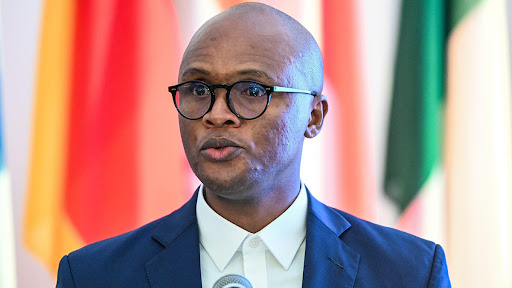
On April 2, South Africa’s Department of Communications and Digital Technologies (DCDT) published a draft version of its AI policy for public comment.
South Africa’s proposal decentralises AI oversight by assigning different agencies to monitor its development. The regulator designated AI technologies as “unacceptable,” “high,” “limited,” and “minimal” risk, marking its risk tolerance and what technologies can be comfortably applied to finance and other critical systems that affect the public.
Failing its own AI test: Yet, in a somewhat dramatic twist, critics of the proposed AI policy have found at least six of the citations in the draft to be fabricated. According to local publication News24, the policy includes referenced articles that were either never published, could not be linked to existing academic journals, or were simply fabricated by AI hallucinations.
It’s a bit of a head-scratcher and an embarrassing situation for a country’s policy against AI risk and ethical use of the technology to be written by AI.
Political critics of Solly Malatsi, the country’s Minister of Communications and Digital Technologies, including Khusela Diko, Chairperson of the Portfolio Committee on Communications, have asked South African regulators to withdraw the policy.
Malatsi responded on Saturday, saying he asked the DCDT Director General to “investigate and take action against anyone found to be responsible for any wrongdoing,” suggesting that regulators are now looking inward to find where the lapses occurred.
In another post on Sunday, Malatsi confirmed the claims to be true and withdrew the draft policy.
“The most plausible explanation is that AI-generated citations were included without proper verification. This should not have happened,” he wrote on X, adding that there will be consequences for those “responsible for drafting and quality assurance.”
Zoomout: South Africa’s cabinet will be scrambling over the next few days to save face in what could potentially be a major public embarrassment resulting from a lack of detail. Whether somebody at the DCDT office used AI or not, the draft policy provided a framework to tackle AI risks as the technology gains more prominence in public systems.
In Nigeria, the Central Bank is urging banks to use AI in money-laundering systems to combat fraud. South Africa’s policy showed that awareness, where most other countries’ frameworks, including Nigeria and Kenya, focused on centralising AI oversight. The intention is good, but the method of delivery may be less than perfect. Right now, South Africa’s cabinet is scrambling, and it is peak theatre.


20+ Markets. One API.
Fincra connects your business to Africa’s payment rails without building market by market. For collection, payout, FX, and settlement through a single integration. See what this means for your business.
Companies
Mastercard deepens Africa push with Nedbank deal and crypto play
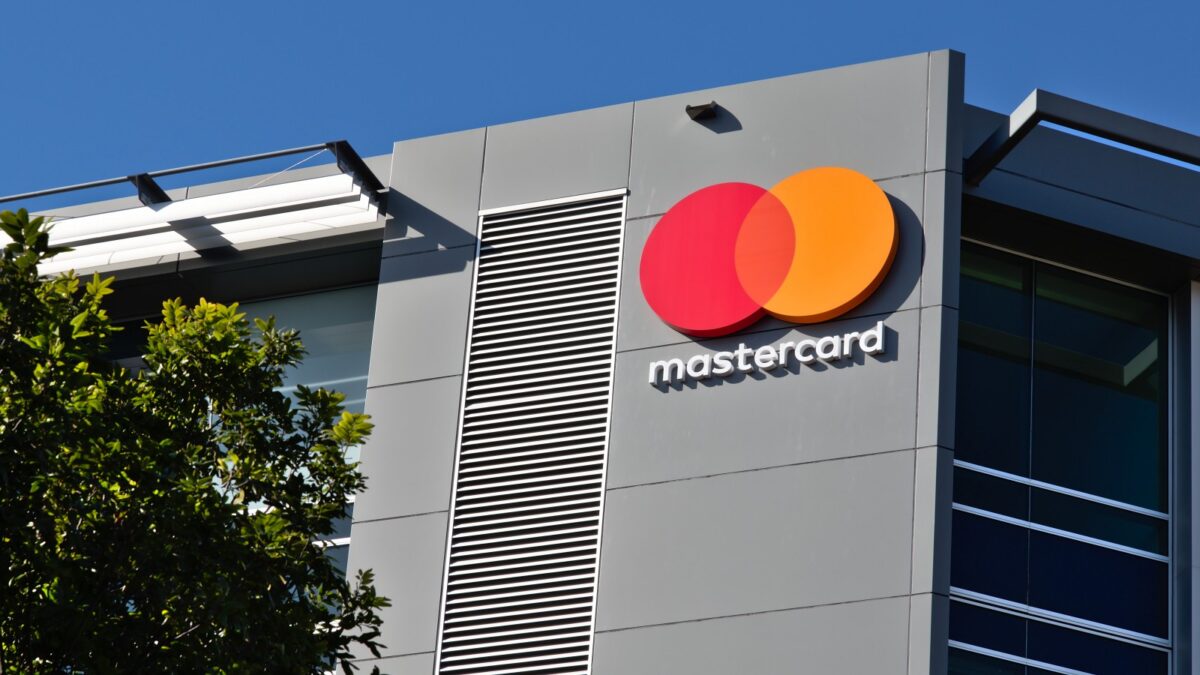
Mastercard is tightening its grip on Africa’s payment rails, and it is doing so from both ends: traditional banking and digital currency.
The payments giant has signed a 10-year agreement with Nedbank, South Africa’s fourth-largest commercial lender by assets, to migrate the bank’s card portfolio onto its network across South Africa, Zimbabwe, Namibia, Eswatini, Lesotho, and Mozambique.
The deal will see Nedbank tap into Mastercard’s fraud detection systems and faster transaction processing as it pushes deeper into digital banking.
This is a long game. Card networks rarely switch, and when they do, it signals a deeper alignment on technology, pricing, and future products. For Mastercard, locking in a major bank across multiple markets strengthens its position in a region where digital payments are growing, especially in e-commerce.
At the same time, it is looking ahead. Mastercard has since announced plans to acquire BVNK, a stablecoin infrastructure company, in a $1.8 billion deal, signalling a future in which card payments and crypto wallets are more intertwined.
Between the lines: Mastercard is not choosing between fiat and crypto. It wants both. By adding stablecoin capabilities to its network, it is positioning itself as the bridge between traditional banking systems and digital currencies.
Why this matters: Payments are becoming a stack rather than a single system. Cards, mobile money, and crypto are increasingly expected to work together, and companies like Mastercard want to sit at the centre of that flow.
For banks like Nedbank, the partnership offers a way to modernise without rebuilding from scratch, plugging into global infrastructure while focusing on customers.
The Safe and Reliable Banking App

With over 35 million users and a 99.9% transaction success rate, PalmPay is making digital banking safer, simpler, and more reliable for everyday Nigerians. Download the app to learn more.
Government
Kenya sets up unit to tackle rising gambling addiction

When it comes to gambling and the risk-reward nature of online betting platforms, Kenyan regulators have noticed a trend: the house is always winning, and too many people are paying the price.
The country’s Betting Control and Licencing Board (BCLB), its gaming sector regulator, has set up a dedicated unit to address rising addiction tied to online betting, as concerns grow over how deeply gambling has embedded itself in everyday life. The new unit will focus on consumer protection, awareness, and intervention as cases of problem gambling increase.
This is not happening in isolation. Across Africa, regulators are starting to respond to the surge in online betting. South Africa has moved to tighten oversight around advertising and consumer protection, while Nigeria and Ghana have also faced mounting pressure to rein in aggressive betting practices and protect vulnerable users.
State of play: Kenya’s regulator is trying to move from simply issuing licences to dealing with the consequences. The new unit is expected to monitor betting behaviour, push responsible gambling campaigns, and work with operators to enforce safeguards.
This is also about control. Online betting platforms operate at a scale and speed that regulators have struggled to match, with constant odds updates, instant deposits, and round-the-clock access.
What is really happening? Governments are beginning to treat online betting less like entertainment and more like a public health issue, as addiction concerns rise alongside industry revenues.
Setting up a dedicated regulator for monitoring betting behaviour will place more scrutiny on companies to comply with consumer protection standards. Yet, this could also mean tighter limits on how, when, and how much users can bet, as well as more friction in the once seamless process of placing wagers.
TECHCABAL 4.0
In March 2013, TechCabal published its first article. Thousands of stories later, the work continues, and today, it goes deeper.
TechCabal has always been free. That’s not changing.
We’ve opened a new layer. Reporting that goes further, built on sources you won’t find anywhere else, and told in ways we haven’t tried before. You’re among the first to see it.
Getting in takes less than 15 seconds.
You’re one step away from the other side.
Click the button below to see what TechCabal 4.0 looks like and what it means for you.
Telecoms
Nigeria is trying to upgrade its Internet connection
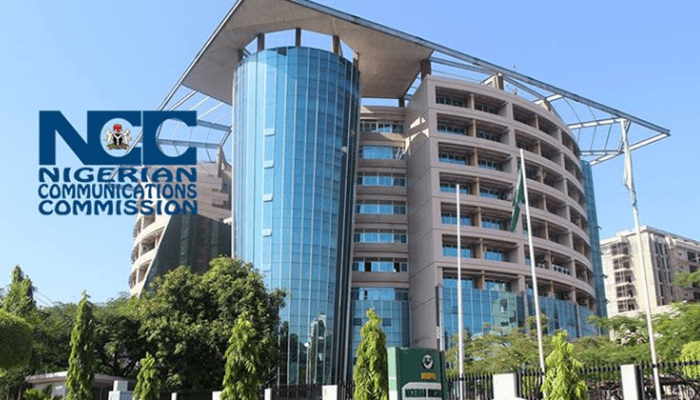
The Nigerian Communications Commission (NCC), the country’s telecoms regulator, has set up a national council to upgrade the country’s Internet system that can support far more devices, data, and modern services.
What is to change? Nigeria currently heavily uses the Internet Protocol version 4 (IPv4) system, an older Internet system which has been in use since the 1980s. This system assigns addresses to devices so that they can connect online (IP address). But it can only support a limited number of devices, a limit which we’ve basically hit. The Internet Protocol version 6 (IPv6) is the upgrade-the latest global standard for identifying and routing devices. It removes that device limit almost entirely and allows every device to have its own unique address
Why now? Internet usage in Nigeria is climbing fast. In January 2026, total Internet consumption reached 1.39 million terabytes (TB), 38.4% more than the previous year. Add 5G, cloud services, AI tools, and more connected devices, and the pressure on existing infrastructure becomes obvious. This upgrade is about keeping the Internet functional as demand keeps rising.
The plan and the challenge: The NCC has set up a council to drive this transition and lead with government systems first. Then it will push adoption to other telcos, banks, government agencies, and tech players.
However, Nigeria has attempted major infrastructure upgrades before, like fibre expansion projects and satellite plans that stalled. IPv6 is even more complex because during the transition, organisations must run both IPv4 and IPv6 at the same time.
Many security systems (firewalls, fraud detection tools, and network monitoring systems) today are set up to monitor IPv4 traffic. If IPv6 traffic isn’t properly configured and monitored, it can slip past existing security controls unnoticed, meaning suspicious activity might not be flagged as quickly, or at all, creating new risks for regulators and service providers to manage. For users, it could translate to things like delayed fraud detection and data exposure.
What should you expect? If you’re using a relatively new phone or laptop, you’re likely fine, as most modern devices already support IPv6. Older devices and networks may struggle. That doesn’t mean your Internet will stop working, but you might start to notice differences over time, like slower connections. In the long run, this upgrade is expected to make the Internet faster and more reliable.
CRYPTO TRACKER
The World Wide Web3
Source:

|
Coin Name |
Current Value |
Day |
Month |
|---|---|---|---|
 Bitcoin Bitcoin |
$78,207 |
+ 0.16% |
+ 17.80% |
| Ether |
$2,364 |
+ 0.38% |
+ 17.71% |
| Terra Classic |
$0.00005911 |
+ 14.34% |
+ 61.89% |
| Solana |
$87.24 |
+ 1.03% |
+ 4.68% |
* Data as of 06.24 AM WAT, April 27, 2026.
JOB OPENINGS
- Big Cabal Media — Senior Motion Designer, YouTube Growth Strategist, Quality Assurance Engineer, Editor-in-Chief (TechCabal) — Lagos, Nigeria
- Babban Gona — Machine Learning Engineer — Lagos, Nigeria
- Moniepoint — Data Analyst — Lagos, Nigeria
- Sun King — Product Operations Associate — Lagos, Nigeria
- M-KOPA — Business Intelligence Manager — Nairobi, Kenya
There are more jobs on TechCabal’s job board. If you have job opportunities to share, please submit them at bit.ly/tcxjobs.

Written by: Emmanuel Nwosu and Opeyemi Kareem
Edited by: Emmanuel Nwosu and Ganiu Oloruntade
Want more of TechCabal?
Sign up for our insightful newsletters on the business and economy of tech in Africa.
- The Next Wave: futuristic analysis of the business of tech in Africa.
- Francophone Weekly by TechCabal: insider insights and analysis of Francophone’s tech ecosystem
P:S If you’re often missing TC Daily in your inbox, check your Promotions folder and move any edition of TC Daily from “Promotions” to your “Main” or “Primary” folder and TC Daily will always come to you.